A 3-Day Journey Inspired by a Mother’s Breast Cancer Diagnosis

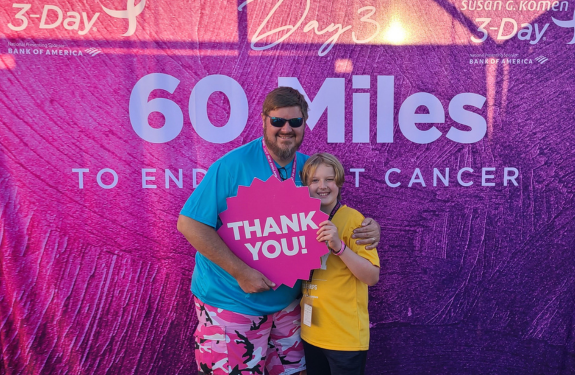
Scott S. and his son Lincoln at the Susan G. Komen 3-Day.

When Scott S. was 18, his mother was diagnosed with breast cancer. Now in his 50s, he has spent more than two decades honoring her memory through the Susan G. Komen 3-Day®. Today, he participates alongside his sons, passing down the traditions and purpose that have carried him through his grief. 

A Mother’s Breast Cancer Diagnosis 
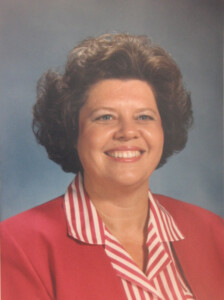
Connie S., who died from metastatic breast cancer, in 2004.

Scott’s mother, Connie, was 49 when she was diagnosed with breast cancer in the fall of 1991. She underwent a mastectomy and chemotherapy and Scott — who was a freshman in college at the time — remembers how much she endured. 

“After some years in remission, her cancer unfortunately came back and it had metastasized,” Scott said. “In the summer of 1997 doctors said she probably had a year or less to live, but she participated in new treatments that were being piloted at that time and lived until early 2004. She was really tough.” 

In those extra few years, Connie was able to be a part of some of his family’s most special moments: her oldest daughter’s wedding, Scott’s engagement, his college graduation and her younger daughter’s high school graduation.  

Connie’s Kids 

The year after Connie died, Scott’s sister, Melissa, signed up for the 3-Day. Scott joined her, and together they formed a team for their mother: Connie’s Kids. What began as a way to honor their mom has grown into a lifelong family tradition.  
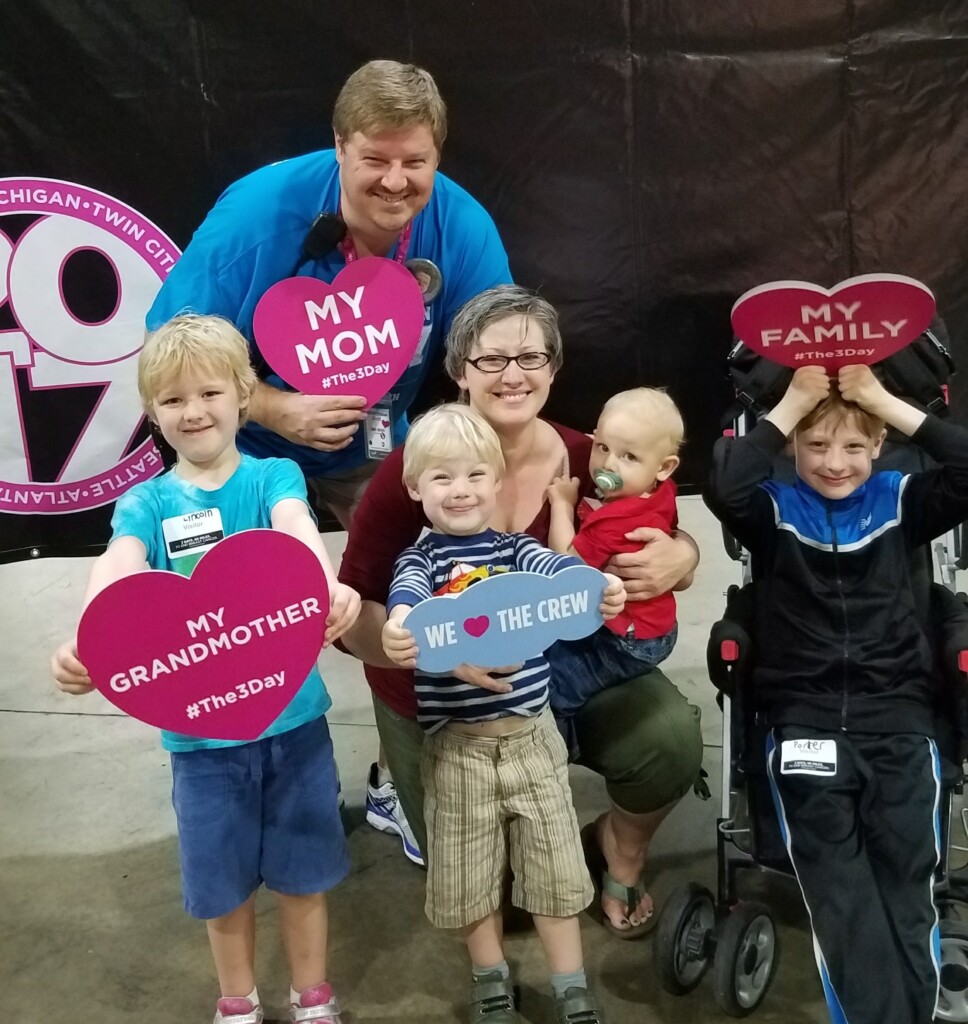
Scott. S. and his family at the Atlanta 3-Day.

“I decided to be my sister’s walking partner in 2005, and I have been with the 3-Day every year since,” Scott said. “Whether it be walking in Atlanta with my wife, Jessica, volunteering or being a member of the crew.”  

As Melissa and Jessica became mothers, Scott shifted from walking to crew in the Twin Cities and San Diego — eventually becoming a 3-Day Youth Corps Leader in Dallas/Fort Worth and San Diego. 

Passing the Tradition Forward 

This year will be Scott’s fourth leading as a 3-Day Youth Corps leader in San Diego, a role that has become one of the most meaningful ways he keeps his mother’s memory alive. 

“I have four boys. My oldest, Porter, is 16. He first came to the 3-Day when he was just three weeks old,” Scott said. “Now he’s looking forward to switching over to becoming a walker or crew member in a couple of years.” 
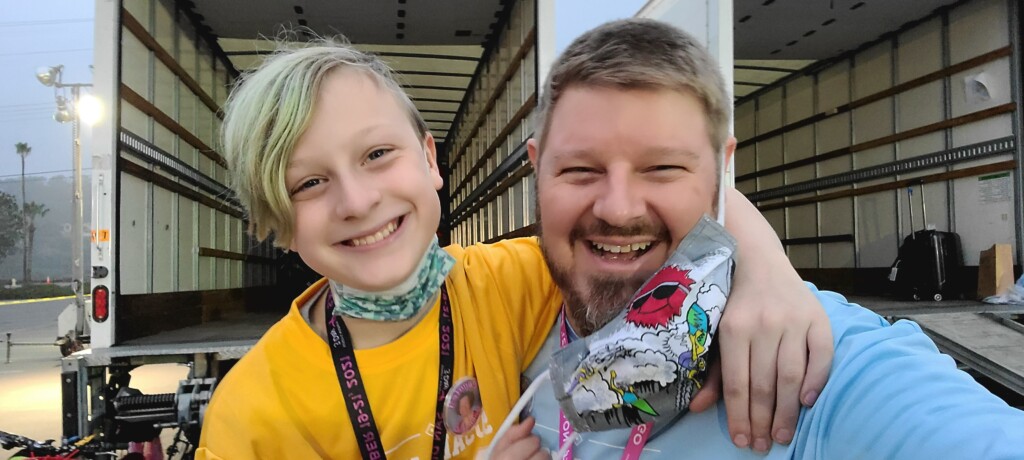
Scott. S. and his son, Porter, at his first Susan G. Komen 3-Day as a member of the Youth Corps.

When his sons reached the age to join the Youth Corps, Scott began a tradition: each boy’s first year would also be a solo father-son trip. The Youth Corps is a special group of young volunteers, ages 10 to 16, who support walkers during the 3-Day by offering a helping hand, cheering them on and lifting their spirits every step of the way.
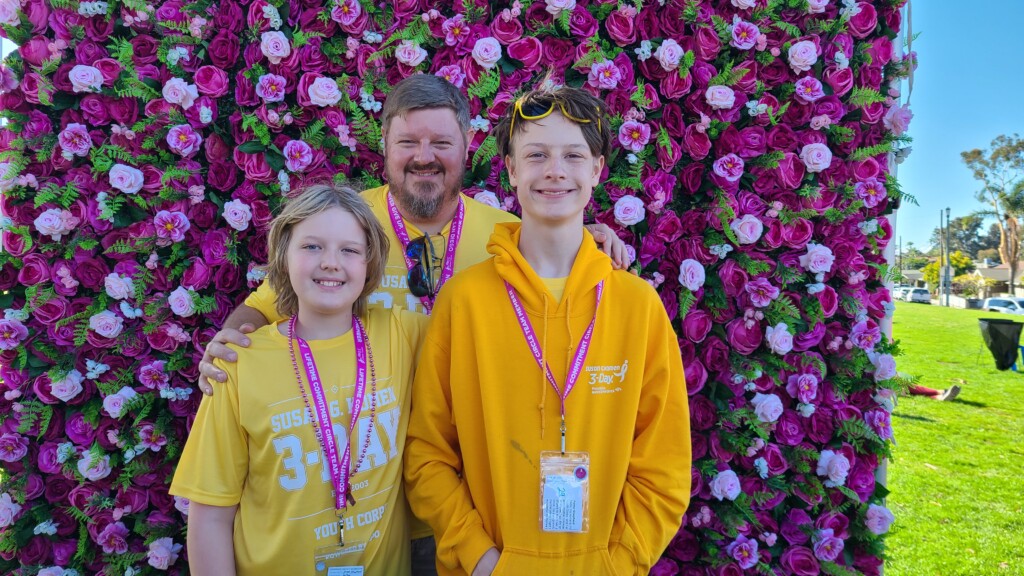
Scott S. and his sons, Porter and Lincoln, at the Susan G. Komen 3-Day.

Porter joined the San Diego Youth Corps at age 10 and has completed three seasons, including Dallas/Fort Worth. Scott’s second son, Lincoln, has served twice and will return to San Diego this year for his third Youth Corps experience.  

Scott’s third son, Miller, completed his first Youth Corps a few years ago and is joining Scott again this year. Hudson, the youngest at 9, is already counting down the days until it’s his turn.   
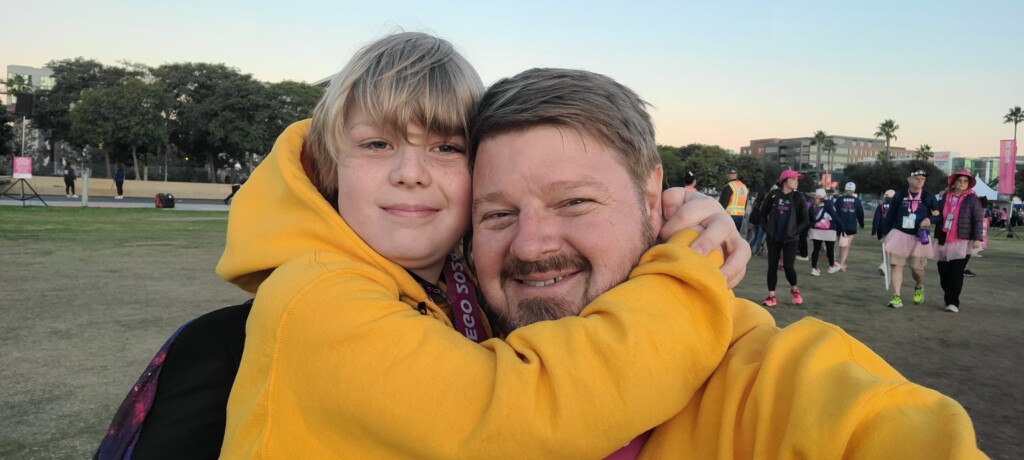
Scott S. and his son, Miller, at the San Diego 3-Day.

Even though none of the boys ever met their grandmother, they know her through photos, stories and the 3-Day traditions they have become a big part of over the years. 

“The 3-Day is an emotional connection for me and the boys see that,” Scott said. “It’s  a great way for them to see how to be of service in different ways.” 
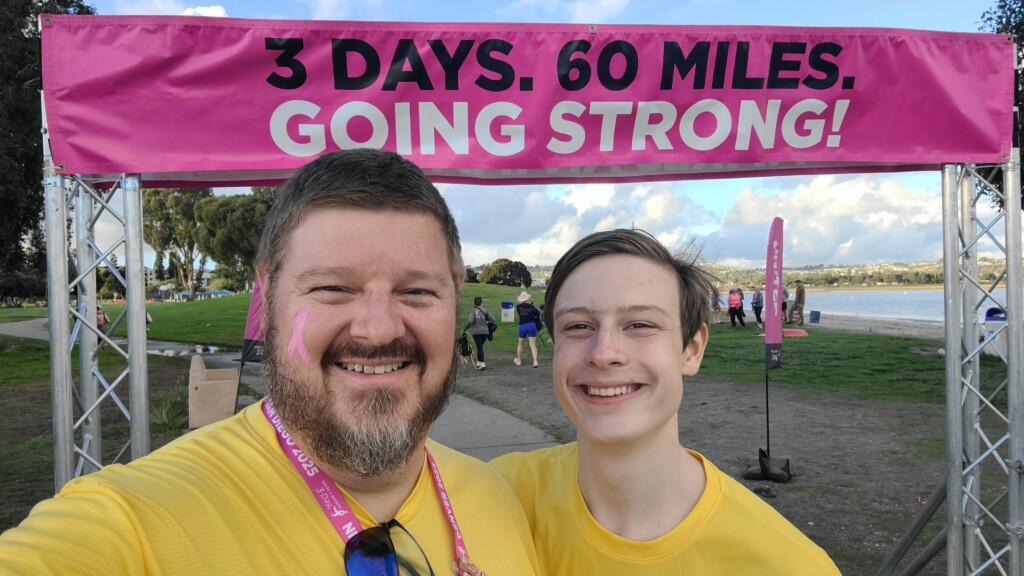
Scott S. and his son, Porter, at the Susan G. Komen 3-Day.

For Scott, the 3-Day is more than an event, it’s the place where he feels close to his mother and where his boys have learned to support others and how to serve with purpose. 

“I love the 3-Day because you can let life’s little things go for three days. Everyone who is there is just focused on the mission,” Scott said. “You’re exhausted but energized. I love the camaraderie and being able to connect with my mom.”
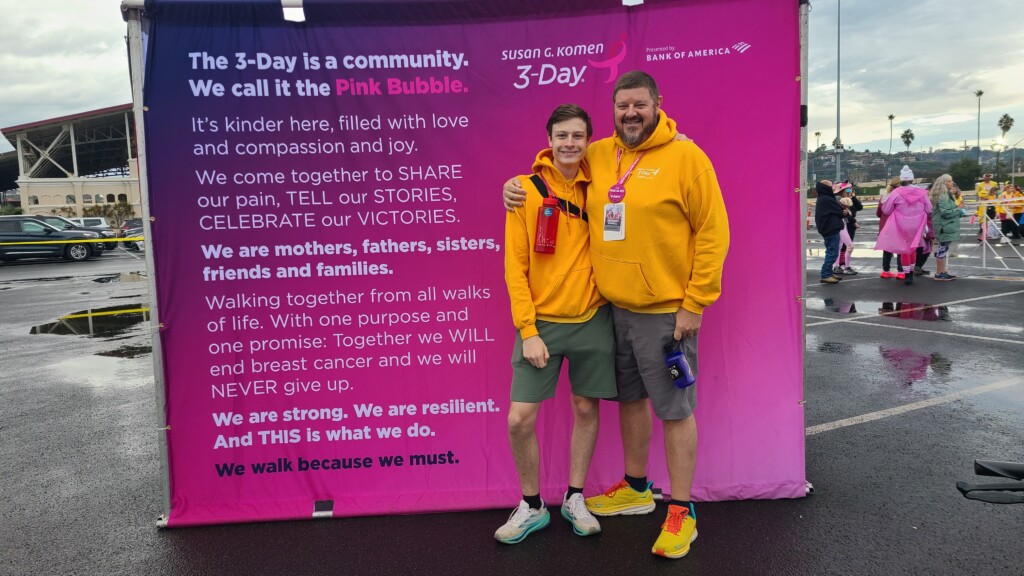
Porter and his dad, Scott, at the Komen San Diego 3-Day.


Jessica’s Story: Volunteering With a Crown at the 3-Day

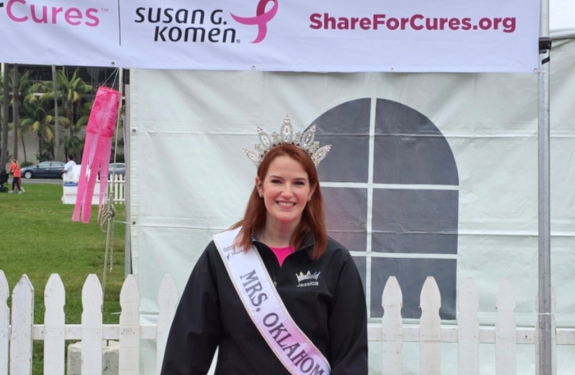
Jessica Ashmore wearing her Mrs. Oklahoma crown and sash at the ShareForCures tent at the San Diego 3-Day.

Jessica A. took a unique approach to volunteering at the Susan G. Komen San Diego 3-Day® — wearing her crown as the reigning United States of America’s Mrs. Oklahoma 2026 to draw attention to breast cancer research. 

At the 3-Day in November, Jessica volunteered in the tent dedicated to ShareForCures® — a breast cancer research registry by Susan G. Komen, connecting researchers with information from people who have or had breast cancer to close gaps in breast cancer research data to make new discoveries faster. 

Jessica A. at a Susan G. Komen event in San Diego.

“I initially found out about the Komen 3-Day about 10 years ago when we first came to San Diego,” explained Jessica, whose husband serves in the U.S. Marine Corps. “Back then, I volunteered and cheered along the route. It was a fantastic experience, so I wanted to be part of it again when we moved back here last year.” 

As part of her role, titleholders must participate in community service during their reign, and she saw the 3-Day as an opportunity to do just that.  

“My platform typically centers around all things military —  supporting veterans, active-duty service members and their families, and finding ways to better serve them,” Jessica explained. “But breast cancer is something that affect so many women and families, and it felt important to use my voice to support that as well.”  

Like many, she has seen the impact of breast cancer firsthand. 

“My grandmother was diagnosed with breast cancer. She had a mastectomy and reconstruction, and she had a lot of issues with that pre- and post-surgery,” Jessica said. “And my husband’s grandmother had breast cancer I believe three different times.” 

In preparation for volunteering at the 3-Day, Jessica took the time to learn about ShareForCures so she could speak confidently and direct potential participants on how to join the registry.   

ShareForCures volunteer Jessica A. is also Mrs. Oklahoma 2026.“The crown and sash — it’s a talking point. It gets people to come over and ask, ‘What are you here for?’” Jessica said with a smile. “Whenever I got those questions, I would tell them I was there volunteering for ShareForCures. I am hopeful my volunteer efforts resulted in people signing up for this important program.”
Outside of her volunteer work, Jessica is a research program coordinator supporting the Extremity Trauma and Amputation Center of Excellence for the Department of Defense. She lives in San Diego with her husband and three children.  

For more information on joining ShareForCures visit komen.org/shareforcures. 

Statements and opinions expressed are that of the individual and do not express the views or opinions of Susan G. Komen. This information is being provided for educational purposes only and is not to be construed as medical advice. Persons with breast cancer should consult their health care provider with specific questions or concerns about their treatment.


Raising Awareness for Male Breast Cancer at the 3-Day

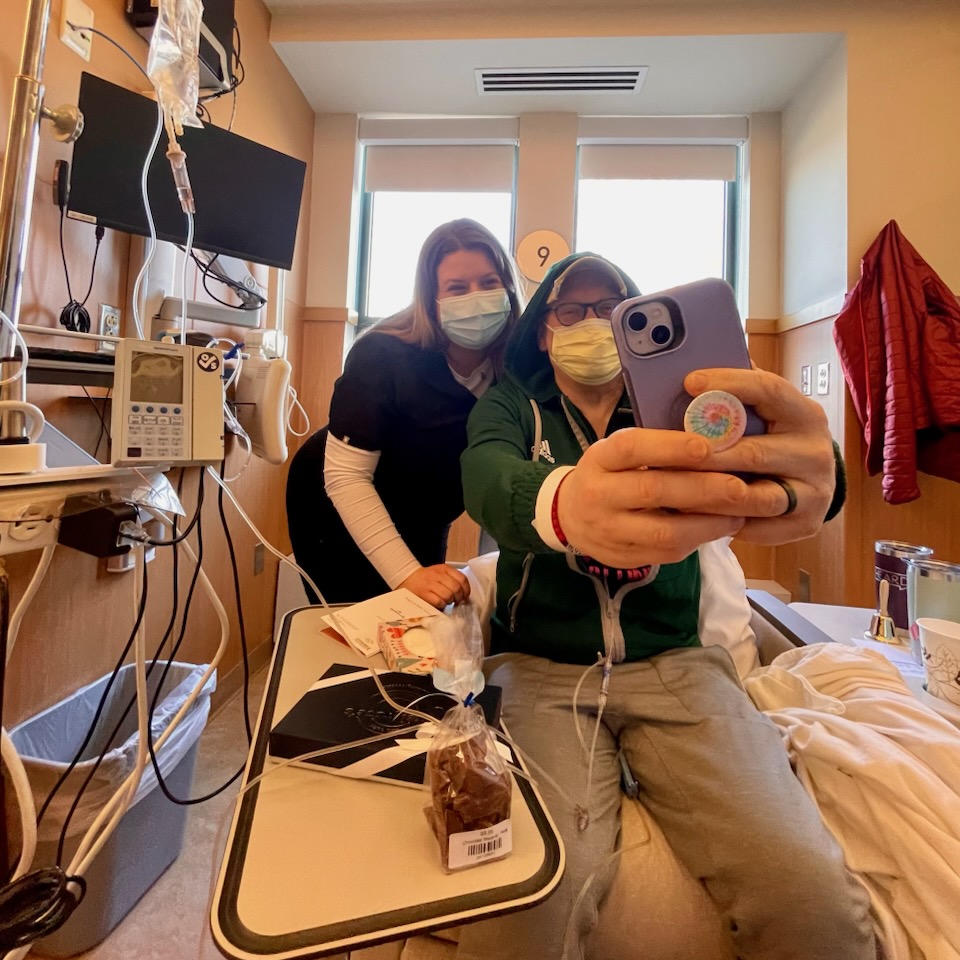
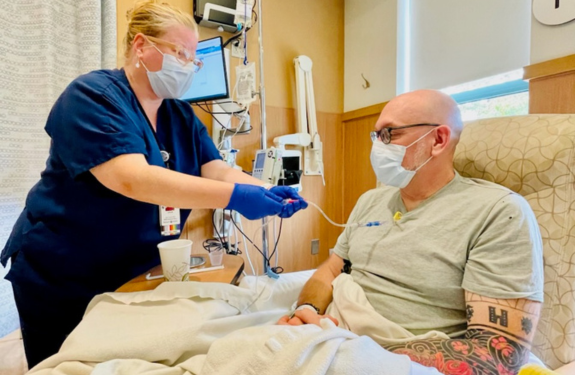
Jake Messier is living with metastatic breast cancer and is seen at chemotherapy.

Jake M.,54, is preparing to walk his first Susan G. Komen Boston 3-Day® with one goal in mind: to raise awareness that men can get breast cancer, too. 

In 2023, Jake discovered a lump in his armpit while putting on deodorant. 

“In the moment, I thought it was weird, but I went on with my day,” Jake said. “Guys aren’t taught that when we find a lump, we should tell somebody.” 

He didn’t mention it until a routine physical months later. 

“My primary care physician listed off about 10 things that it could be and none of them were breast cancer,” Jake recalled. “But I’m thankful he wanted to be ultra sure and sent me for an ultrasound and mammogram, and then that snowballed to a biopsy.” 

Jake was diagnosed with stage 2 breast cancer—but he believes it was likely more advanced. 

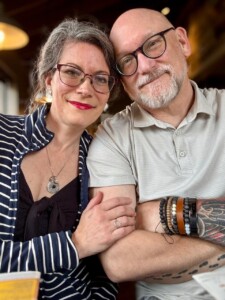
Jake Messier and his wife are preparing to walk in the Susan G. Komen Boston 3-Day.

“I know I was likely misdiagnosed stage 2 and was actually stage 3,” Jake explained. “Then about a year later when it traveled to my hip, that’s when it metastasized.” 

Since then, he has undergone chemotherapy, a mastectomy, two additional surgeries and 10 weeks of radiation therapy. He also recently spent six weeks in a wheelchair after a hip biopsy.  

From Diagnosis to Advocacy 

Over the last two and a half years, Jake has turned his metastatic breast cancer (MBC) diagnosis into a personal mission.  

“Breast cancer is still seen as the pink disease—a woman’s disease,” Jake said. “I’m hoping to try and change that through the advocacy I do and by walking in the Komen 3-Day.” 

Through his TikTok account @theguywithstage4breastcancer, Jake shares his story to raise awareness and remind men to listen to their bodies and speak up when something doesn’t seem right.  

If I can make an impact with whatever time I left have,” he said. “I want it to be this: men can get breast cancer.”  

Jake Messier takin a selfie at his chemotherapy appointment.

Putting the MEN in KOMEN 

That mission is what’s driving Jake to walk in the Boston 3-Day this summer. With his team, Putting the MEN in KOMEN, he hopes to raise $10,000 and bring greater visibility to male breast cancer. 

“The Boston 3-Day is a big event,” he said. “If people see me, a man, holding a sign that says men can get breast cancer too, and they remember that—that matters and that is huge.” 

To register for the 3-Day, visit the3day.org. 

Statements and opinions expressed are those of the individual and do not express the views or opinions of Susan G. Komen. This information is being provided for educational purposes only and is not to be construed as medical advice. Persons with breast cancer should consult their health care provider with specific questions or concerns about their treatment.