The Power Behind Every 3-Day Donation

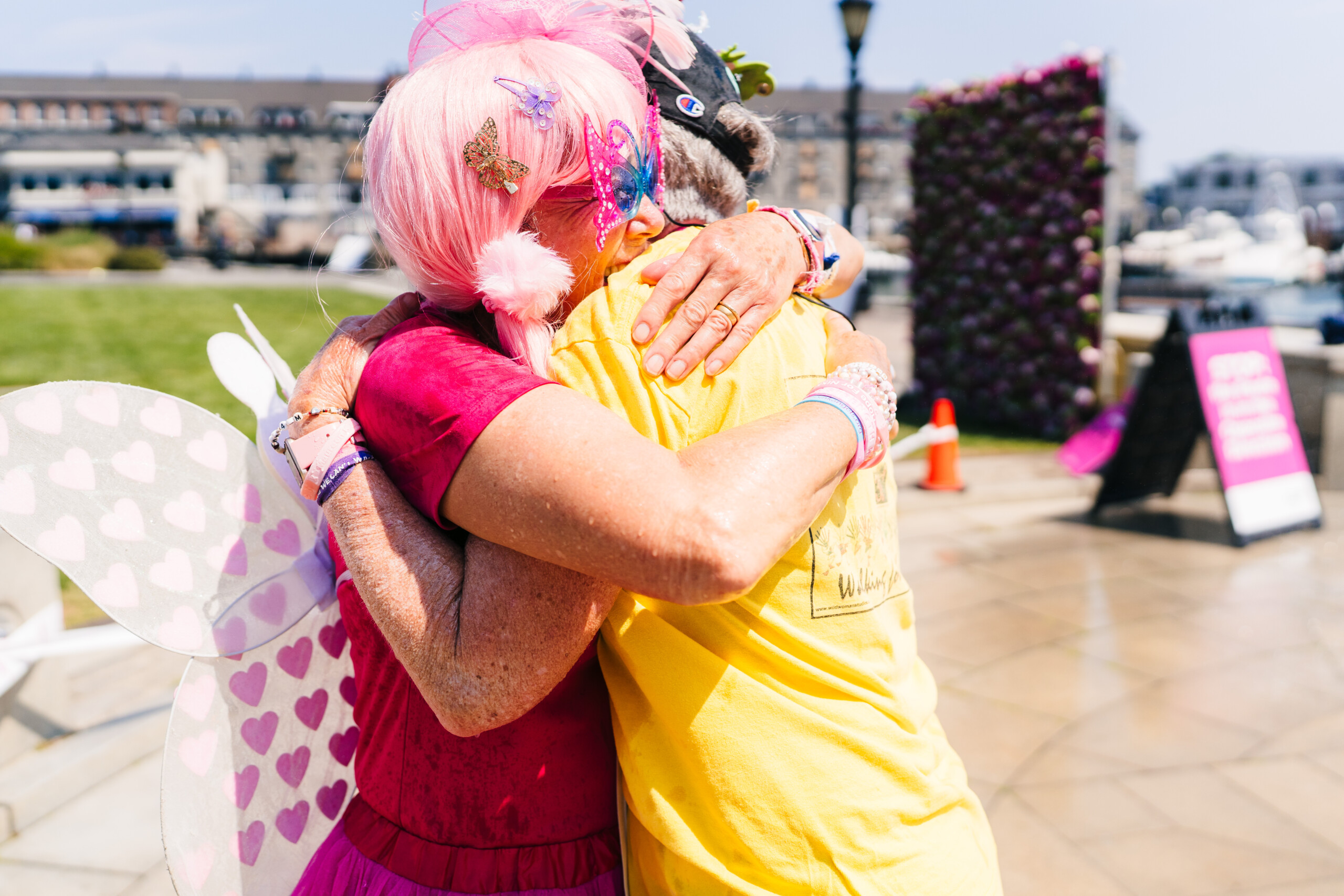
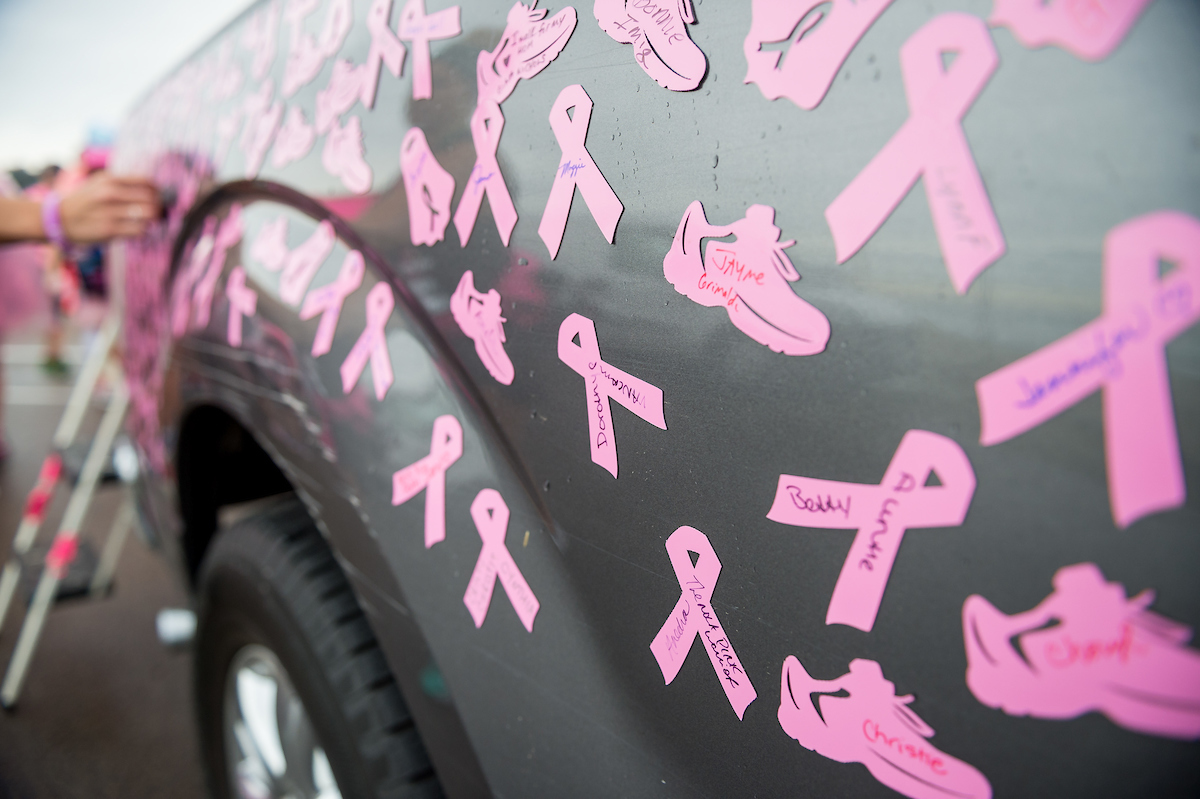
An embrace at the Susan G. Komen 3-Day

When you donate to the Susan G. Komen 3-Day®, you might wonder where your dollars go. With every donation, they embark on a powerful journey, one that brings hope where there is uncertainty, comfort where there is fear and progress where there is urgent need.  

Every dollar raised through the 3-Day could become the research breakthrough that leads to lifesaving treatment. From a call to the Patient Care Center at just the right moment to financial help that aids a patient in getting to chemotherapy to advocating for state and federal policy change to ensure all people have affordable access to the care they need – every dollar carries the weight of possibility. 

Read more at Komen.org. 

Where Your Dollars Go 

  • $25 helps scientists find new ways to prevent, detect and treat breast cancer. 
  • $100 provides emotional support, breast health information and educational resources for one person through our Patient Care Center navigators. 
  • $150 pays for one week of groceries for a person undergoing treatment. 
  • $400 supports an early-career scientist for a day as they develop breakthroughs for aggressive and deadly cancers. 

Your generosity can drive research, provide assistance and make a tangible difference in the lives of those impacted by breast cancer.  Every contribution, no matter the amount, moves us closer to a world without breast cancer. 

Komen Advocacy Summit: What is your story? Will you come share it with Congress?

Guest Blog Post By Sally Dunbar, 3-Day Walker

Hands Up For Hooters, Team Captain

I am a breast cancer warrior. I am also a Political Bozo. Which makes it a bit ironic that I was invited to travel to Washington, D.C. last week to advocate to Congress for breast cancer. Truth be told, I had to look up who my house representatives are. How do you refer to them face to face? And I’m still unclear if D.C. is actually a state! Yeah… a political Bozo — first class.

I wasn’t sure what I could offer the Advocacy Summit last week, or why I got the emailed invitation, but how could I say NO? (For the record, I paid my own way — they do not waste money flying bozos around the country!) I figured I would learn something. I could see our nation’s Capitol. And hey — I could probably recruit for my team! So I went. By way of background, I am team captain of Hands Up For Hooters — a huge Komen 3-Day team that primarily walks in San Diego. This year we also have walkers in Boston, Philadelphia, Seattle and Dallas/Fort Worth. In the past four years, we have raised $660,000 for Komen.

I arrived at the Hyatt on Capitol Hill in D.C. for our first day-long training session on Wednesday, May 1st. There were more than 250 men and women in attendance, including Komen staff, as well as CEO Paula Schneider, and Victoria Wolodzko, Senior Vice President of Komen’s Mission. Throughout the three days, I met many Komen Affiliates from all over the US. I met Komen Advocates Scholars, and Research Scholars. (I didn’t even know what those were before.) I met many women living with metastatic breast cancer who were very moving to hear as well as survivor advocates. I also met many African American women who were specifically invited to help give voice to the black community about breast cancer through Komen’s Speak Truth to Power conference. Oddly, I only met two or three other 3-Dayers. I hear there were 10 registered, but I didn’t meet them. Also, oddly, I met many people who did not know what the 3-Day was! How could that be? Clearly, we need a louder voice!

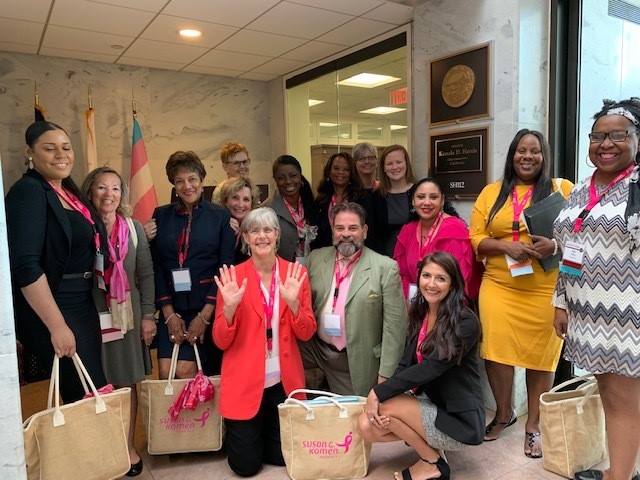
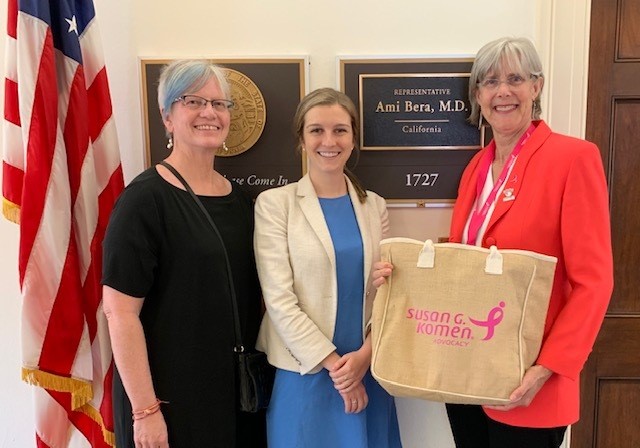
Thursday our group of more than 250 marched to Capitol Hill. All 13 of us from California met with Senator Dianne Feinstein and Senator Kamala Harris’s office. Then two of us met with my House Representative, Ami Bera, and another group member’s representative, Tom McClintock. Komen had pre-arranged meetings scheduled for us with their Health Legislative Aides for 15 minutes each.

During our meeting on the Hill, we had 4 main “Asks” to request their support of:

  1. To increase research funding to the National Institute of Health (NIH), which includes the National Cancer Institute, from $39B, to $41.5B, despite the president’s proposed budget of a $4.6B decrease. Interestingly 80% of our voters support more money for NIH for Bio Tech research, even if it means raising taxes, because they understand the importance to all of us and our families. This “ask” struck me in that we were advocating for funding ALL health issues, not just breast cancer.
  2. Maintain funding for Early Breast and Cervical Cancer Early Detection (B-CEP) at $275M. This helps low income and under- or un-insured women get early screening and diagnostics before they advance to higher stage cancers.
  3. Co-sponsor a new Komen led bill recently introduced by Representative Debbie Dingell (D-MI), called the Access to Breast Cancer Diagnosis Act, aiming to eliminate the disparity between the out-of-pocket cost of diagnostic imaging and tests. The average patient cost of a mammogram is $231. The average patient cost of an MRI used to further diagnose a suspect mammogram is more than $1,000. How many women will forego the advanced diagnosis because they can’t afford it? This bill will lessen patient out-of-pocket costs, leading to more early diagnosis and more lives saved.
  4. Sign on to the Cancer Drug Parity Act (H.R.1730/S.741) as a co-sponsor. Think about this. You have breast cancer. You need chemo. You go to the clinic for your IV infusion with a $25 copay as this is an office visit and what your treatment will cost. But let’s say there is a newer, better drug for you that comes in pill form. Wow. Easy peasy. No driving to the infusion center. No babysitters. No doctors or technicians involved. No travel. No time off work. You just pop the pill a home. This, however, is paid for under your prescription coverage, which for most of us is a 20% co-pay. My partner on the hill has stage 4 metastatic breast cancer. Her treatment caused peripheral neuropathy which numbed her hands, and ended her career as an OB-GYN. So she has no job. Her current drug co-pay is $120 per month. But when that drug quits working for her, the next step is a drug costing $13,000 a month. Her co-pay will be $3,500 each month. She has a daughter in college and she said if she has to choose between her daughter’s tuition, and one month’s co-pay — well, she is a Mom. She knows what she would choose.

We asked our representatives to support eliminating the disparity between IV and oral chemotherapy treatments, so patients like Kelly don’t have to make these types of decisions.

Honestly, I crammed my head with factoids in preparation for these meetings, yet still felt totally inadequate to speak to these issues. Then a bit of divine intervention arrived in the form of what else? My UBER DRIVER from the airport! “What are you in D.C. for?” she asked. I told her. “Really? I have spent my career conducting advocacy fly-ins for decades. I teach people how to advocate. I am currently a professor of humanities, getting my PHD in… blah blah.” Honestly, I didn’t even understand what her PHD was in. But it was a PHfrikkenD! I asked the obvious — “Whachadoin driving for UBER, Doc?” She replied, “I have to fund my research”.

She gave me two invaluable tips for advocating. “First, don’t wear metal to the Capitol — it sets off the metal detectors.” Check. “Second, forget all the factoids Komen gives you. Just tell your story. And make them cry. THAT is what they will remember.”

So that is what I did. I let my partner explain the details about our asks, as the aides dutifully wrote notes (or maybe finished their morning’s Sudoku puzzle — it was hard to tell). Then I told my story.

“I want to tell you why I paid my own way to come to D.C. from Sacramento to talk to you. 14 years ago I was diagnosed with breast cancer. It scared the begeezus out of me. The doctor didn’t pull my treatment plan out of his hat. It was research from the gazillions of women before me that told my doctors what treatment I should have. And it worked. I am here today. But I learned there was more work to be done because too many men and women are still dying. I started walking and fundraising for Komen, because they were working to end death from breast cancer. I formed my team — Hands Up For Hooters — to walk 20 miles a day, three days in a row in the 3-Day event. To date I have had over 300 men and women join my team and we have raised $660,000 for Komen. We are the hiking boots on the ground in the war on breast cancer, so to speak. I do this so that if I get a recurrence, the research will be there to let my docs know what to do. I also walk for my little grandson. This is something I can do today — advocate for his future — so he never loses his wife, or his second grandmother — ME — to breast cancer. THAT is why I am here.”

Was I effective? Well, I didn’t get them to cry. But I did find out that on both sides of the isle there is broad support for research funding and breast cancer issues, and each of the four aides I met with had their own breast cancer story. Their Mom. Their aunt. Their partner. I feel encouraged about their votes.

After our meetings we delivered a dozen information packets to the House and Senate offices who had no constituents attend the summit. It dawned on me that we would have been so much more powerful had we had summit attendees from EVERY nook and cranny in the US — if EVERY house representative got a visit and every state senator heard our story. But some states had no one. Even my state, California, only had 13 of us from the entire state, yet we have 53 house representatives. We missed most of them!

That is where you come in, Mr. and Ms. 3-Day Walker! Consider coming next year. You are invited. Especially if you are from some podunk, off the beaten track location with a lonely representative who doesn’t get many visitors! They want to hear from you. From US. One thing I kept hearing is how much more impactful a volunteer constituent’s voice is over a paid lobbyist. They value us. They listen. Komen almost doubled the size of the Summit this year, to 250. Their goal is to double again for next year — to 500. We 3-Dayers can do it. And think about it. We have spent tons of time advocating for Komen each time we ask for a donation. We are experienced! We know how to make the ask!!!

I will be there next year. And I will come more prepared. I plan to gather stories from my team, and from my own experiences — stories that support the asks that Komen will decide upon. I hope you are there with me. You won’t regret it.

Health on the Hill: Komen Advocacy Summit Recap by Melissa Melson

2018032295103327

Day One

My Advocacy Summit experience was a whirlwind but it was completely worth it. After two cancelled and rebooked flights due to the upcoming storm, I finally got one at 6:00 AM from Detroit to D.C. I got there and went over the slides, facts and the current political climate while waiting to check in. The bright pink signs guided my way and I was greeted with warm smiles and a booklet to explain everything I would need to know. It was a big task we set out to accomplish. We were there to stand up and speak up for the cause and for so many with breast cancer.

We were grouped by states to allow us to meet others. And to my excitement, I was paired with people who had done this before and helped us newbies with what to expect and how to prepare. The meeting after registration got us up to speed on the relevant things happening on Capitol Hill regarding budget talks and the Oral Parity bill we would also be discussing.
201803229511340795HDR

We discussed our three “asks” or main topics to discuss when attending our meetings on the Hill and it also helped us prepare for potential curveballs, too. We wanted policymakers to understand the asks, connect, and remember us and the important reasons we came.

Our first ask was an increase in funding to the NBCCEDP (National Breast and Cervical Cancer Early Detection Program). Our second ask was to the NIH (National Institutes of Health), which houses the National Cancer Institute, to increase funding for biomedical research. The third ask was to thank those who cosponsored HR1409, the Cancer Drug Coverage Parity Act, and to get the other House members to cosponsor if they hadn’t already. Of the 50 states, 43 have passed this on the state level. Michigan is not one of the 43, but it is one of the five that have it on the table this year. This made our visit very important. The Oral Parity bill instructs insurers to treat oral medications at the same level as IV medications to treat cancer. Pharmacy bills can be thousands of dollars without this coverage. I work with a therapist who has Metastatic Breast Cancer and takes an oral chemotherapy. She said it would be thousands every month and she would not be able be able to afford it if she hadn’t found financial assistance. Unfortunately, she knows many who are not as lucky in the state of Michigan.
2018032295101542.jpg

After a great dinner, we heard from Komen’s new CEO, Paula Schneider, about her own diagnosis, her family history and how all that passion and personal connection brought her to us. She reminded us of the disparity where women of color have a 40% less chance of survival, which is completely unacceptable. I work and live in a county with a high percentage of women of color. This matters to me and it was good to hear this reminder before I left to go to bed. The next speaker was Komen founder and ambassador, Nancy Brinker. Hearing from her made the end of this day even better. She reminded us of the promise she made her sister and showed us all the countries that Komen helps. She reminded us of how much we need to make positive changes in the world. We may be meeting within our own states but our impact could have positive global implications. I would say this was my most impactful moment of the whole weekend. It reminded me of how much work we still had to do and it showed me just how many lives we can help change with everything we do.
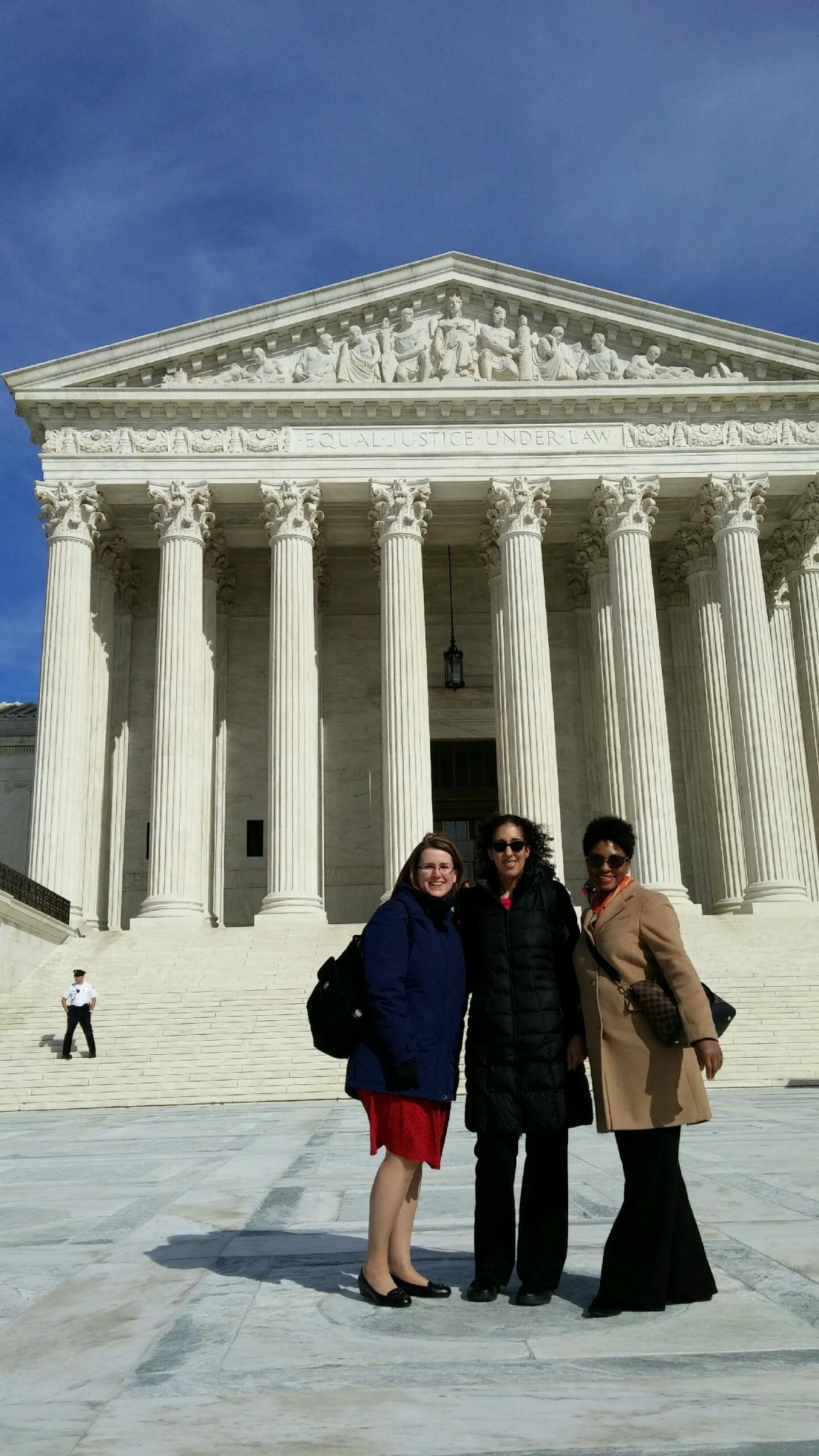
2018032295160947.jpg

Day Two

The day on the Hill was long, but amazing! We grabbed our breakfast and did some more prep for the day and hopped on the buses to the Hill. For Michigan, we split into two groups depending on the areas we service and tackled our busy schedule.

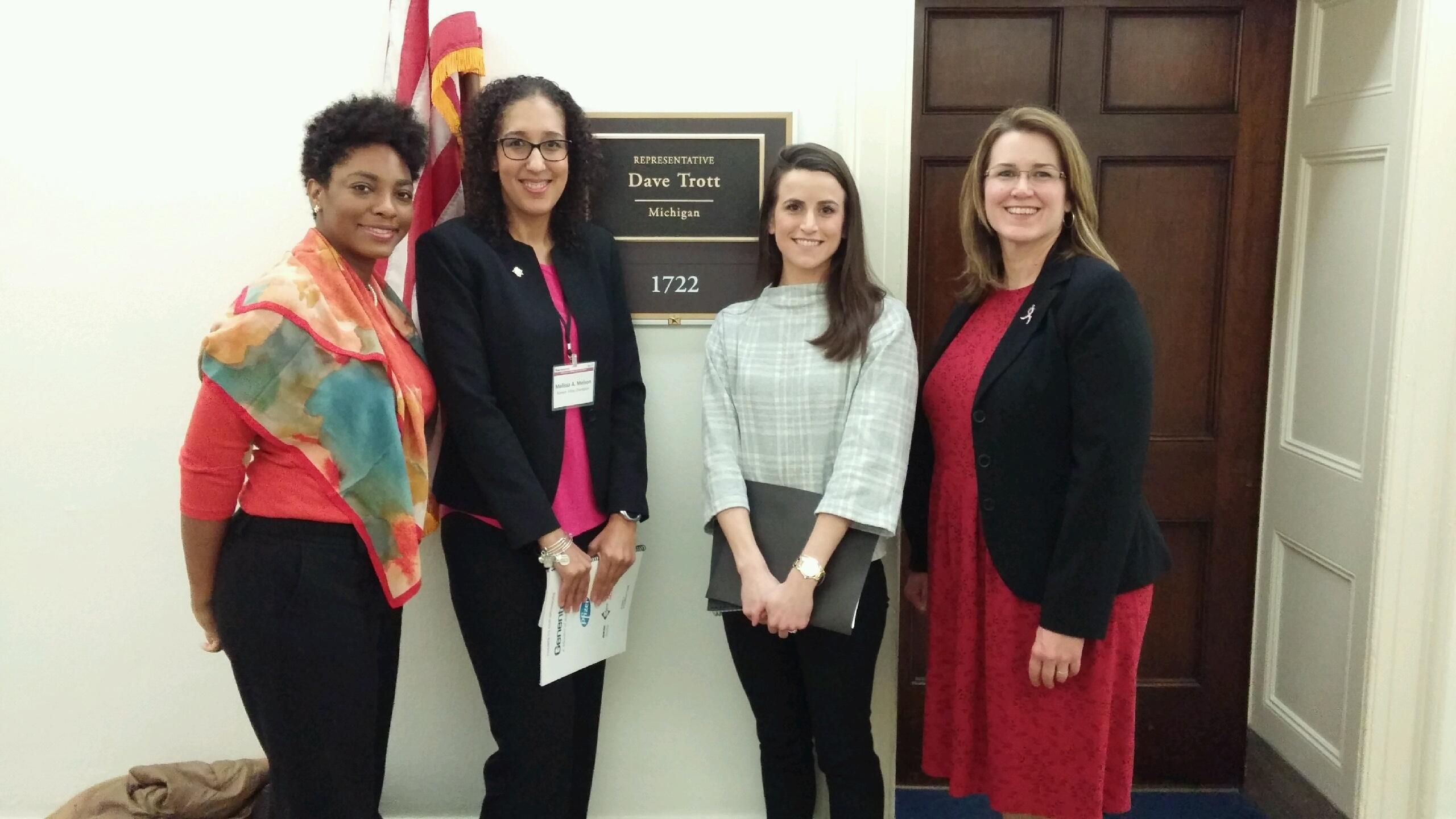
Our first stop was Representative Levin, who supports the Oral Parity bill. Our next stop was Representative David Trott. We found out that we had his support on all our asks and thanked him for already being a cosponsor of the Oral Parity bill. Next, we met with the staff member for Representative Brenda Lawrence, Annika, and we thanked her for her support and for cosponsoring, as well as her support of the Detroit Race for the Cure® in recent years.
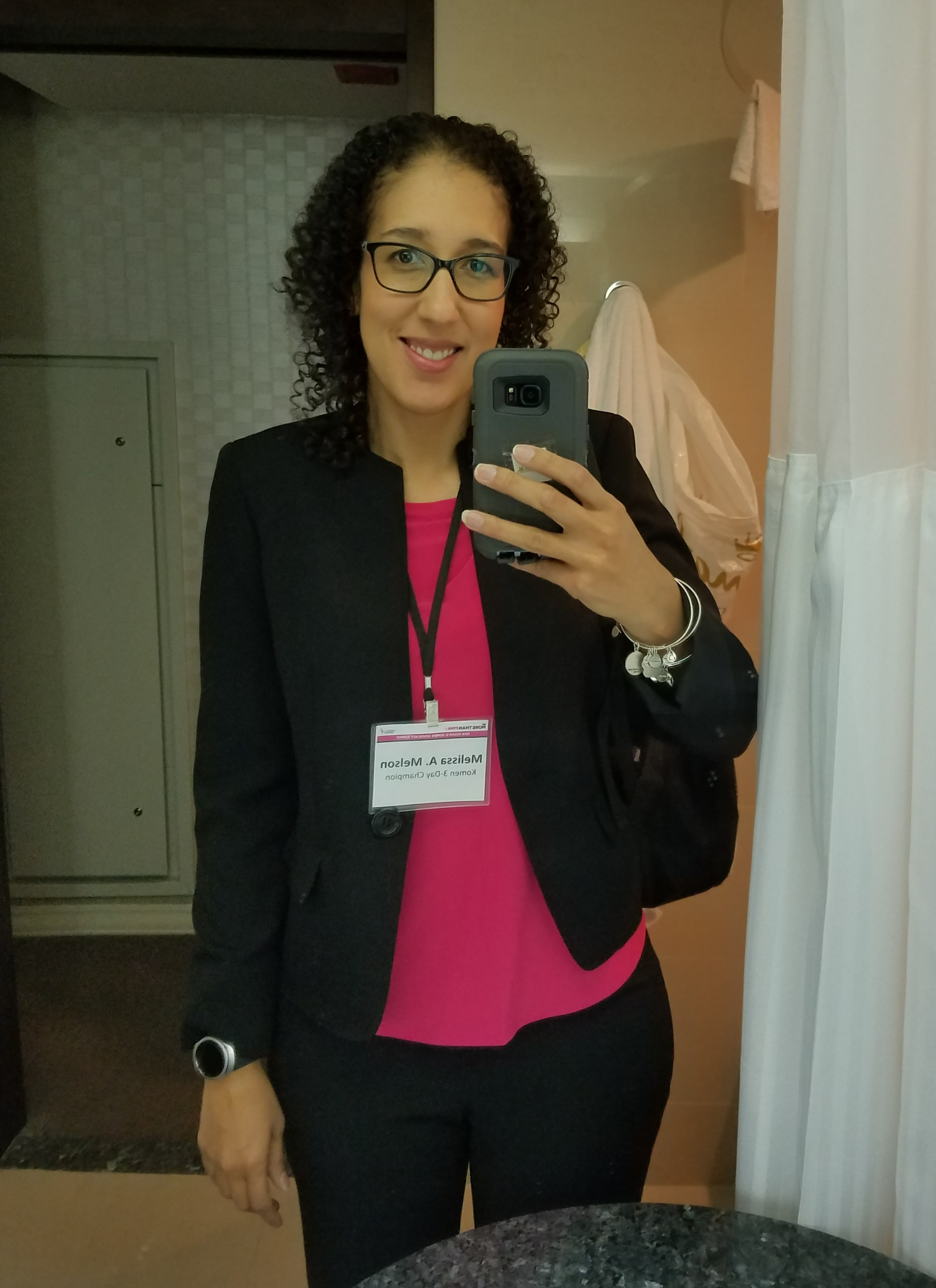
20180322_070842.jpg

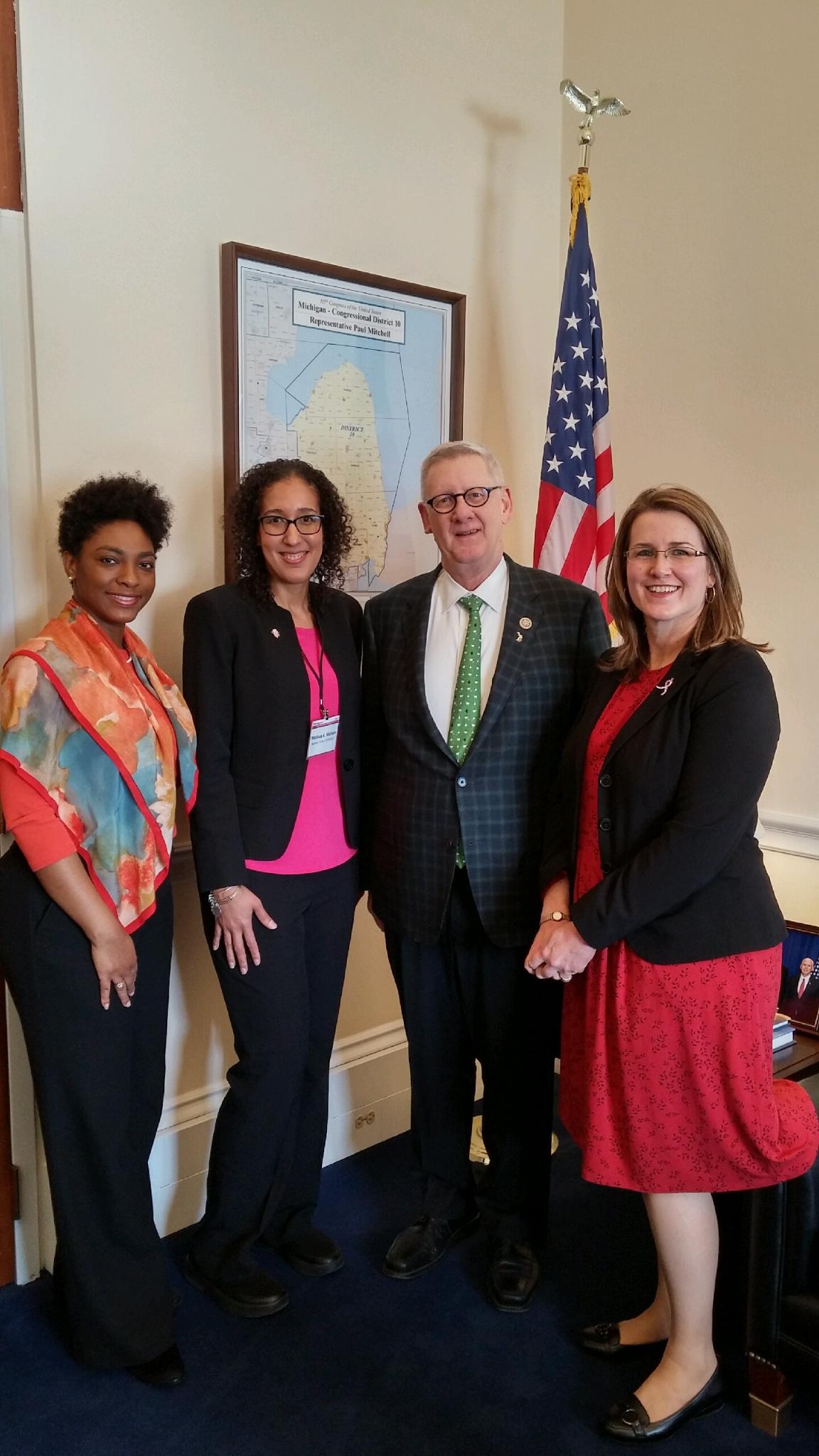
While waiting for our next meeting with the staff member for Representative Paul Mitchell, Rep. Mitchell himself coincidentally came out of a meeting nearby. We got to talk and hear his personal stories and connections to cancer. It was clear why we had his support for funding and why he cosponsored the Oral Parity bill. His nephew just passed at 35 of cancer that had metastasized. His wife benefited from advance screenings and her mother had breast cancer. He saw the reason for our asks and their importance in his own life.

We dropped off information for Representative Debbie Dingell (a longtime supporter of Komen and women’s health programs), and we took off for our two meetings with Senators. We joined the other half of the Michigan team for the meetings with Senators Gary Peters and Debbie Stabenow. We shared our asks and folders with information. We then asked that when the time comes that the Oral Parity bill comes to the Senate, to remember us, our stories, and the information we shared, and help it pass. It was an amazing end to the day with an opportunity that was unlike anything I could have ever imagined.

As a co-survivor, I often feel helpless. I can’t bring back the friend that died at 33. I cannot make sure my mom’s cancer doesn’t come back. I cannot take the Triple Negative Stage 3B cancer away from my 45-year-old stepmother, nor the cancer away from my friend who was just diagnosed at 34. The 3-Day walk, the Race for the Cure and this Advocacy Summit helped me feel like I was helping in my own ways.
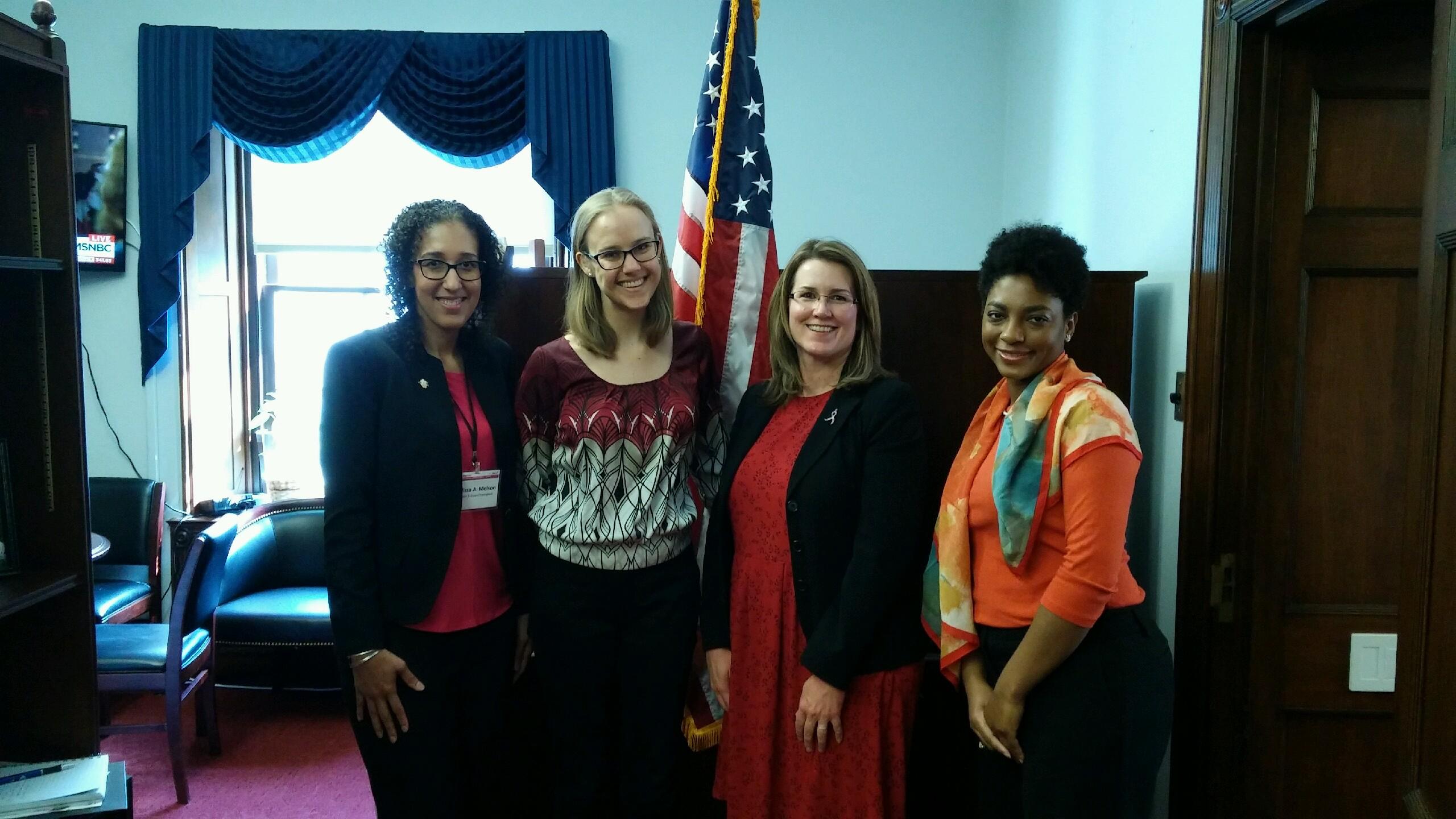
2018032295111043

Day Three

We ended our three-day adventure recapping our day on the Hill, had discussions about the state of Medicaid and insurance issues and we got to hear from a few speakers, including former Colorado Legislator Dianne Primavera, who now leads Komen Colorado. She told us about the hard work she did for cancer bills, and helped us learn how to get our Representatives’ attention. She really wanted us to know that anyone can stand up for a cause. Doing our homework, having passion, and even a little food can help get you a chance to talk to our elected officials.

We ended the day hearing from a Metastatic Breast Cancer thriver, Vicki Summers*. She was diagnosed at 34, and at 38 she found out she had Metastatic Breast Cancer. The estimated survival rate is 24 to 36 months, but she has fought for 8 years. She sees the need for new treatments, immunotherapy advances, and more research. The things she did try have given her more time with her daughter, who was only three years old when she was diagnosed. She is now 12, and Vicki* wants to see her daughter grow up, she wants other women and men to see their families live and grow too. There was not a dry eye in the whole room. I don’t think it’s a real Komen event without a good cry. Her story reminded us of the personal side to the “asks” and put another face to my list of people I fight for. Her story reminded me of why we had all come together and how much further we need to go. I am so grateful for this opportunity to continue to fight for advances and improvements. To help not just those I know personally affected by breast cancer, but all women and men everywhere.
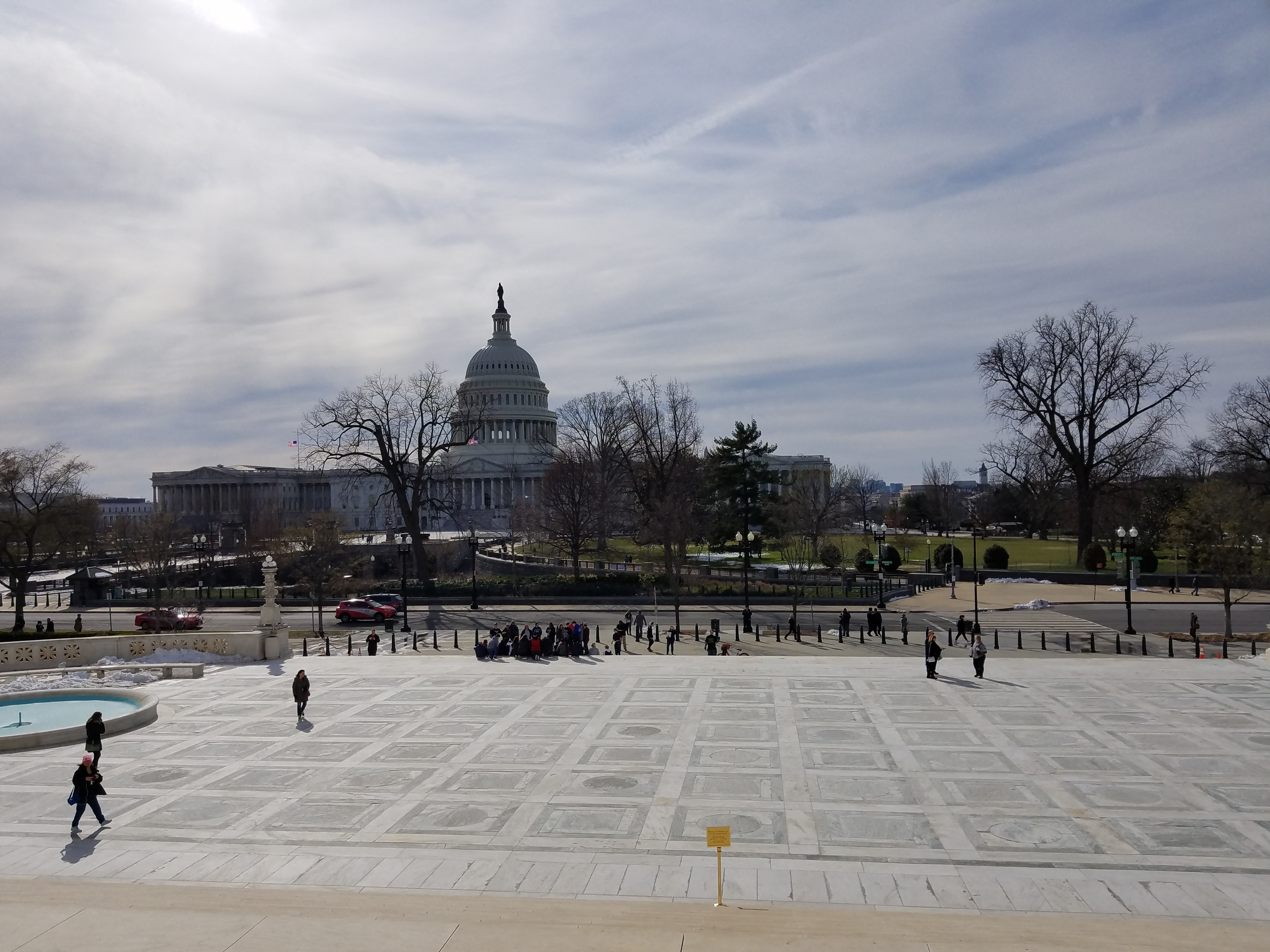
20180322_162359

*Our friend Vicki Sumner, who inspired us all last month in D.C. with her metastatic breast cancer journey and urgent call for more research funding, passed away this week. She was a devoted wife and mother, and a passionate advocate. Her passing is a tragic reminder of the importance of our work together.

Our thoughts and prayers are with her family. Vicki, along with all those we have lost to this terrible disease, remain the inspiration for our work.