Walk with Pride at the Susan G. Komen 3-Day® 

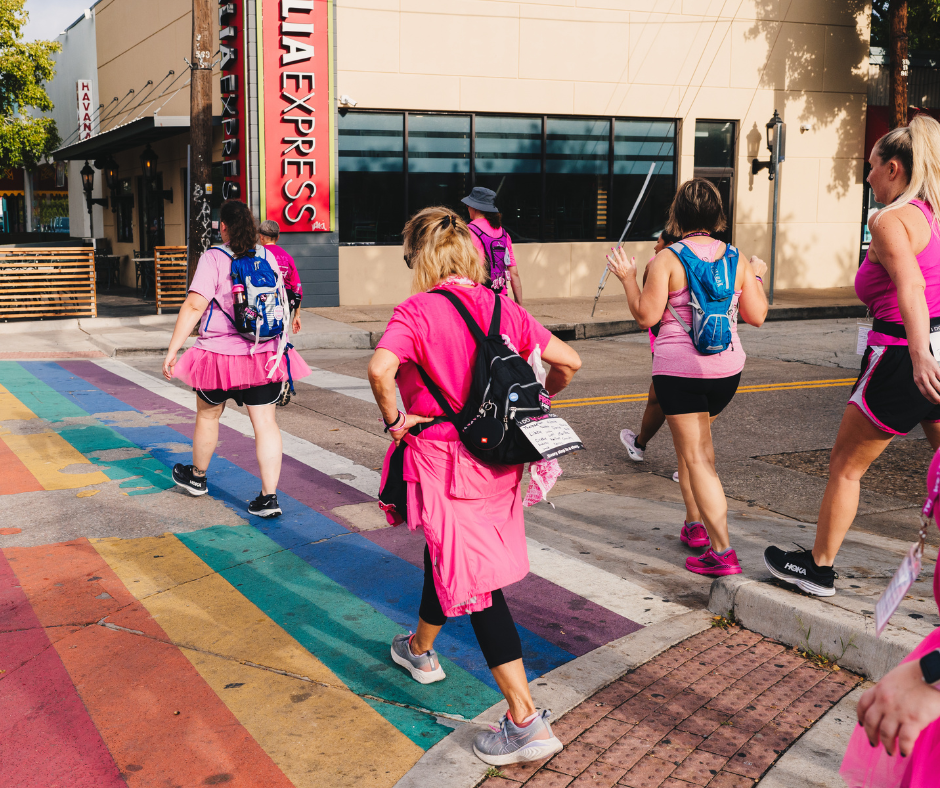
Though the Susan G. Komen 3-Day® bleeds pink, we celebrate all colors of the rainbow! Inclusivity is at the core of the Pink Bubble because breast cancer doesn’t discriminate against race, ethnicity, sexuality, or status. This Pride Month, we strive to celebrate the LGBTQIA+ community as well as highlight the discrepancies in health outcomes that individuals may face regarding breast cancer. 
While breast cancer isn’t a female-only disease, cisgendered lesbians and bisexual women tend to have an increased risk of breast cancer compared to cisgendered heterosexual women. This is not due to their sexual orientation, rather, studies show the increased risk of breast cancer is linked to risk factors that tend to be more common in lesbians such as never having children or having them later in life, obesity and alcohol use. Additionally, some lesbian and bisexual women may not get regular mammograms due to lack of health insurance, perceived low risk of breast cancer, past discrimination or insensitivity from health care providers, and having trouble finding a health care provider. If you are part of the LGBTQIA+ community, one step you can take is to find a health care provider who is sensitive to your needs. You can get a referral from a trusted friend or turn to the National LGBT Cancer Network, which has a directory of LGBT-welcoming cancer screening centers that may be helpful. 

Unfortunately, data on screening mammography in transgender people and nonbinary people is limited. One small study compared breast cancer rates among transgender people who had hormone treatments, with or without surgery as part of their transition, to breast cancer rates in the general population. These early findings suggested that transmasculine people (female to male) had a much lower risk of breast cancer than cis-gendered women, but a higher risk than cis-gendered men. On the other hand, transfeminine people (male to female) had a much lower risk of breast cancer than cis-gendered women, but a higher risk than cis-gendered men. With little research having been conducted, there’s still much to learn about the risk of breast cancer in transgender people and we’re eager to discover more data. If you’re transgender, please talk with your health care provider about your risk of breast cancer.  
Celebrating AAPI Heritage Month at the Susan G. Komen 3-Day® 

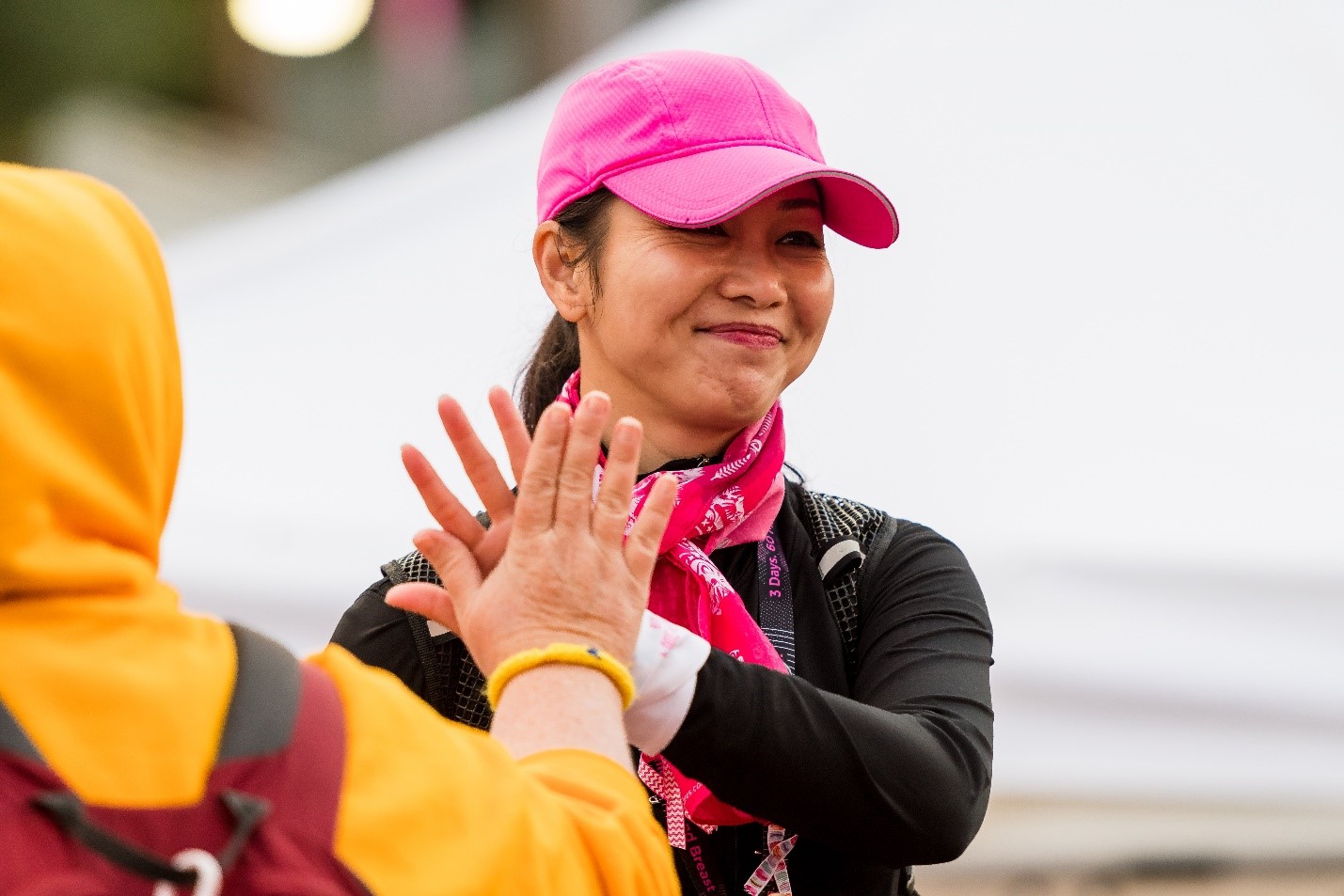
May is Asian American and Pacific Islander (AAPI) Heritage Month, an opportunity to commemorate the history and achievements of Asian Americans, Native Hawaiians, and Pacific Islanders. AAPI month is a time to speak out against hate, share stories of achievement and hardship, and debunk myths about Asian communities, including breast cancer discrepancies. Breast cancer doesn’t discriminate, and it touches the lives of people from all walks of life, including Asian American and Pacific Islanders. 

However, the experiences and challenges faced by AAPI women in dealing with breast cancer can be unique, influenced by cultural factors, access to healthcare, and societal expectations. Generally, Asian American and Pacific Islander women are less likely than non-Hispanic white women to be diagnosed with early-stage breast cancer that hasn’t spread to the lymph nodes. This is likely because Asian American women have lower rates of screening mammography compared to Black women, white women and Hispanic women, likely due to cultural barriers. These include cultural beliefs and language barriers which can impact understanding and access to healthcare services, further complicating the journey for AAPI women facing breast cancer. 

Though rates of breast cancer incidence and mortality are generally lower for AAPI women than for non-Hispanic white women and non-Hispanic Black women, breast cancer is the second leading cause of cancer death in Asian American women following lung cancer. As of January 2020 (most recent data available), there were about 160,000 non-Hispanic Asian and Pacific Islander women in the U.S. who were breast cancer survivors or were living with breast cancer. Incidence has increased slightly from 2015 to 2019 by about 1.5% each year, likely because the daughters and granddaughters of immigrants adopt American lifestyle behaviors which may include behaviors that increase breast cancer risk, such as alcohol use, being overweight, or having children later in life. For that reason, over time, breast cancer incidence rates for the daughters and granddaughters of immigrants may become closer to incidence rates in the U.S.   

For immigrants, navigating the complex healthcare system in a new country can be daunting, leading to even more delay to prescreening. Moreover, factors such as socioeconomic status, immigration status, and geographic location can influence access to screening, diagnosis, and treatment. Despite these challenges, AAPI women are breaking barriers and advocating for themselves and others facing breast cancer. Community organizations and support groups are emerging to provide culturally sensitive resources and support which play a crucial role in raising awareness, providing education about breast health, and advocating for better access to healthcare services throughout their community. At the Susan G. Komen 3-Day®, we continue to fight for equity amongst all cultural groups and encourage an open dialogue to destigmatize conversations about breast cancer. Through these efforts, we can empower AAPI women to seek timely medical care and support and get closer to ending breast cancer at every step.  

Discover more at Breast Cancer Statistics | Susan G. Komen® 

How the 3-Day® Inspires this San Diego Police Officer

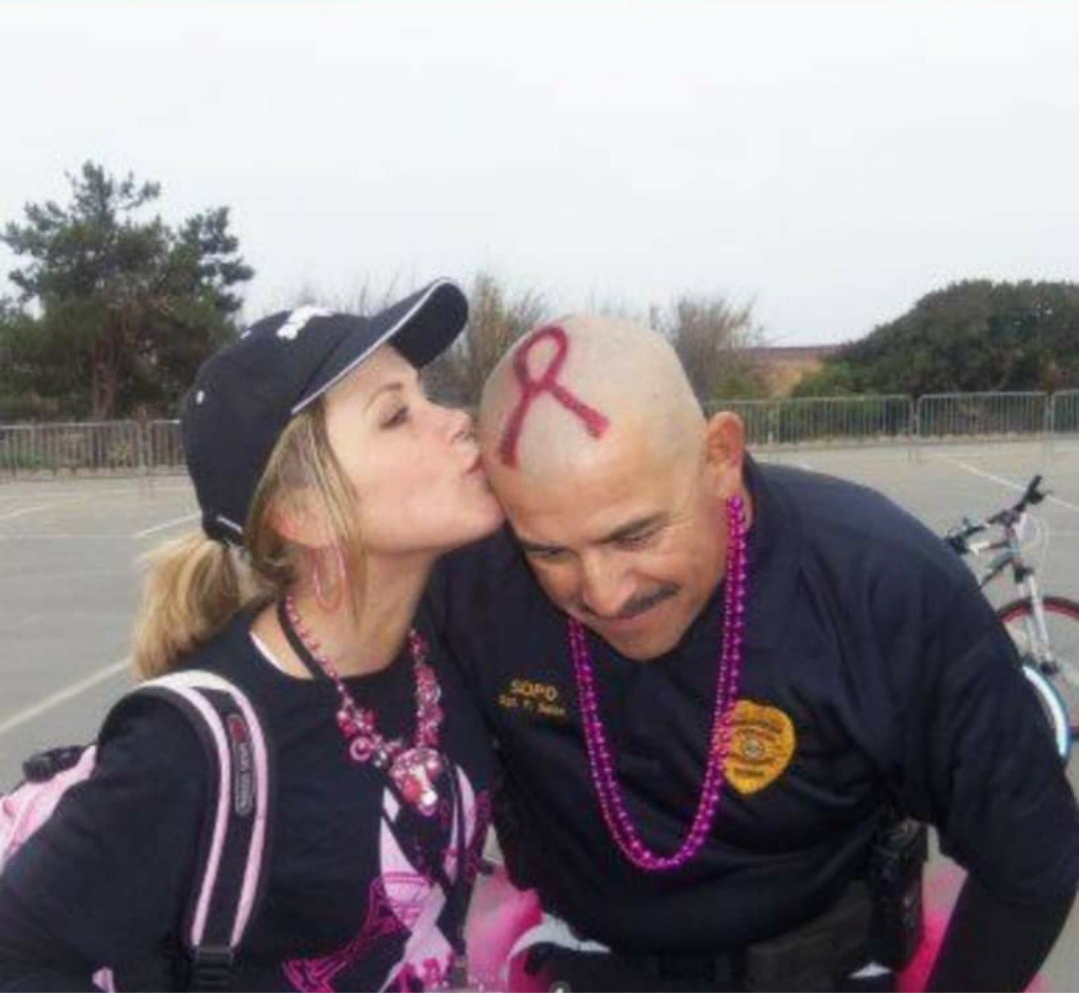
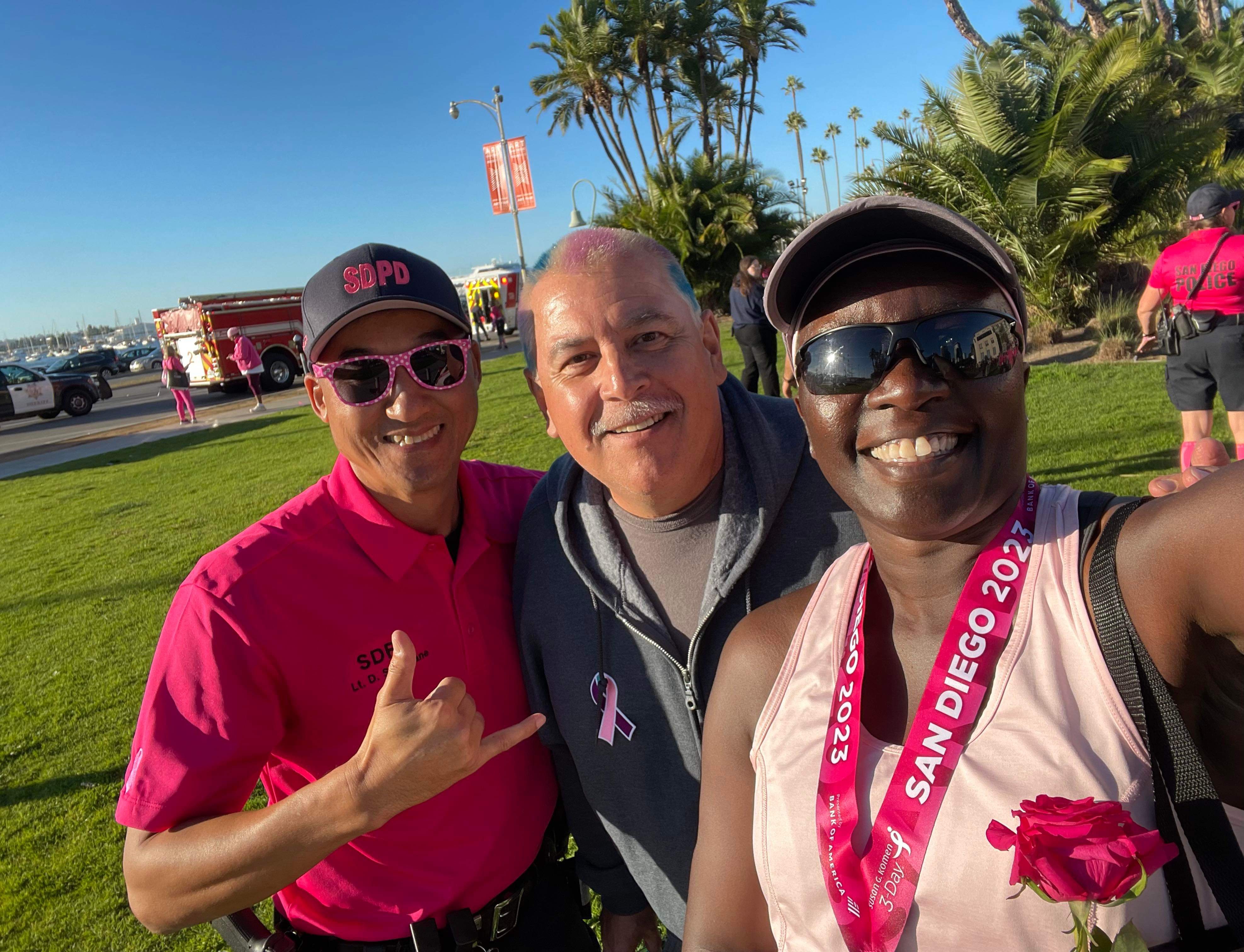
Each year, the San Diego Police Department attends the Susan G. Komen 3-Day® to provide support and safety along the costal route. Many officers cherish volunteering at this event where they get to join the Pink Bubble and sport their favorite pink accessories, including Paul S. who served 30 years on the force. Best known at the event for his elaborate hair styles, 2023 marked Paul’s 12th year as a volunteer at the Komen San Diego 3-Day. His iconic look began when he decided to dye his hair pink and shave in the breast cancer ribbon to add a bit of joy for those taking on the tremendous feat of walking 60 miles in just three days. As time progressed, walkers began seeking out Paul along the route to see which unique design he etched into the side of his head that year.  

He first discovered the 3-Day® through a police department announcement and knew that he wanted to participate after learning how inspiring the event was. As the years of volunteering have grown, his desire to participate only increases with the tremendous relationships he builds, the support he receives, and the safety he’s able to provide. “[Everyone] treats us police officers as rock stars… It is great to have so many people love you for what you do day in and day out, but most of all I am there for [the walkers],” he shares. “I lift their spirits and they lift mine. Those years when I was a full-time police officer, it was what recharged my batteries so that when I went back to work, I knew that I was loved for who I am and what I do. There is no feeling like being there in uniform, seeing the look in the walkers’ eyes, and feeling the love they have for us… They treat us like we walk on water, but honestly, we officers do not come close to how special the walkers are.”    

Paul has always had a tremendous appreciation for the survivors and thrivers. The first year that he volunteered he was blown away by how inspiring the participants are. However, this year, he felt an even closer connection to the walkers as he was diagnosed with thyroid cancer on June 10th, 2023, which had metastasized to his lungs, liver and spine. Just a few months before the 2023 San Diego 3-Day, Paul underwent six and a half hours of surgery and began treatment, including medication and radiation. In October of 2023, he had a CT scan when the doctors discovered a saddle pulmonary embolism in his lungs for which he was immediately admitted into the emergency room. After his release from the hospital, Paul decided that the best way through this was to remain positive and keep busy with his volunteer work, including coaching high school football, working at a PGA golf tournament, and, of course, the 3-Day.  

The following month, Paul was back in his favorite place: the Pink Bubble. “I was so happy to be alive every day and had a positive attitude about my journey. I wanted to help others keep their positive attitude… more than ever, and I wanted them to help me continue my positive attitude,” he beamed. “I wanted to let them all know that anything is possible if you just stay positive.” After the 2023 3-Day, Paul’s spirits have never been higher, and he shares that he walked away a better person for being there and for participating in the incredible event. He finds solace in his family and friends, through volunteering at events like the 3-Day, and by reminding himself of how much good he’s been able to do throughout his career. Since beginning his service in 1988, Paul was able to lead, mentor, and give advice to countless officers and detectives, and takes tremendous pride in helping them achieve their goals.  

He expresses a tremendous amount of gratitude to the San Diego Police Department for allowing him to participate in the 3-Day all these years. “But most of all I want to thank all the walkers I have known over these years for being there and for allowing them to touch my life and make it have more meaning.” 

The 3-Day community is endlessly grateful for all that the San Diego Police Department has done for us throughout the years. Their support and service are integral to what makes the San Diego 3-Day such a momentous event each and every year. We extend our positivity to Paul as he continues to battle this journey and hope to see him again in 2024.