We Crew for MaMa Tutu: Meet Ken and Kris Kauker

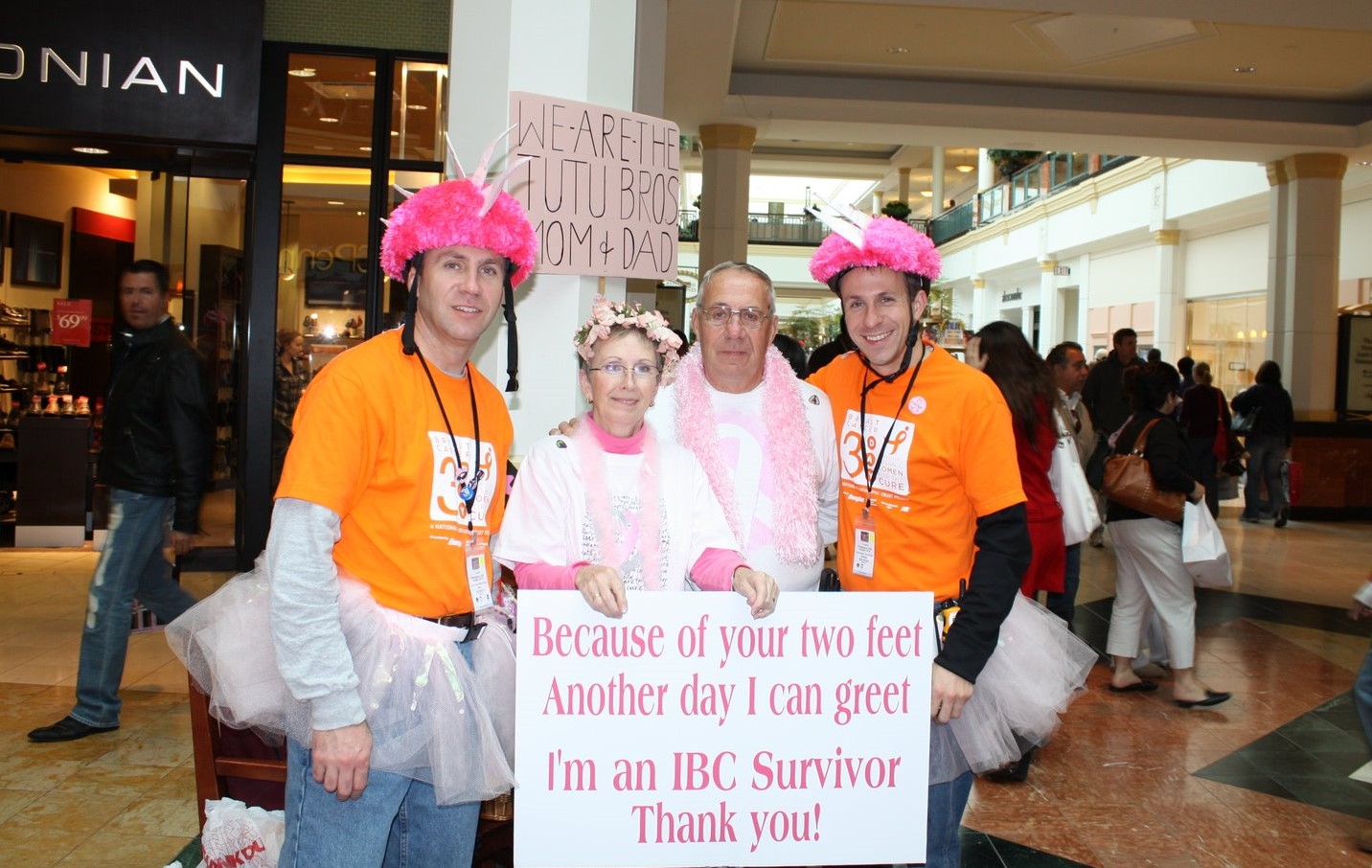
The sign says it all!

Eight family members. More than 30 events. Walkers, crew, youth corps, walker stalkers. The Kauker and Lawrie families have the 3-Day running through their veins. And that includes Ken and Kris Kauker. Most Philadelphia 3-Dayers know them as the TuTu Brothers and remember their fun outfits and wide smiles as they ride by while on the Safety Crew.

They are just a small part of a true family movement to support the 3-Day’s mission, in memory of their mother, Julie Kauker (MaMa TuTu), who passed away from inflammatory breast cancer in 2011. With Mother’s Day this Sunday, Ken and Kris are giving us a deeper look at their family’s dedication to the 3-Day, and the love for their parents that started it all.
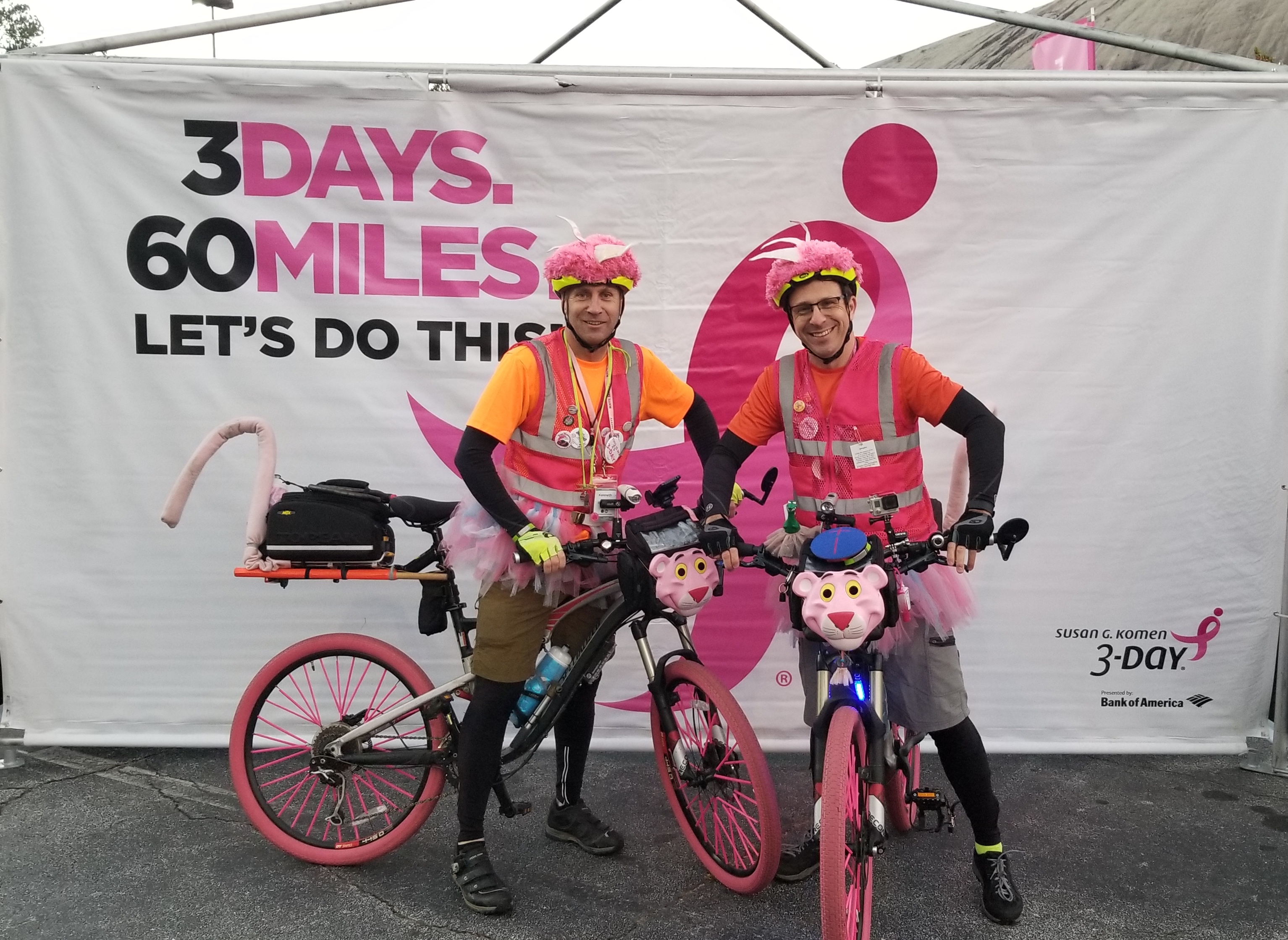
2018 Atlanta 3-Day TuTuBros.jpg

Meet the Kauker/Lawrie family (TuTu family) members…

Our family of five was always a close family. We did everything together: family camping on the weekends, participating and watching sporting events, vacations to local destinations, working behind-the-scene at our local community theatre and even performing as a colonial family at local historic sites.

Thankfully, many of those things we still do. And yes, still as a family. At the head of the family were our parents. Mom and Dad (MaMa and PaPa TuTu) were involved with everything the family did. No one family member would ever end up being the only one. This goes for everything we do. If one of us is involved, we are all involved.
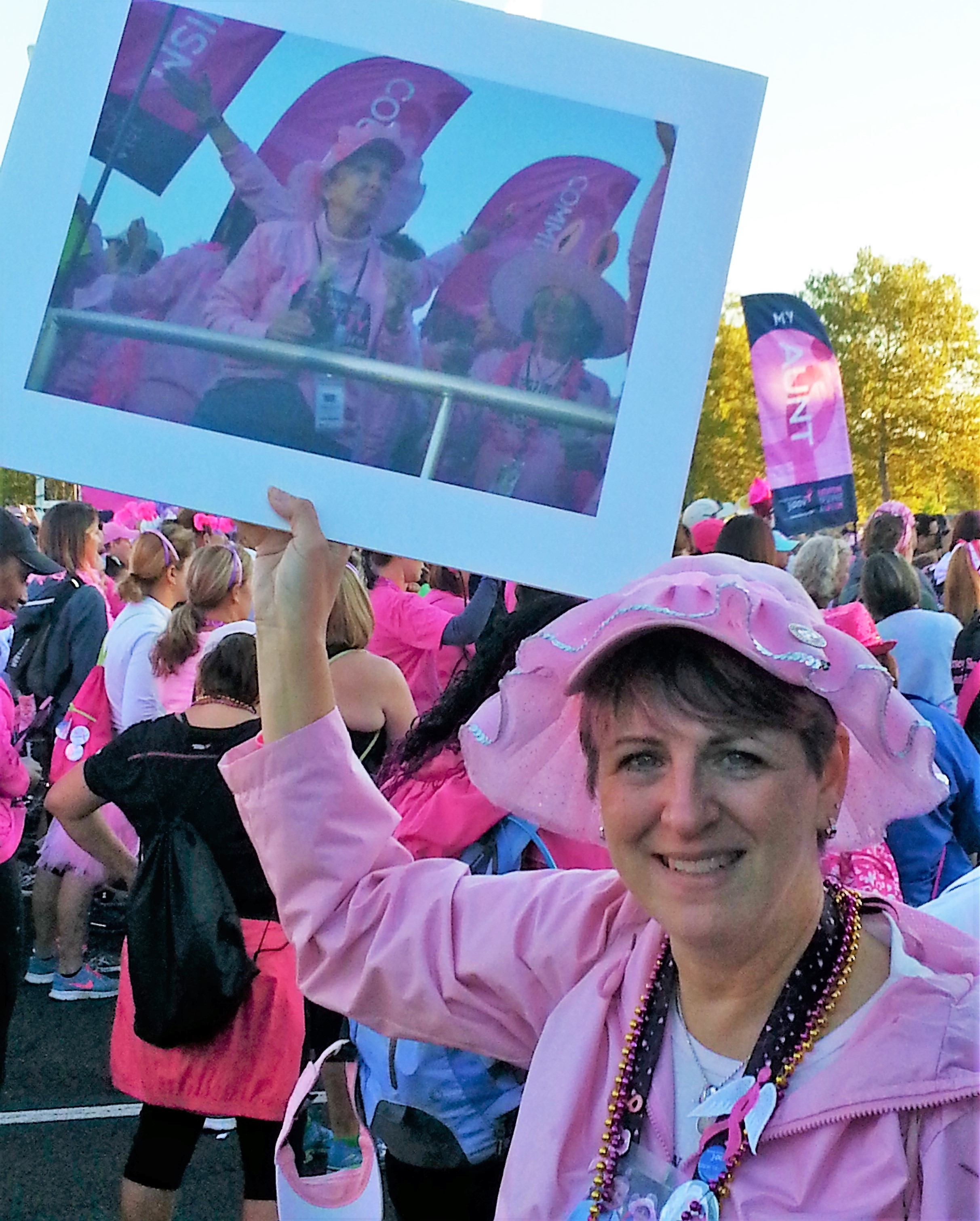
2014 Philadelphi 3Day Kathleen holding moms photo.jpg

And then in 2006, everything changed…

When our Mom was diagnosed with inflammatory breast cancer, she wasn’t the only one getting ready for the battle. We were all involved with every aspect of the treatments, doctor’s visits, hospital stays and everything else that goes along with it. She didn’t go anywhere alone. Someone was always there taking notes, holding all the paperwork, asking all the questions and anything else we could do to make things a little easier.

Things moved quickly through chemo treatments, surgeries, and radiation treatments. We describe the days after a diagnosis like riding a roller coaster. There were the days of climbing the hills. There were the days of flying down the hill. There were the days of screaming around curves. There were days of being turned upside down. There were days when all we could do is hold on and scream in fear. But, like with all rollercoasters, the ride came to an end.

With the help of countless doctors and countless nurses, Mom was given a clean bill of health and the road to recovery was complete. And just like riding a rollercoaster, we laughed and were joyous that the ride was over.
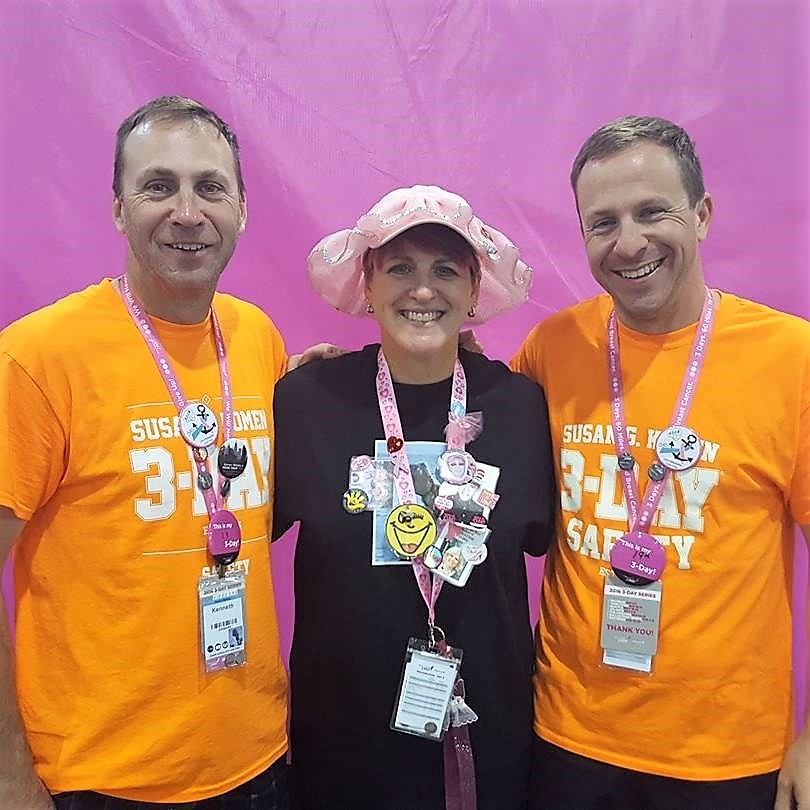
2016 Philadelphia 3Day

From there, the family began to move forward…

With everything behind us, it was a radio commercial that sparked the realization to pay it forward and the medium in which to do it. The commercial was for the Philadelphia 3-Day that would be taking place in October. It was this commercial that pushed our family into the realm of the 3-Day family.

And they never looked back…

Our 3-Day family has been with us since 2008. They’ve been there when we needed them and when we didn’t know we needed them. They were there when our Mom passed away and again 10 months later when our Dad passed away. They provided the light down the dark passages that cancer and losing someone forces you to go down. Every city that we’ve crewed has welcomed all of us with loving, open arms and made us a part of their family.

The Philadelphia 3-Day may be our home event, but when it comes down to it, the Crew is a part of every walk, no matter what city it takes place in.

That means our family is always part of the 3-Day, no matter where we are.
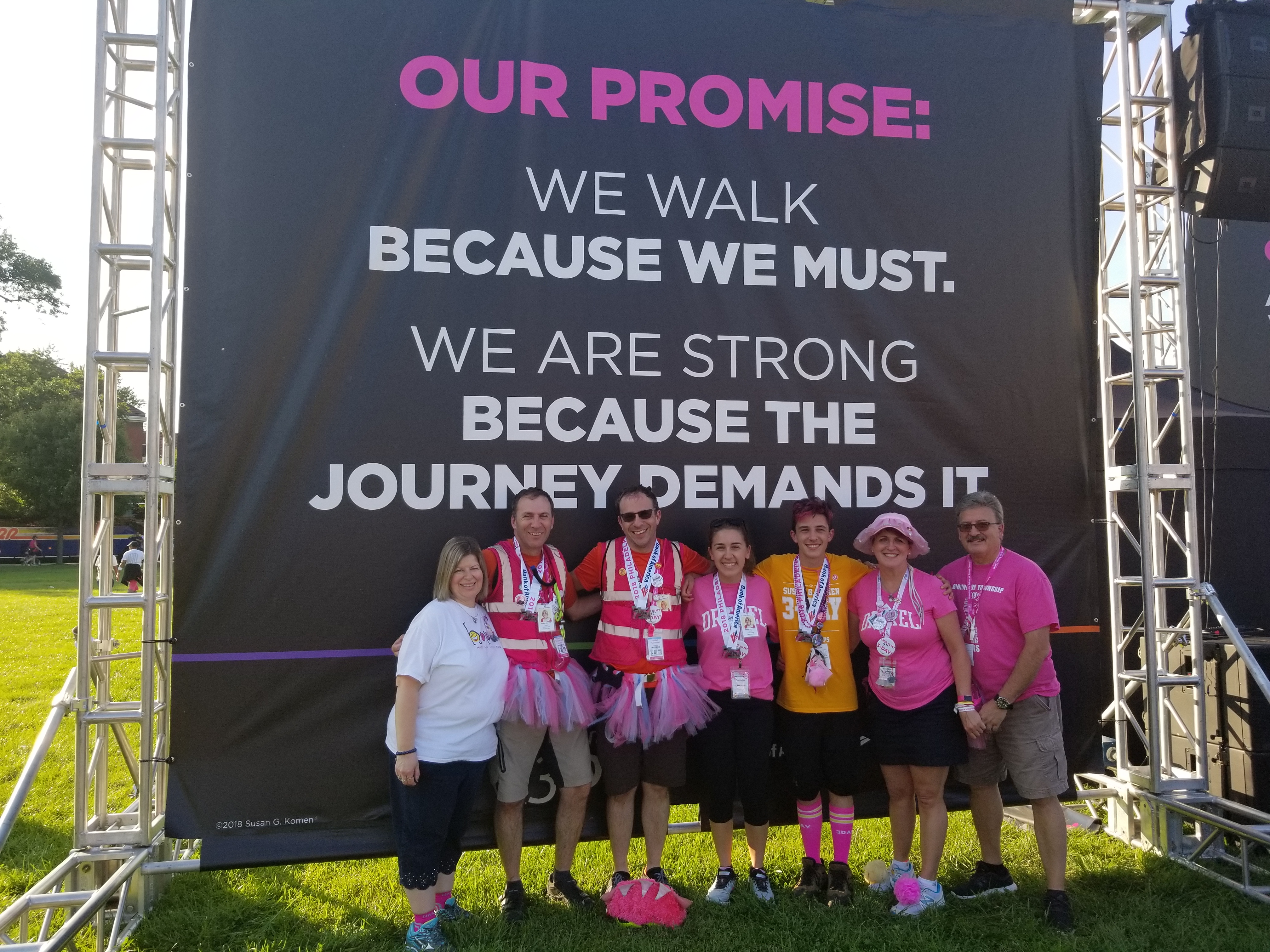
2018 Philadelphia 3-Day Family.jpg

Spread the love this Mother’s Day to the special women in your own life! You can share a personalized love note with your mom this Mother’s Day and Susan G. Komen will then share one with a mother facing breast cancer. komen.org/withlovexoxo
Coach Heather’s Mom is One in a Million. She’s Also One in Eight.

18341774_10211397027432652_288704117220380159_n

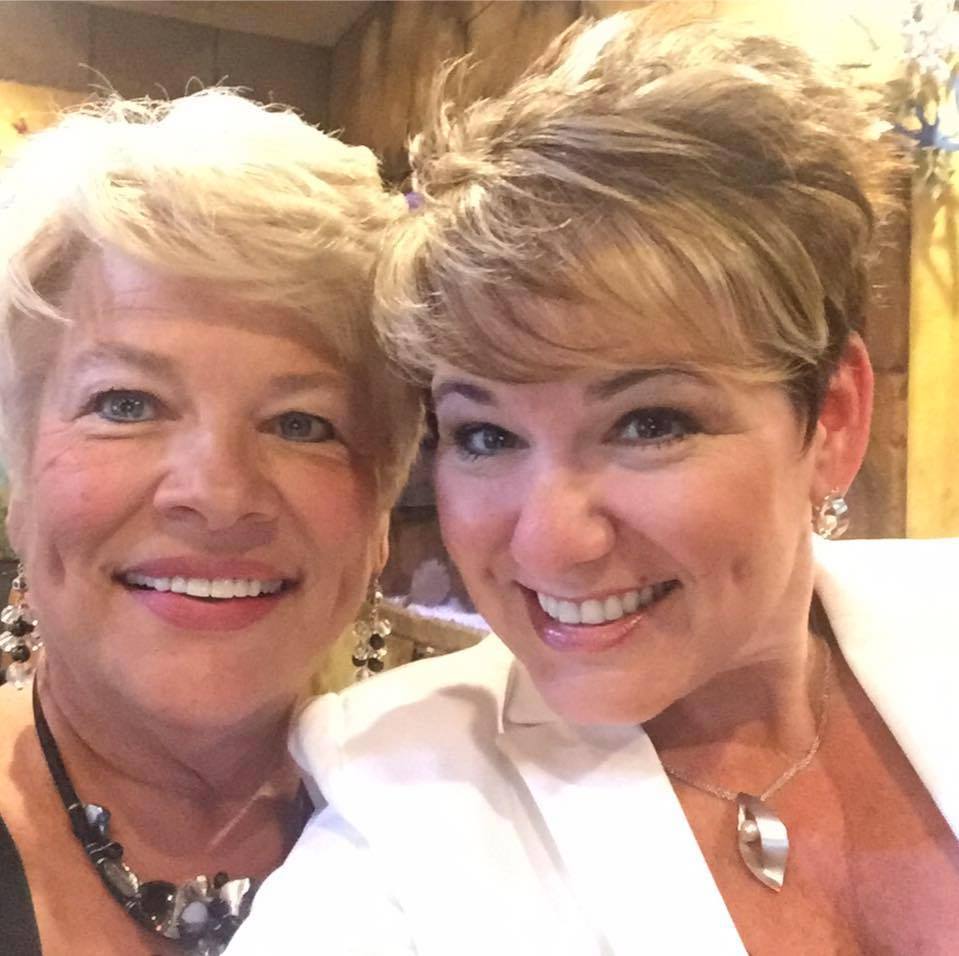
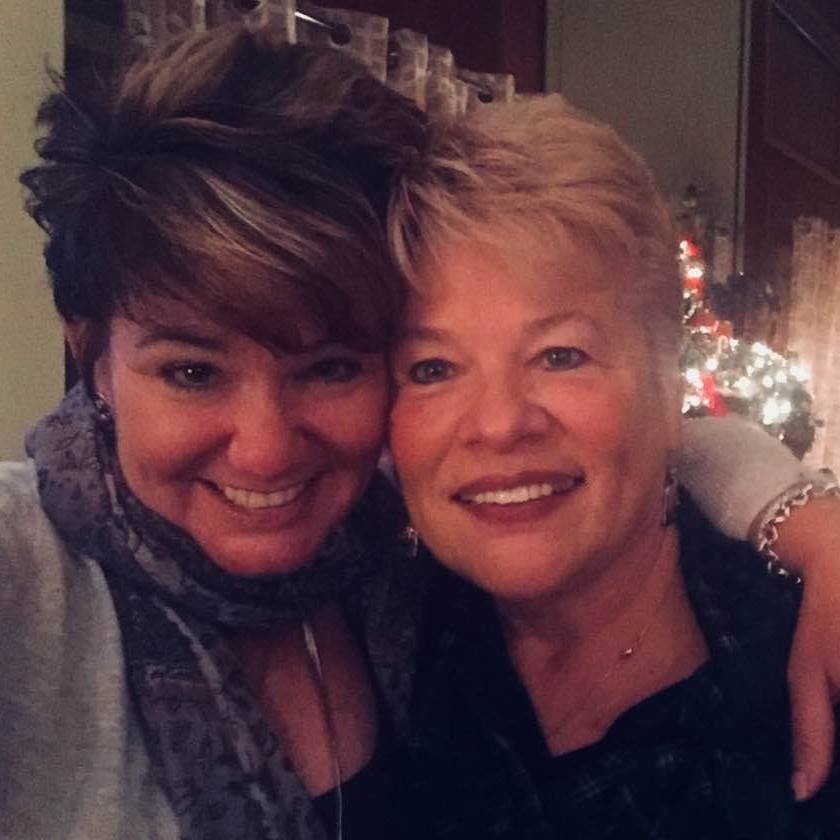
As we approach Mother’s Day, we have a special guest post from Coach Heather, sharing her own family’s breast cancer story. This year, her mom will be celebrating Mother’s Day for the first time as a breast cancer survivor, and Coach Heather is sharing their journey together to remind us all the ways breast cancer can affect any one of us. We all think our moms are one in a million, but when they also become 1 in 8, everything changes.


Truly, never did I think that the 1 in 8 would be my mom. There has been zero history of breast cancer in our family. But sure enough, on the afternoon of February 18, 2019, she received the call with me by her side. I didn’t even have to ask…because I already knew. I could tell by the expression on her face. She had breast cancer.

The call came five days after her annual mammogram. In those five days she had two mammograms, an ultrasound, and a biopsy. They weren’t messing around…bam, bam, bam. This was all taking place in the hospital where she spent 37 years of her career and she had her “people” all around her.

Even after the call, we were in shock. Wait, what? Breast cancer? She had had no symptoms, no lumps, nothing that would ever concern her or lead her to believe she was at risk. She immediately started looking to blame this on something that she had done. Maybe she drank too much wine, maybe she consumed too much caffeine. She needed an explanation.

25550325_10213299846321935_5726556089702006051_n

Now, after some of the dust has settled, she is far more educated and realized that regardless of whether there were symptoms or not, she WAS at risk merely because she was aging, and because she was a woman. Sometimes, there is no explanation or logic.

The day after she heard her diagnosis, she left for a scheduled vacation. While I had the opportunity for the news to sink in and the chance to be angry, sad, and feel the roller coaster of emotions, she had to remain calm and cool because she didn’t want to put a damper on the vacation for those she was with. At least until she came home.

One week later we had a 3-hour appointment at the Cancer Center at Henry Ford Hospital in Macomb. We were so nervous, knowing that once this train left the station, it was rolling and there was no going back to life “before cancer.”

So, like we do in most situations, we walked through those doors optimistic, joking, and ready to tackle whatever came next. We met a wonderful surgeon who really laid it all out there. My mom had invasive ductile carcinoma, Stage 1, with a tumor smaller than a pea. A lumpectomy was discussed and the treatment plan that the surgeon, oncologist, and radiation oncologist laid out was far better than we originally thought.  The surgeon said “We caught this early. You are not going to die from breast cancer!”

Cue the BIG sigh of relief! But Mom still had so much ahead of her.

17992336_10211163014942486_8491549199954252411_n

The next week we walked back into Henry Ford for what Mom kept calling “three procedures.” We arrived at 8:30am for her 12:30pm lumpectomy. Prior to the actual lumpectomy, she had wires inserted to act as a roadmap for the surgeon, took a quick trip to nuclear medicine where she had dye injected into her nipple to further direct the surgeon to the location of the tumor, and then finally went into surgery. It went as well as it could go, and we were on our way back home by 3pm.  Mom felt great by 5:00pm, ready to eat Chinese food, and only needed two Aleve per day for the next few days. She was very lucky, and we knew that.

Outside of the breast cancer diagnosis, things have gone as well as they can for someone dealing with this life changing news and journey. About a week after the lumpectomy, Mom’s biopsy results came back with clean margins and no trace in the lymph nodes. Great news! Oncology testing results showed that chemo would not be necessary. So, a month of radiation and then five years of medication would be coming next.

heather

My mom is all about positivity but still knows that her life will never be the same. The days of reading breast cancer books, really “hearing” commercials related to breast cancer, checking labels for soy, and frowning on the red wine she used to love, are the new normal now. She doesn’t want to do anything to contribute to the development of another estrogen-induced tumor.

To say she is and was scared is an understatement. But much good has come of this as well. She is far more concerned about taking care of herself in regards what she consumes, her exercise regimen, and health in general from this point forward. She is also determined to share her story in hopes that her friends will understand the risks, re-evaluate their daily behavior, and (most importantly!) get their annual mammogram. As we always hear, and as Mom has learned, early detection is key.

I am part of a group of 9 women who have been friends since high school and in recent years, as we rapidly approach 50, I often wondered who would be the 1 in 8 to get breast cancer. Knowing the statistic that 1 in 8 women will be diagnosed with breast cancer, I was prepared that surely it would be at least 1 of us. I just never thought it would be my mom. But breast cancer can affect any and all of us. Now she’s not just one in a million. She’s also 1 in 8, and she is never going to quit.

Healthy Living: Preparing you Mind, Body and Bones for the 3-Day

Thanks to the support of Amgen and working in partnership with American Bone Health, we are excited to provide you with a special series of emails, blogs and additional resources that will help prepare you for this life-changing event, as well as year-round health.

It Takes More Than a Number to Prevent Bone Loss and Fractures

Special Guest Contributor: Risa Kagan, MD, FACOG, CCD, NCMP

I have been working in the bone world for many years. I know it’s challenging for people to keep up with the emerging science and research, so here is a look at where we came from and where we are now.

Advances in medicine over the past several decades have helped us live longer, and because many women previously didn’t live long past menopause, we didn’t know the impact of the loss of estrogen on bone mass.

In the 1980s, bone density testing machines gave us the ability to identify the quantity of bone mass and monitor changes in the trabecular structure of bone. This is when we started using the terms “osteoporosis” and “osteopenia.” In 1994, the World Health Organization (WHO) established a definition of osteoporosis based on the statistical concept of a normal distribution. A consensus of scientists determined that a T-score — which is a standard deviation from the average 30-year-old — of more than 2.5 standard deviations below the mean should be defined as “osteoporosis.” “Osteopenia” became the standard term for a T-score between -1.0 and -2.5. Osteopenia is not a disease, but a term created by the WHO to describe low bone mass. Anyone with a T-score greater than -1.0 was consider “normal.”

It’s not perfect, but it’s a start.

One of the main reasons this isn’t perfect is because scientists didn’t do a bone density test on a person when they reached peak bone mass at age 30. So, it’s not clear whether a T-score at age 50 was the result of bone loss. It could have been the peak bone mass/density they ever achieved.

As the science has improved, we have learned to focus on bone quality as well as density. The quality of the bone is important in understanding fracture risk. Just like high cholesterol is a risk factor for heart attacks and high blood pressure is a risk factor for stroke, osteoporosis on a bone density test is a risk factor for fracture. We think of fractures as “bone attacks” and are now developing treatment that focus on fracture prevention, rather than just bone density. As a result, we realized not all people were candidates for osteoporosis medicines, especially women and men who are relatively young, without any risk factors for breaking a bone.

Having a better understanding of bone quality is encouraging us to engage in more conversations with patients about fracture risk. We use calculators to understand individual’s risk and their chances of breaking a bone. This helps us focus on a bone health plan that is appropriate for an individual.

You have an important role to play in this discussion. Knowing your risks and taking action by talking with your doctor to prevent bone loss can help you avoid a “bone attack.”

Not all people will have the luxury of prevention strategies alone. Whether it’s a medical condition, a medicine you take, or a family history of bone loss and fractures, you could be someone who benefits from a medication to reduce the risk of a “bone attack.” 

All the medications used for the prevention and treatment of osteoporosis have good safety data, and they reduce the risk of fractures – especially spine and hip fractures. We know that up to 25 percent of people with hip fracture die within a year and most others are not able to have mobility without assistance. We know now how to determine who is a good candidate for treatment based on fracture risk and what medicine would be best.

In December 2017, a study using the Medicare data found the decline in hip fractures had leveled off. The researchers estimated 11,464 additional hip fractures (costing $459 million) occurred from 2013-2015 due in part to a decline in screening and treatment and an increase in other chronic conditions, like diabetes. We are now facing a public health crisis in our older population.

Let’s remember that knowing our risk factors and our bone density scores is just the start. Doctors and patients need to work together to take action and prevent bone loss and fractures. 

About Dr. Kagan

Dr. Kagan is a board-certified obstetrician-gynecologist and Clinical Professor in the Department of Obstetrics, Gynecology, and Reproductive Sciences at the University of California, San Francisco. She serves on the Medical and Scientific Advisory Board of American Bone Health (FORE) and is the principal investigator on numerous women’s health clinical research studies. Dr. Kagan is well known as a communicator and teacher and is often approached by media and public forums for her expertise and frequently an invited speaker at national and international scientific meetings.