I walk because I can.
I walk 60 miles because I am #WalkingInBlessings.
I walk for 3 days because I am #TriplePositive.
I walk because I am inspired by the amazing 3-Day community walking with me.
I walk because raising awareness of triple negative breast cancer is my purpose and raising money for research is my mission.
I walk because it is my Faith walk.
I walk because I can’t imagine not walking.
In October of this year I will celebrate five years of survivorship/thrivership.
My cancer diagnosis story is not unlike the stories of many other women. I was a typical, multi-tasking miracle-working, taking-care-of-everyone superhero Black woman who went to the doctor for my annual check-up. It was there, in the most unexpected of surprises, that I was diagnosed with stage III-A triple negative breast cancer, the most aggressive molecular breast cancer sub-type. It represents about 15 percent of breast cancers and currently, there are no targeted therapies, which makes recurrence more prevalent and the mortality rate significantly higher. Also, it affects Black women at twice the rate as women of other races/ethnicities in the U.S.
The next steps were terrifying ones. I had a double mastectomy, chemotherapy and underwent radiation. In my first meeting with my oncologist, she said I would probably only live for 2 years. At the time, my youngest daughter was a sophomore at Dartmouth. I told my doctor that she, I and God would have to work something out because I not only wanted to see Hayley graduate college, but I also had to continue to work so I could pay for it. Somehow, I needed to make it through.
By the grace of God and my doctors, I watched my daughter graduate and her sister, Amanda, recently get married.
Courtesy of Ricki Fairley
My recovery wasn’t all in hospitals and healthcare facilities. My faith, the support of family and my sista friends carried me through.
I had to find peace in my life. I did that by getting rid of all the cancers in my life, not just the one in my breast. I quit my life and started a new one by divorcing my husband of 30 years, separating from my business partners of 10 years, selling my house in the suburbs and moving to the beach. Between my 3rd and 4th rounds of chemo, I started my own business so that I could have more control over my daily life. My “prayer closet,” where I find peace, is on my paddleboard on the Chesapeake Bay. My personal hashtags are #WalkingInBlessings and #TriplePositive.
Courtesy of Ricki Fairley
Though I am blessed and doing well, other Black women are not as fortunate, and it’s certainly not for lack of their own faith or will. The statistics are troubling. According to the CDC and ACS, breast cancer is the most commonly diagnosed cancer among African-American women. In 2016, about 30,700 new cases of breast cancer are expected to occur among African-American women.
According to the American Cancer Society, since 2003, breast cancer incidence has remained stable in white women and has increased slightly (less than 1 percent per year) in black women.
Overall, breast cancer incidence is lower for African-American than white women. However, for women younger than 45, incidence is higher among African-American women than white women. While the incidence rate for breast cancer is lower in African-American women, the mortality rate was 39 percent higher in African-American women than in white women in 2013 (most recent data available). African-American women are also diagnosed at later stages. And African-American women are twice as likely to have Triple Negative Breast Cancer, the more aggressive form that I had, than women of other races and ethnicities.
This new guidance from ACS of moving the age to get our first mammogram to age 45 (and repeating every year from ages 45-54) could cause the numbers above to increase. If we look at this latest set of guidelines in light of what we know about black women and breast cancer, we can only expect more deaths from breast cancer in our community.
I work diligently to make women know about this disease and raise funds for research efforts. Komen is spending $54 million on researching new treatment strategies for triple negative breast cancer. Also, I believe so strongly in the Triple Negative Breast Cancer Foundation (TNBCFoundation.org) that I now serve on their Board of Trustees. For our disease, they are the primary resource with up-to-date information on the latest research, the specialized doctors and they have a 24/7 discussion forum where women living with TNBC and their families can go for support. They also have toll-free telephone help line that is staffed by oncology social workers trained to handle our specific needs.
Komen’s Breast Care Helpline (1-877 GO KOMEN (1-877-465-6636) is also a great resource for any and all things related to breast health and breast cancer.
I tell everyone I know to check the breasts that you love; I know you have a pair. It is important for women to know how their breasts look and feel and report any changes to a doctor. Get a clinical breast exam by a trained medical professional at least every 3 years beginning at age 20 and annually after age 40. Talk with a doctor about which screening tests are right for you if you are at a higher risk. If you follow me on Twitter @RickiDove, I tweet a monthly reminder on the 20th of each month.
As Black women, we try to take care of everyone, and often at the expense of our own mental and physical health. We don’t always have to be super heroes. Listen to the direction of flight attendants; put the mask on yourself first. Take a pause for yourself every day, take care of yourself and find peace in your life. I find peace in making a difference in this fight against breast cancer.
Consider walking in the Komen 3-Day! It’s three days of friendship, inspiration and encouragement. After walking 60 miles, you will walk away with a memory that you will treasure for the rest of your life. Join my team and walk with us in San Diego in November: Triple Positive Faith Hope Cure, OR if you are a first-time walker Register to walk by May 9th with the code BYB16 and you’ll get a free plane ticket to and from the event, so you can experience the magic for yourself. Read all about it at The3Day.org/Bestie. Sign up today!
Photo Courtesy of Ricki Fairley
Category Archives: Inspiration


150 Words That Describe the 3-Day Community
The 3-Day is in its final days of an exciting registration offer where all walkers who register between April 5 and May 2 will receive $150 in their 3-Day fundraising account, courtesy of a new 3-Day sponsorship. To show just how much we love and appreciate ALL of our 3-Day walkers, crew members and supporters, we’ve come up with 150 words that describe the 3-Day and its community. Hope we didn’t miss anything!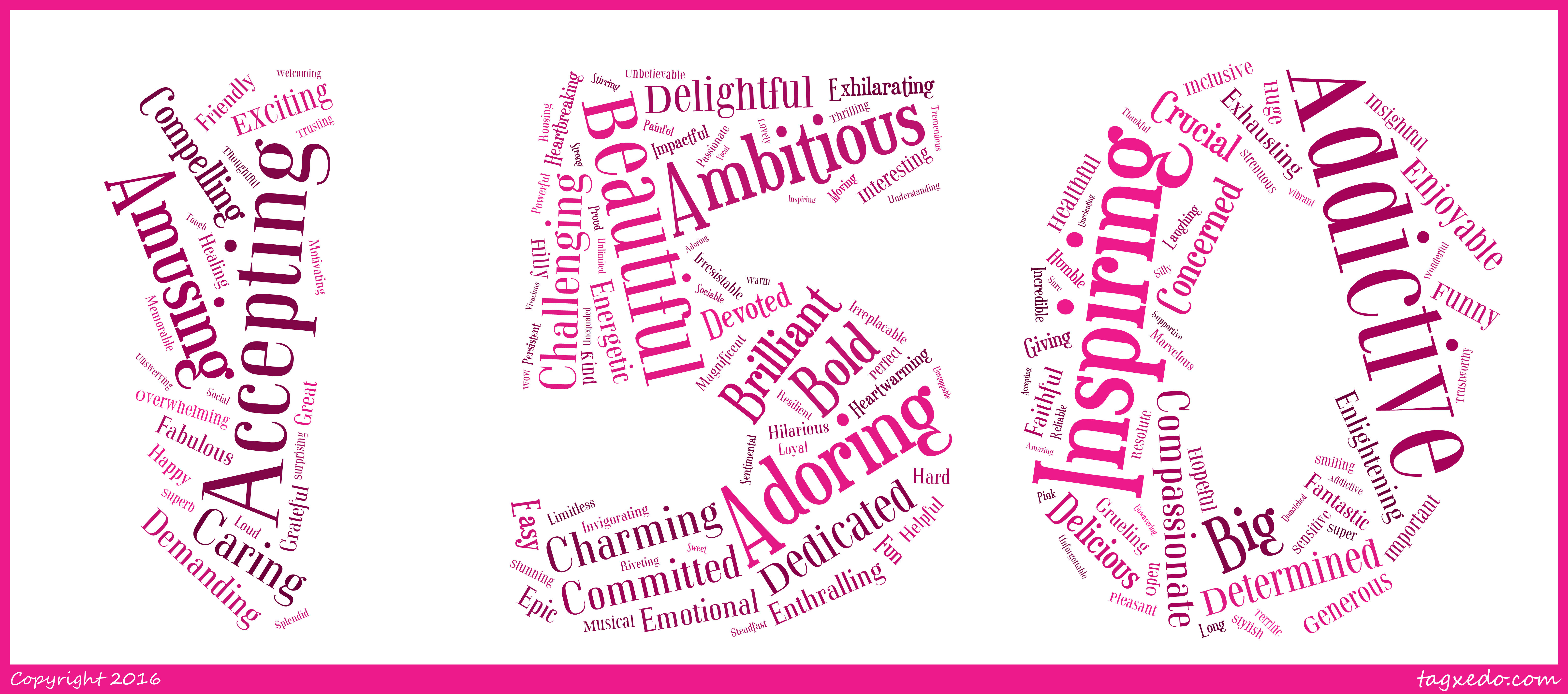
“There’s more goodness than you’d ever believe.” – Ang’s Story
At the Atlanta 3-Day last October, I ran into Susan, the Atlanta participant coach, at camp, and she said, “You have to meet Ang.” She led me to a grey-haired man who was sitting in the dining area. I shook his hand and he introduced himself to me with a warm smile and a deep southern drawl that was thick and sweet like molasses. All I knew about Ang was the little bit Susan had told me— he was from Alabama, he lost his wife to breast cancer, he was walking in the Atlanta 3-Day for the third time, and he had raised an impressive amount of money. That was the basic gist, but within moments of meeting Ang, I could tell his story went a deeper, and knew I wanted to talk to him more about it.
I arranged to meet Ang at the Day 2 lunch stop on Saturday. I thought we’d talk there, but he was already ready to leave as I got there, so I did what people do on the 3-Day: I walked and talked with him.
Hugging friends as we left the lunch stop, Ang said, “These guys adopted me. The last 7 or 8 miles of my first walk.” That was in 2013, and Ang was walking alone that year. “They were stopped and I was stopped, and we started chatting. They said, ‘Would you mind walking 5 miles or so with us?’ And I said ‘I think that’d be wonderful, I’d love to!’ And we did, and they were so easy to talk to. We just had so much camaraderie. I guess they had heard my story, I don’t know. But my story isn’t any more special than anybody’s, really.
“I had a wife that did not survive breast cancer. She was diagnosed on February the 18th of 2010. She died on Valentine’s Day, 2011.” Ang’s wife, Patsy, was 61 when she was diagnosed and 62 when she passed.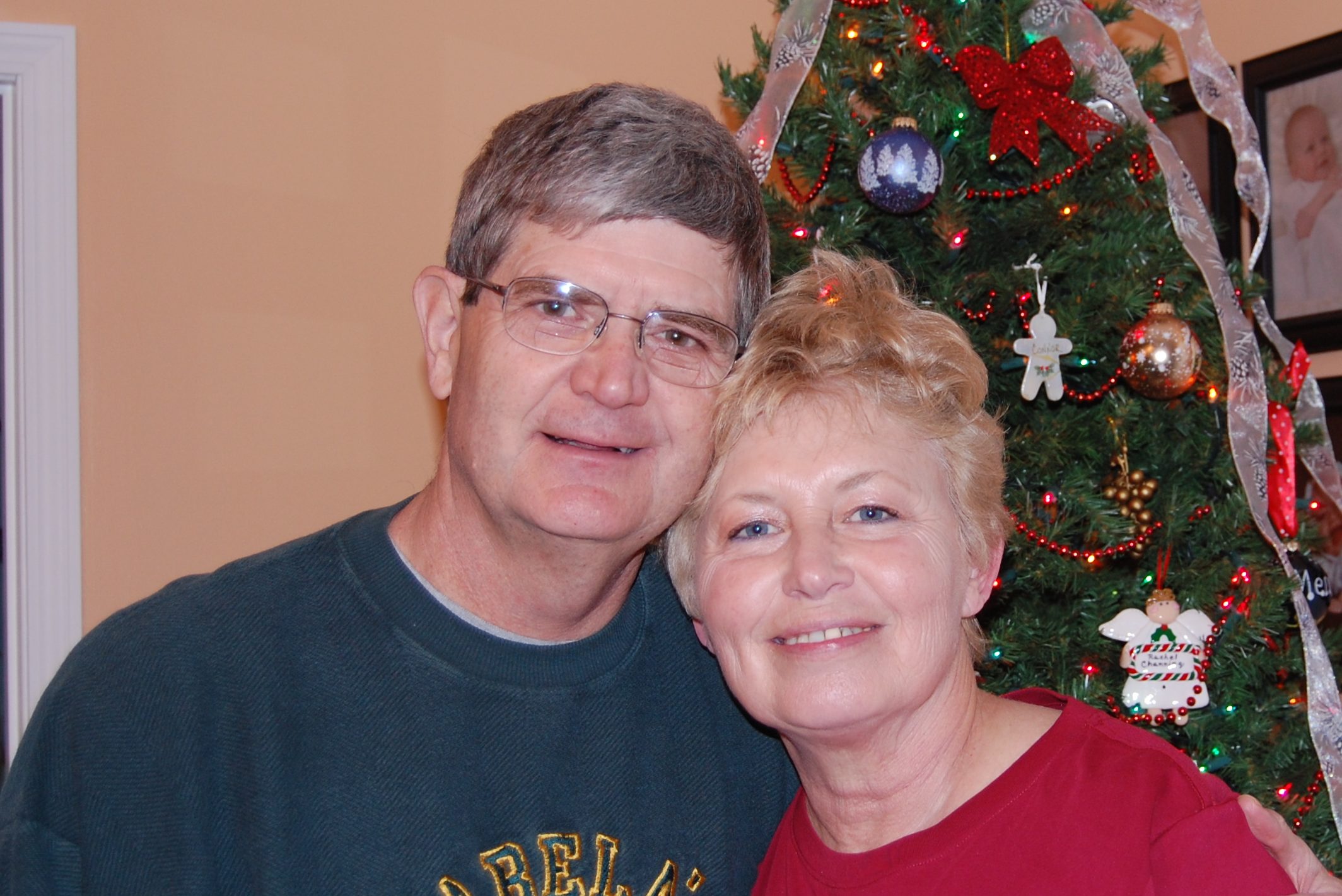
As we walked, Ang told me about Patsy’s diagnosis. She had gone in for a regular mammogram, and mentioned to her doctor that she’d had a new bit of pain under one of her arms. There were no lumps, and the mammogram only showed a small shadow, but it was enough that Patsy’s doctor ordered a biopsy. Ang told me, “They called her from the doctor’s office after hours and said ‘Since the biopsy showed metastatic disease, we scheduled you an appointment with a surgeon.’ That’s how she got the news that she had cancer.” When the nurse realized that Patsy hadn’t already been told her results, the nurse was upset. “She said, ‘Are you alone or is there someone with you.’ When I heard her say, ‘My husband’s with me’ in a very soft voice…I mean, I knew.
“We just cried and cried and cried that night, you know, and I just kept saying, ‘We’re gonna do it. We’re gonna beat this, we’re gonna get through it. Let’s don’t panic yet. You know, breast cancer’s not a death sentence. The stuff you hear everybody say all the time.
“We had to go and talk to her daughter and the grandkids. And of course, when she went outside to talk with her daughter, the grandkids by then had all been told what’s going on, and they came over by me…” Ang gets choked up remembering. “And they were looking to me for answers. I didn’t have the answers.”
And so Ang and Patsy’s journey through the emotional and complicated world of breast cancer began. One of their first visits was to the hospital at University of Alabama: Birmingham. “We got up there and there was somebody from Komen waiting. I didn’t know who Susan G. Komen was, didn’t know anything about the Komen organization. But that lady, I’ll never forget her, she sat down with us and said, ‘You are not fighting this alone.’ And there was not a lot she could do, but, you know, she was just so nice and so helpful, and I thought, that’s a good start.”
Patsy underwent numerous test and procedures, and each time, the doctors would talk to her and Ang about next steps and possible treatments. Each visit meant new information and Ang remembers feeling like they had to learn a whole new vocabulary: ductal carcinoma, triple negative, clear margins. Soon, Patsy started chemotherapy and eventually had surgery to remove the cancer.
“We went to a radiology oncologist who said, according to everything they were looking at, ‘You are now cancer free.’ That was in November. He said, ‘We still need to do about 45 radiation treatments, just to be sure.’ So for 45 days, she went through radiation. Within the last week or so of it, she started complaining about her back. The day after radiation ended, she was hurting so badly, I took her to the ER.”
They knew that something was wrong. For the next month, Patsy was moved between local and regional hospitals in southern Alabama, none of which could really identify what was happening. She eventually ended up at Emory University hospital in Atlanta, where their worst fears were confirmed: the cancer was back and had spread even more “When we got there, they saw her, and asked me to step out in the hall with them and said, ‘You can take her home.’ I said, ‘Well what did you do?’ ‘No, you don’t understand. You can take her home. To die.’”
At this point, Ang and I both tear up. “That was the first time that I knew… I mean, up until then, we were supposed to win. This is not a fight you lose.”
In any family’s experience with cancer, if the worst imaginable outcome becomes reality, it’s understandable that the people who are left behind feel emotions that can’t be described. Pain, grief, anger. Ang was no different. “When I lost her…I wanted to die too. It was the most miserable thing in the world. You start second-guessing yourself, you know, because why in the world are you hurting and she’s dead? What did I do wrong? I still struggle with that sometimes.
“For two years, I didn’t do anything. But I walked a lot on my own, and somebody said I should channel that energy. The support and encouragement that I was told was there, that’s what attracted me to the 3-Day.” So Ang registered to walk the 3-Day in 2013; he chose Atlanta not only because it was closest, but also because that year, the event started on October 18—Patsy’s birthday.
Like so many other first-time walkers, Ang wasn’t sure he could handle the fundraising. “My first thought was, I can’t raise $2300. But I sent out an email…” He stops, once again choking up at the memory of it. “And I got $2300 the first time I sent out an email.”
I asked him if that surprised him. “Yes! It still surprises me. I just…I did not expect that much goodness in people. And there’s more goodness than you’d ever believe. Some people are not gonna give, and that’s their choice, but people are generous beyond…sometimes beyond your ability to comprehend.”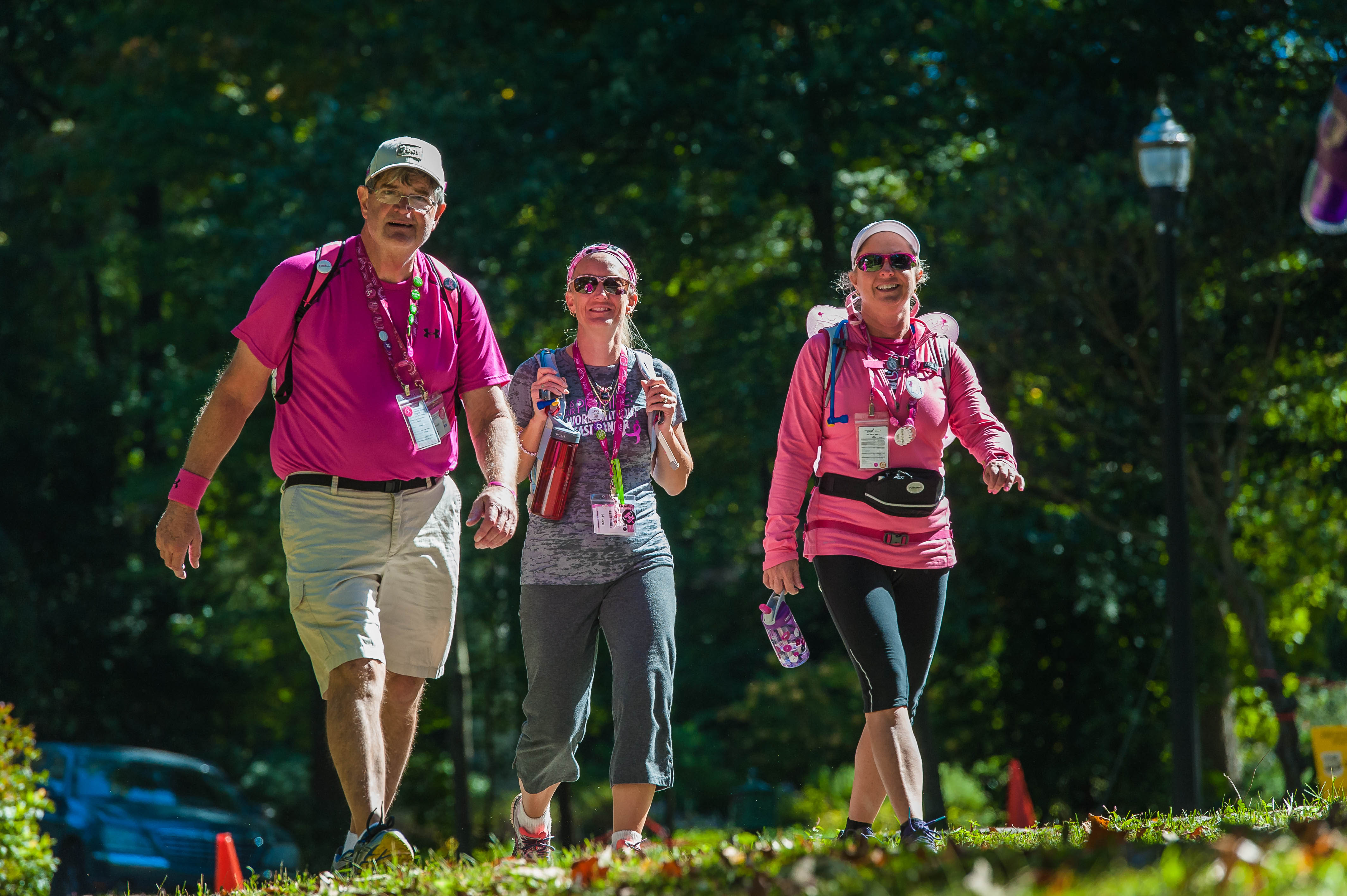
The power of that generosity began Ang’s healing, and he wasn’t about to stop there. “I set a goal of $6,200 because she was 62 when she died. Before I sent out my third email, I was over $6,200. So I changed it to $10,000. Weeks before the walk, I was well over ten-thousand. I left it there, and ended up, I think it was $13,200, give or take. It was just such an overwhelming sense of fulfillment. Because up until then, you feel…you just feel like there’s nobody out there that cares. And there’s a whole world out there full of people that care.
“There are so many people, you know, the people that walk, the participants…we’ve all been through it. There’s nobody here that’s been unaffected by breast cancer. I had people come to me and say, ‘My grandmother, my mother, my sister….my wife died of breast cancer. Twelve years ago, ten years ago, whatever. People that you just didn’t even know were affected by it. It’s just amazing how people just really came through and really just responded and supported me and wrote letters for camp, all of it. And it’s really crazy.
“And I decided, you know what, I’m gonna do it again.”
Ang signed up to walk in Atlanta a second time in 2014. “I thought, might as well set a goal of $10,000, but I probably won’t make it two years in a row. Now I’m begging, pleading with people. Sending them way too many emails. I’m not on Facebook so I don’t even know how to do that. Well that $10,000 came in, and I think in total I collected like $12,600 in the second year.”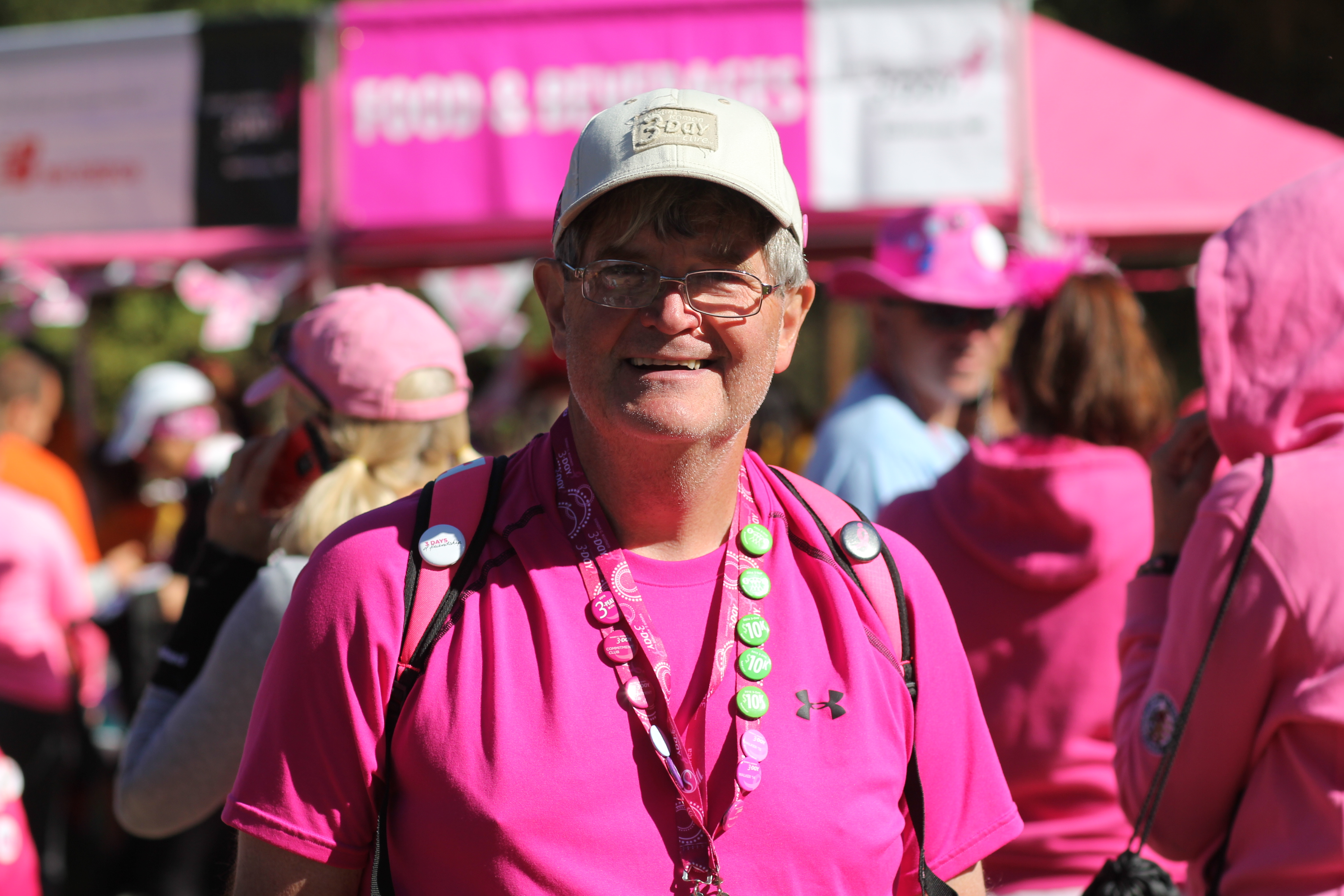
So he was set to return to Atlanta with an extraordinary fundraising total, but that wasn’t all he was returning to. “These ladies–” he gestures up to the friends who had hugged him back at the lunch stop— “they contacted me and asked me if I’d walk with them. Barely knew them, had walked with them maybe an hour and a half, two hours. But I got to meet their families, and got to know them well enough, and I was absolutely flattered and just sort of humbled that they asked me. They had to do some extra legwork to find out how to get in touch with me. I don’t even think we swapped phone numbers or anything. But they got in touch with me and we met up again the night before the Opening Ceremony and I was just, again, blown away by the love they had, and just the outpouring of compassion and support.”
You can probably guess what happened next: Ang registered to walk his third 3-Day in Atlanta in 2015, and he came back with his most ambitious goal yet. “I thought, you know I don’t want to end on a low number. So I added up my first two years, subtracted them from 40,000, and said, if I can get this much, I’ll have raised $40,000 in 3 years. My teammates talked me in to getting on Facebook, so now I’m bombarding all my friends, not just with emails, but with Facebook too. And the donations poured in. I think 3 nights before the final deadline for donations, I hit $14,134. That was what I needed.”
For someone to achieve such incredible feats—over $40,000 in fundraising in 3 years, a team that loves him so much they’ve renamed themselves “Ang’s Angels” for the 2016 Atlanta 3-Day—you’d think he might let the pride go to his head. But that couldn’t be further from the truth in Ang’s case. He remains intensely humble and genuinely grateful for what the 3-Day has given him. “I don’t know where I’d be if it weren’t for my participation in this event. I just don’t know where I’d be. I was absolutely, positively lost. It’s hard to stay composed because you really realize how many people do care.”
We were approaching the pit stop and I realized I had walked 3 miles with Ang, listening to his story, being inspired by his words. Ang knew that he would be retiring his walking shoes after the 2015 Atlanta event (“Walking is hard. I’m 64 years old and the ankles just aren’t made the way they used to be.”), and I can’t help but be a little sad that I might not see him and his warm smile again in 2016, though in my heart, I have no doubt that we haven’t seen the last of Ang.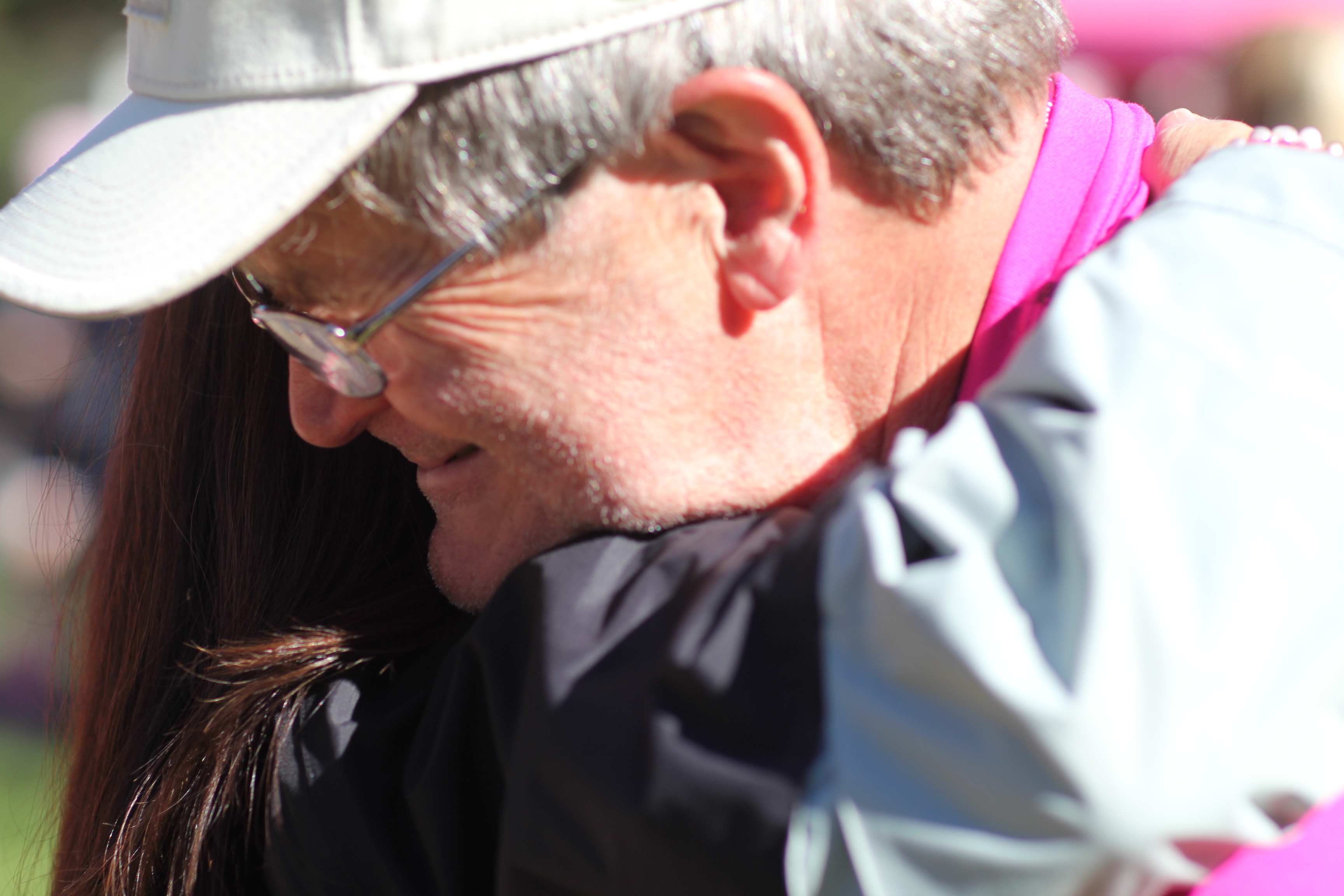
“Everyone I’ve dealt with, in the Komen organization especially, they all have just this wonderful attitude about being brought together by this terrible thing we have in common. We’re brought together by this thing we wish didn’t exist, but it does, and doing nothing is not an option. And in the meantime, look what we get back. We give a lot but we get a lot back. It’s a little bit like love—the more you give, the more you get.
“We lost our fight. That’s the absolute worst outcome you can have. And the most horrible part of anything like that is thinking that you’re by yourself. And you look at all of this, and it doesn’t cure your pain, it doesn’t take away the cancer, but there’s a comfort that you can’t find on your own that comes from knowing that you’re not alone.”