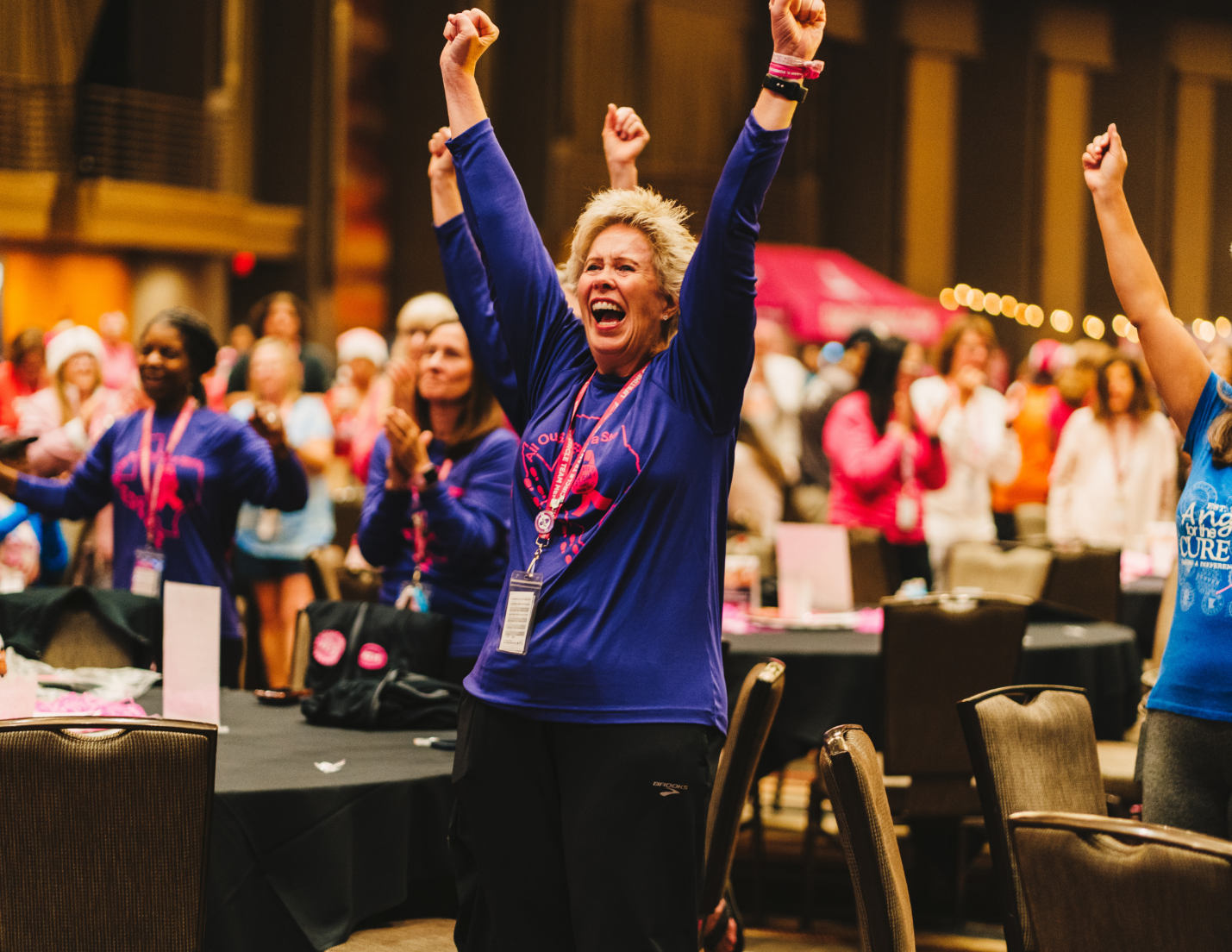
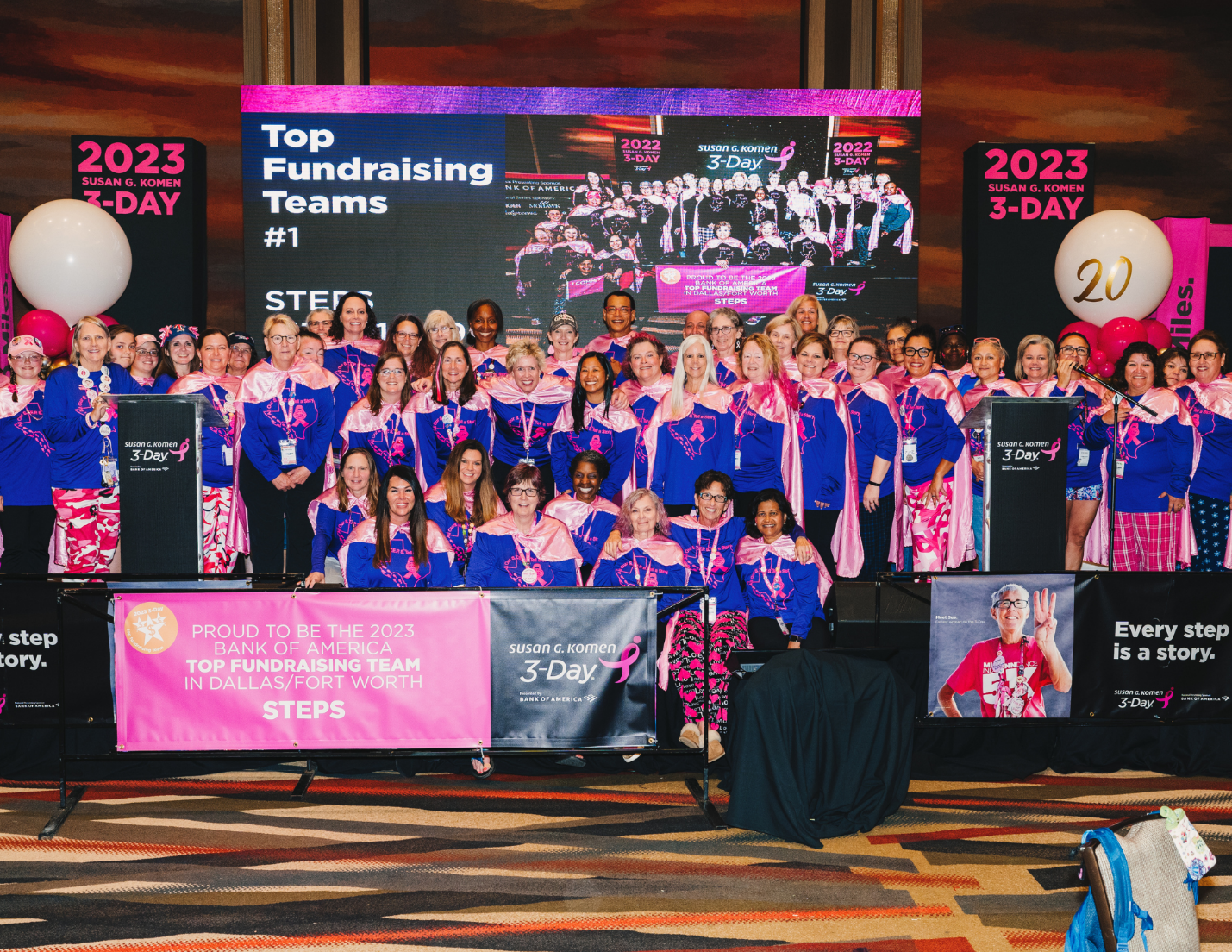
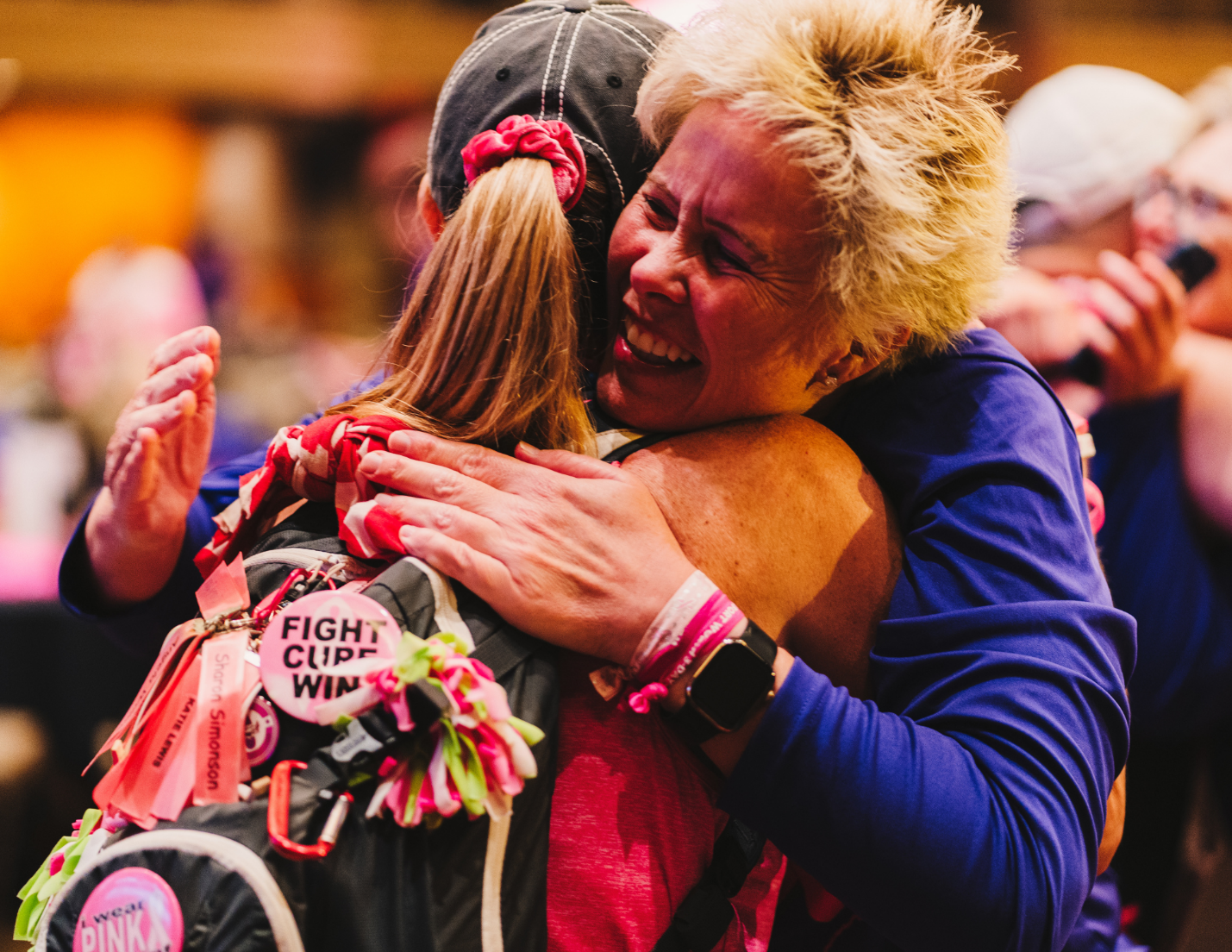
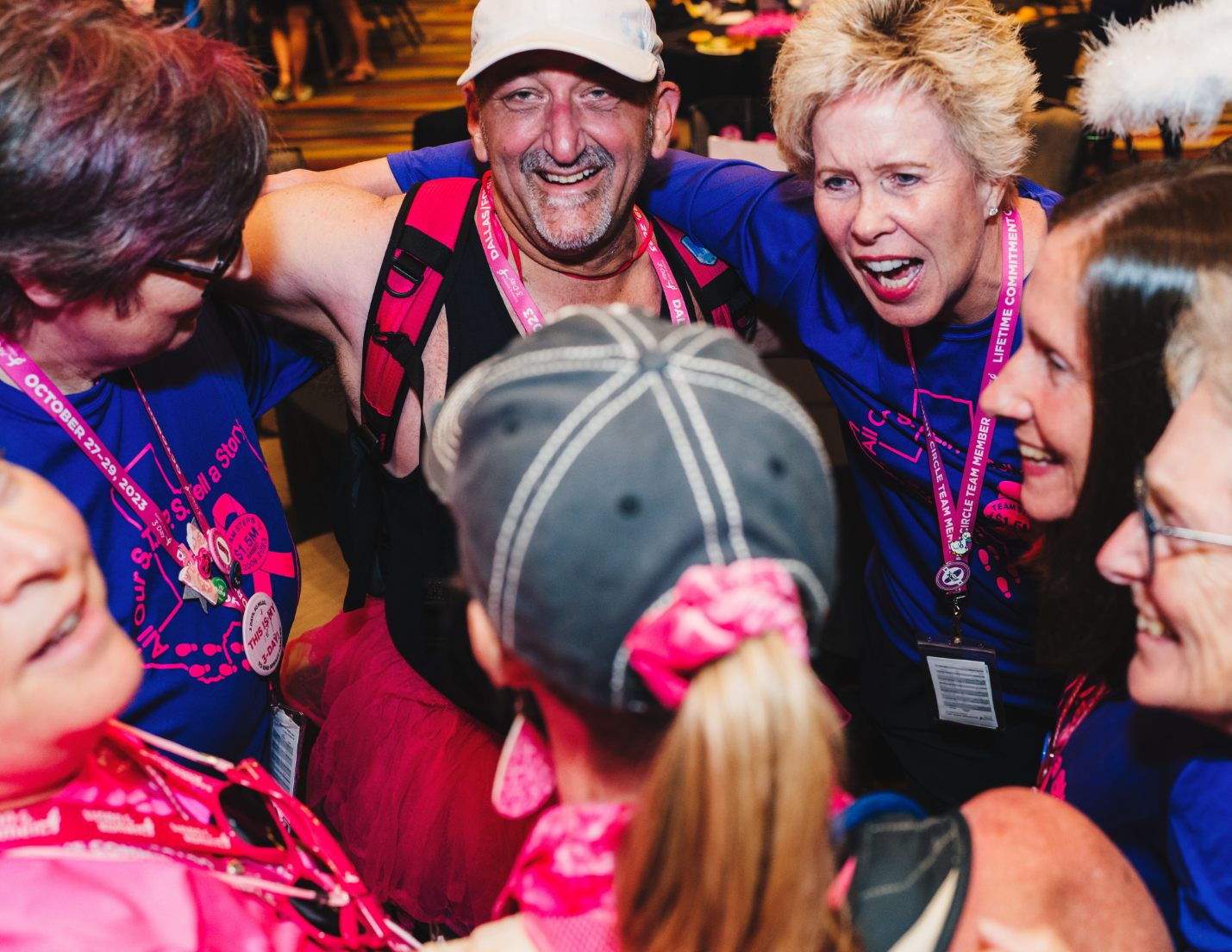
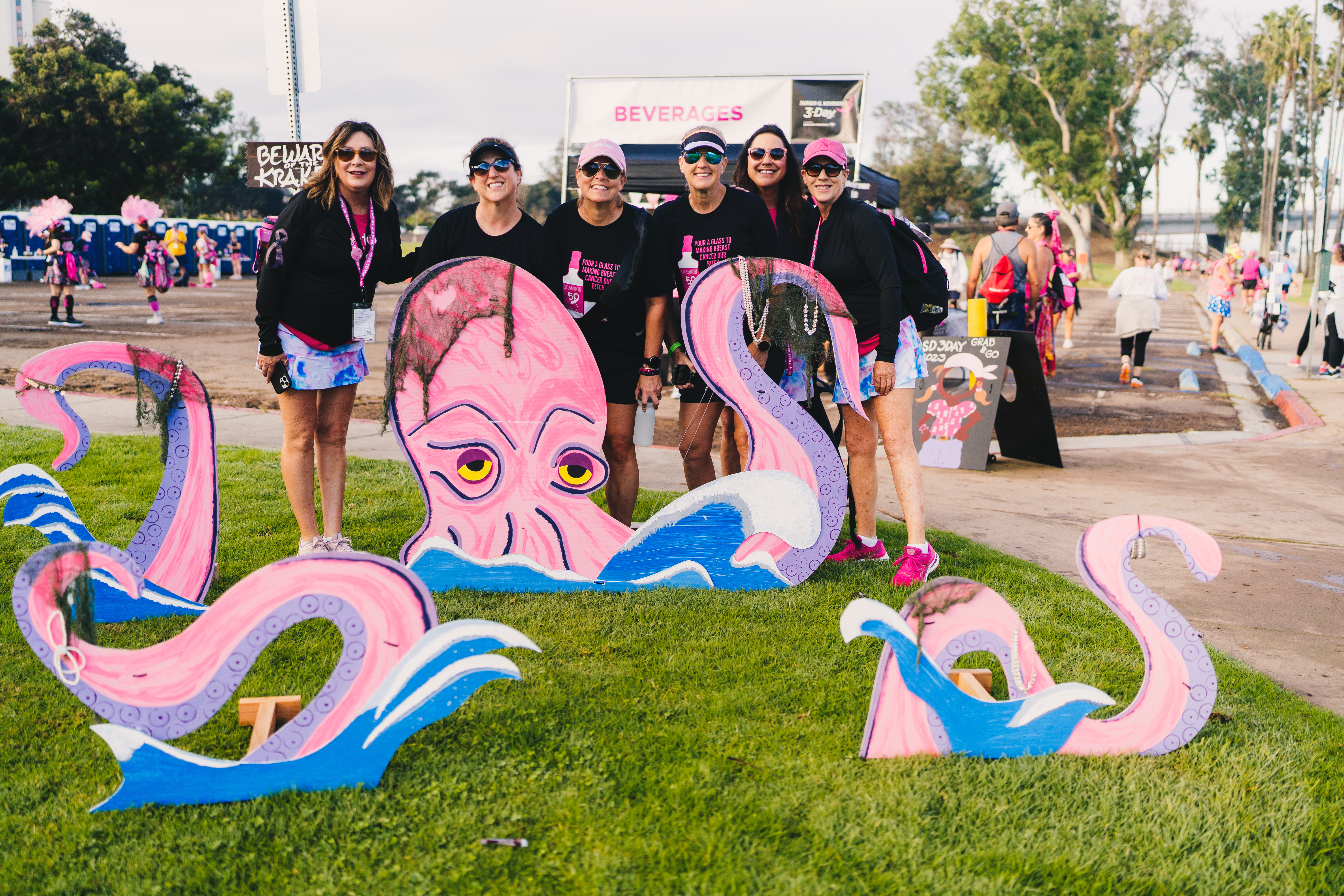
We wrapped up the 2024 3-Day season in sunny San Diego! From November 15–17, the Pink Bubble returned to pink tents to camp out and walk 60, 40, or 20 miles. Together, 1,850 walkers and 340 crew members raised a total of $6.4 million for breast cancer research, community health, patient care and advocacy.
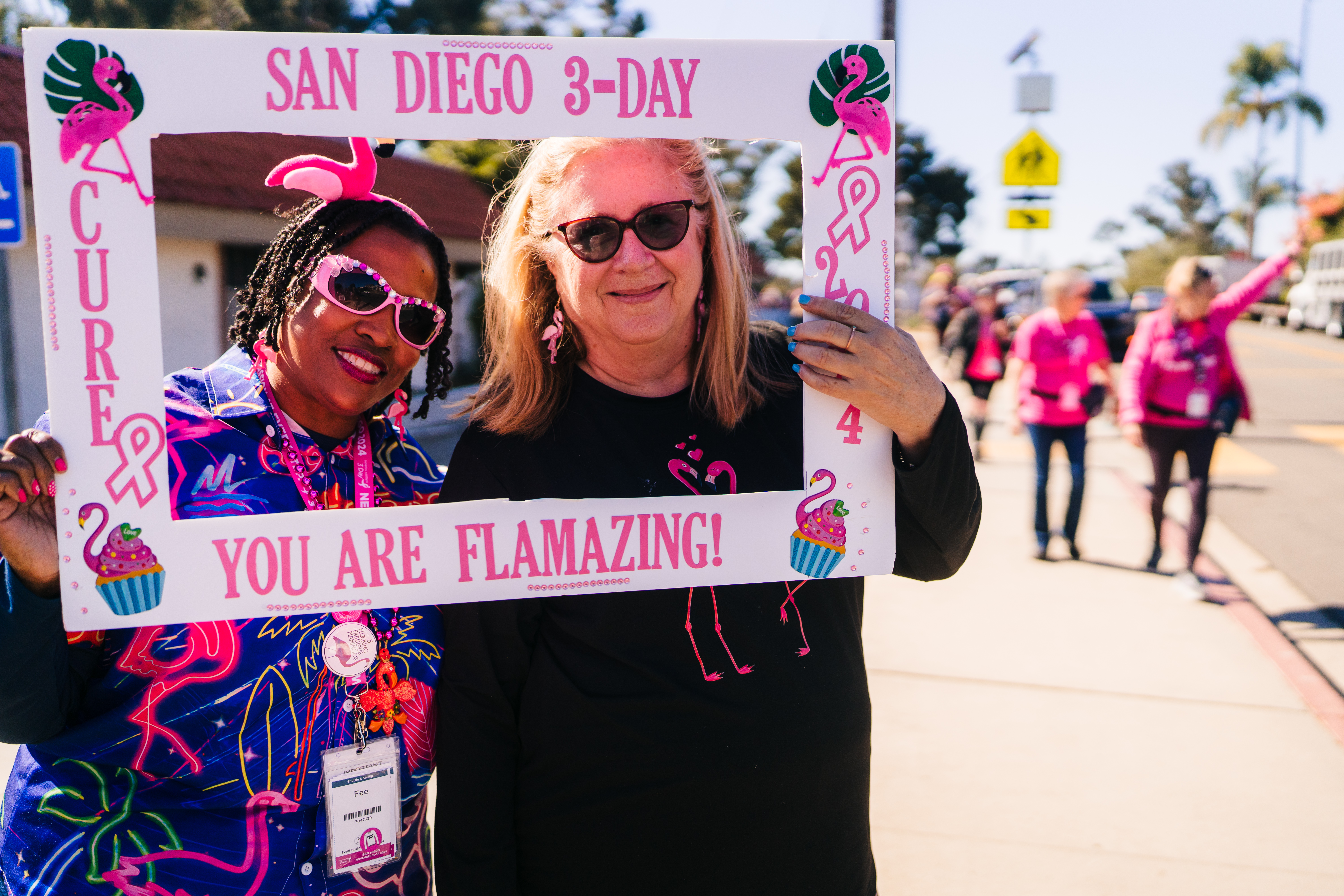
Day 1
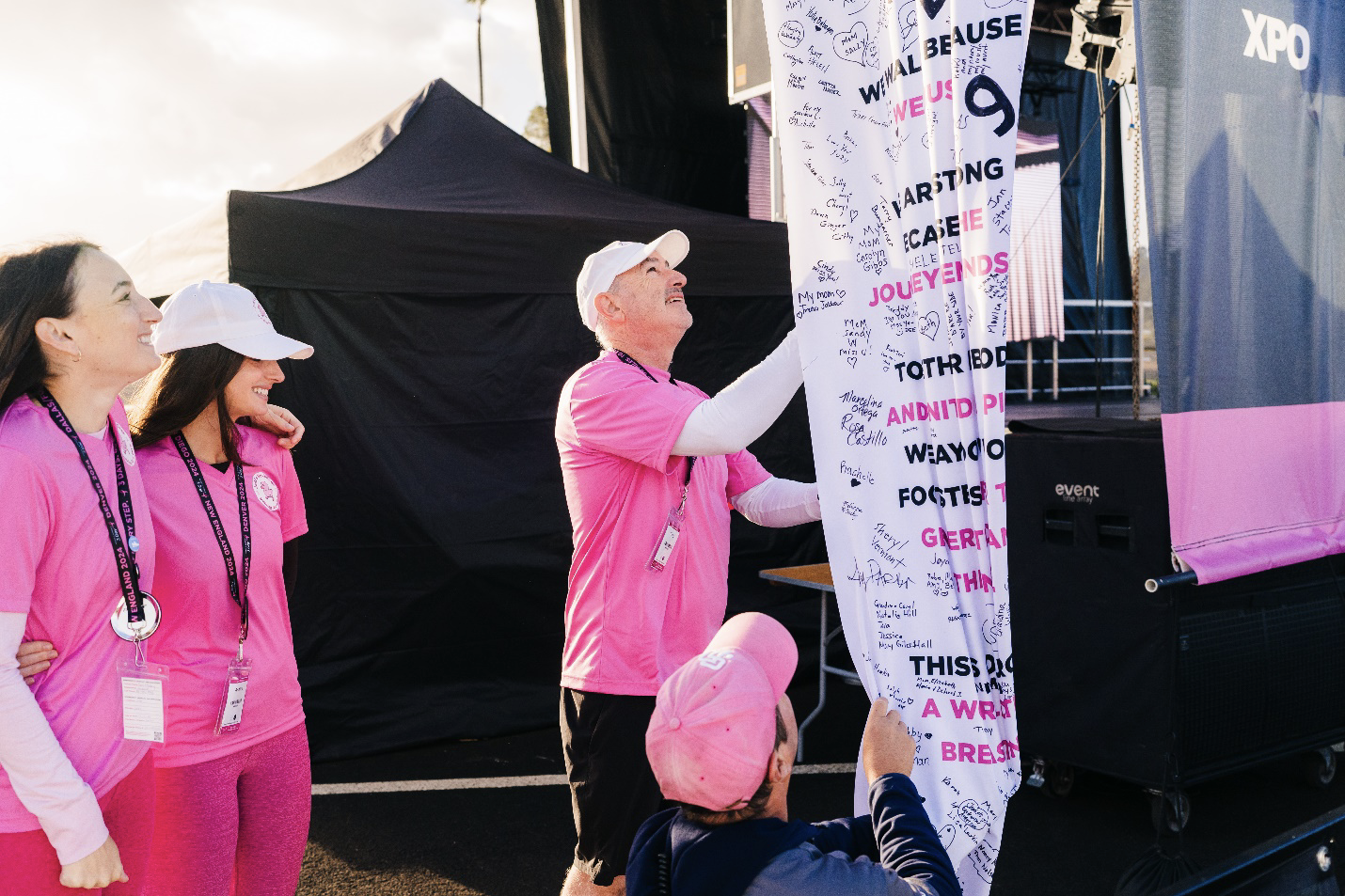
The 2024 San Diego 3-Day kicked off with the sun rising in Del Mar for a packed Opening Ceremony. The entire crowd let out a tremendous cheer of support when Meghan L. shared that she walks for her mom, who lost her battle with breast cancer in 2023. “The 3-Day has quickly become my favorite tradition. It is a space where I am most reminded of her.” Following, Beth B. shared her story as a survivor who walks not just for herself but to share her story and show people what it means to live beyond a cancer diagnosis. To wrap up the ceremony, Aimee and Ashley L. were accompanied by their father, Gary L., on stage as they spoke of their beautiful mother who passed away from this horrible disease in July of this year. “She was an incredible mother to us and a loving wife to our dad, Gary…. We are proud to walk these 60 miles in her memory and to raise funds to support research, clinical trials, patient care, and so much more for this generation and the next.” Gary concluded the Opening Ceremony by raising the Promise Flag in honor of everyone we walk to remember before survivors and thrivers led the way out onto the route.
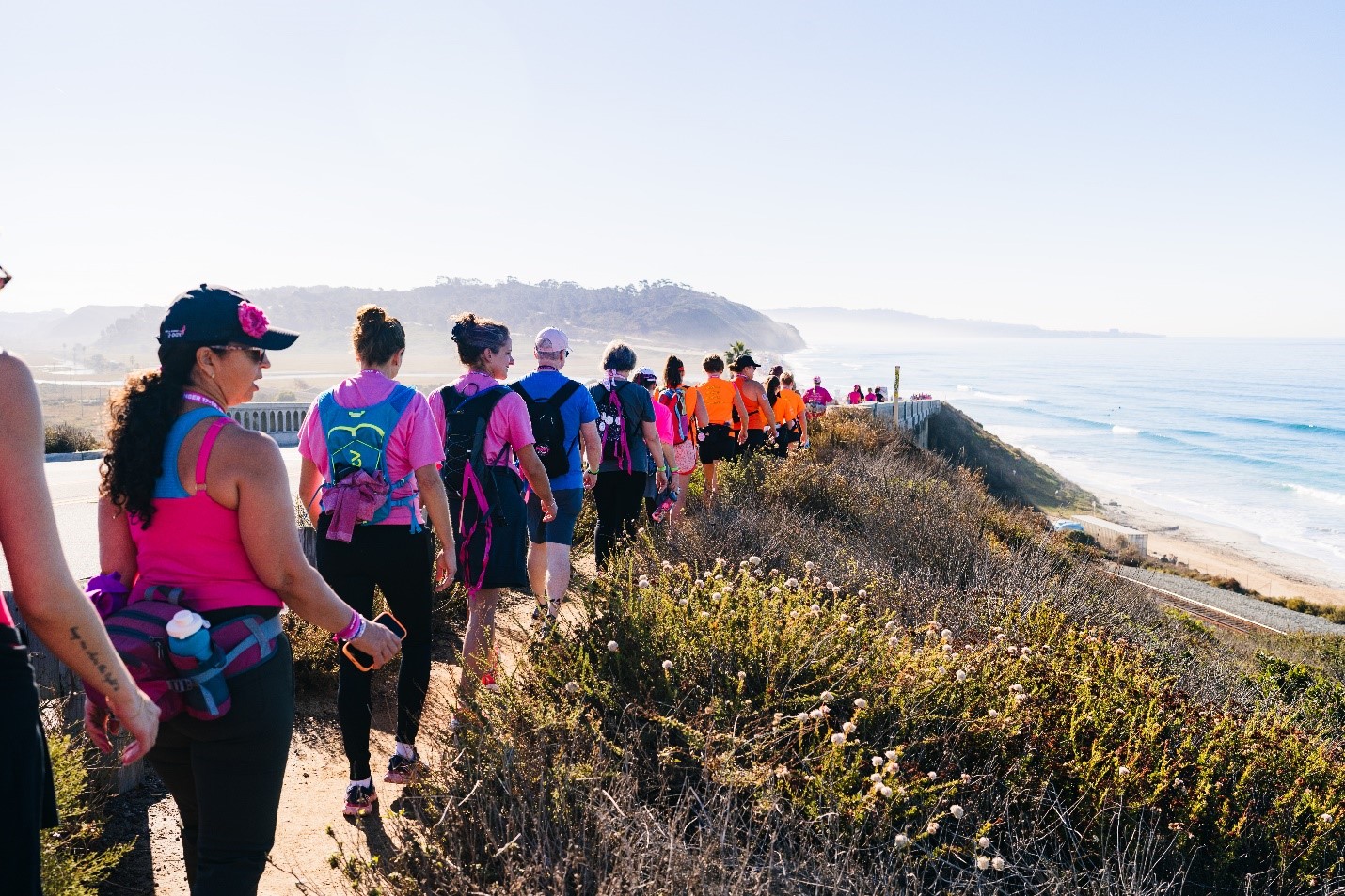
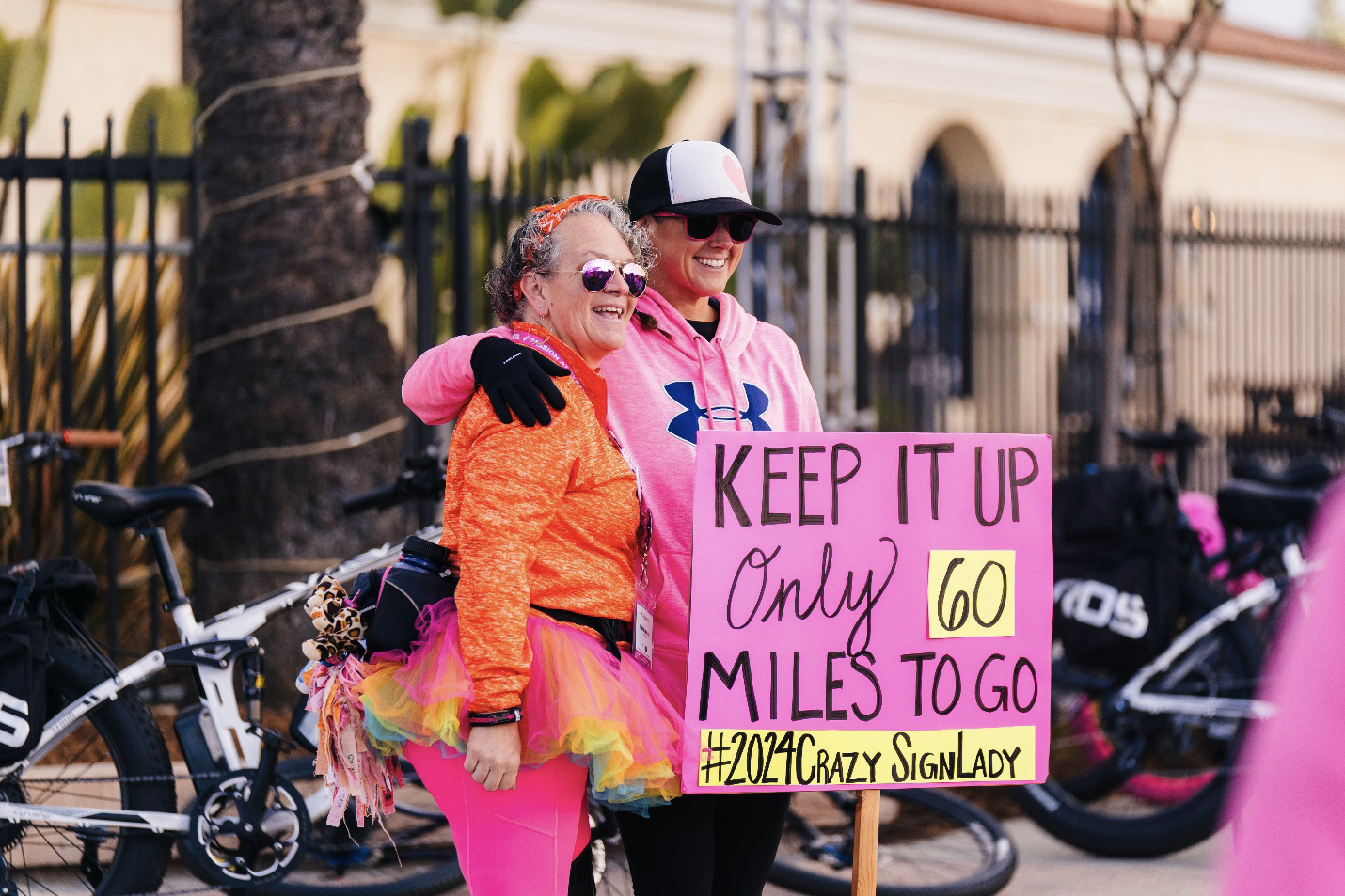
As the parade of pink made its way down the coast, 3-Dayers passed through Del Mar Village, which boasted incredible community support, toward Torrey Pines where they faced a large hill, and into La Jolla Shores where sea life flourishes. From local businesses to cheerleaders and the San Diego Police Department (SDPD), walkers were fueled by cheering and snacks at nearly every corner. They also couldn’t miss the “Crazy Sign Lady” who updated her poster every few miles, all the way from 60 miles to 0.
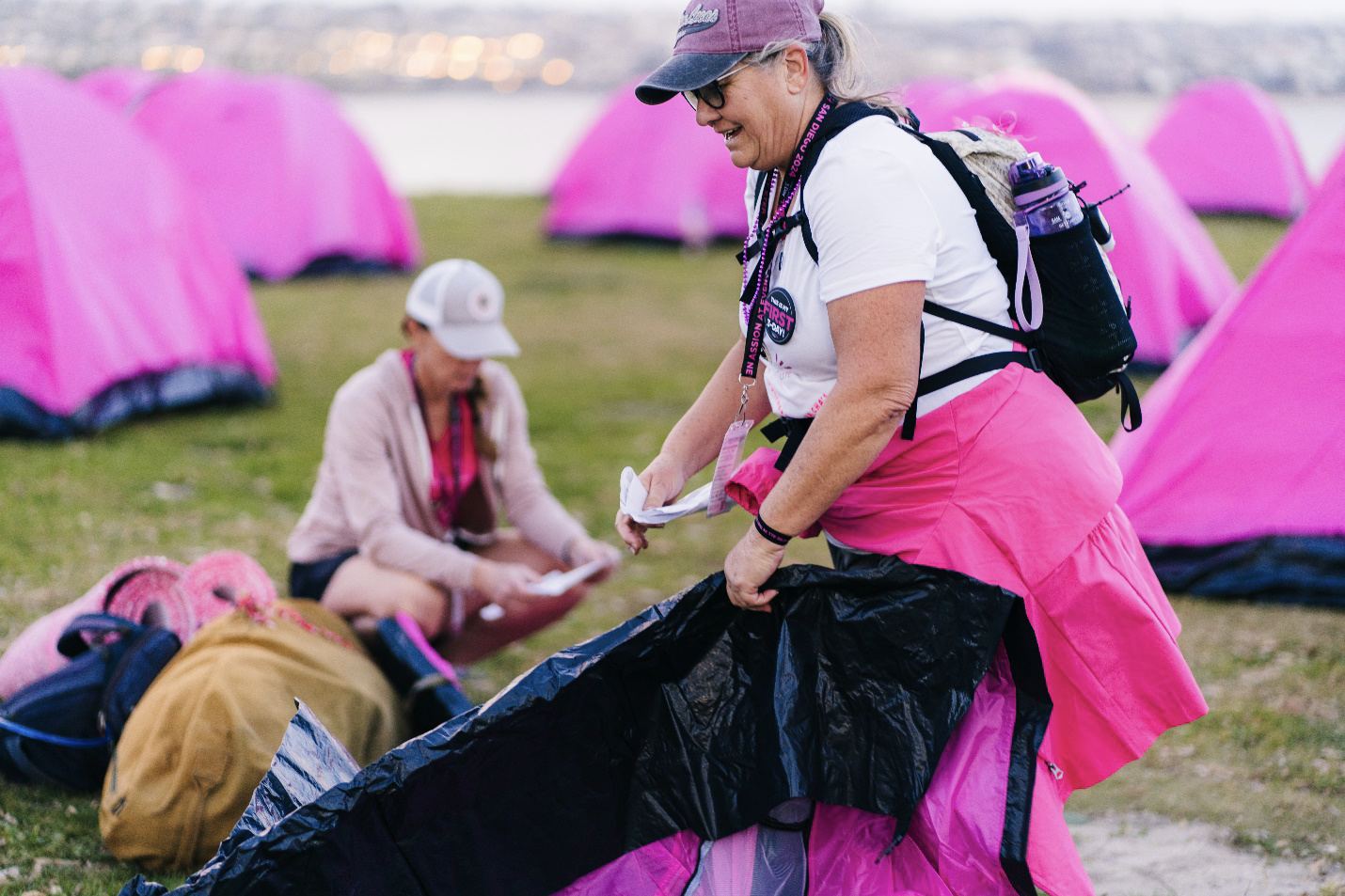
The second half of the route included La Jolla Cove and Children’s pool before returning to camp to enjoy the Bank of America massage chairs, trail mix, and setting up their pink tents. The SDPD hosted an impromptu dance session in the dining tent where hundreds of individuals danced the wobble with tremendous smiles on their faces! To wrap up the evening, walkers enjoyed the Bank of America Celebration of Champions, where we awarded our Top Fundraisers, Milestone Award Winner, and Crew Impact Award Winners with donations of up to $500 for their 2025 3-Day fundraising. Our National Presenting Sponsor also hosted a raffle where five randomly selected San Diego 3-Day participants won $250 toward their 2025 fundraising efforts. What a way to wrap up the evening before getting some shuteye in pink tents along the beach of Mission Bay.
Day 2
As the sun rose, so did walkers and crew as they emerged from their pink tents to enjoy a hearty breakfast before lining up on the Mohawk Pink Carpet to embark on the route. Standing at the front of the line was Rachel B., our San Diego Ultimate Event Experience winner who accomplished her 15th 3-Day this weekend. In the eligible challenge period, Rachel humbly raised nearly $9,700, earning her first position out on the route with her team Bouncin’ Buckeyes amongst other prizes. When given the go-ahead, Rachel led walkers who flooded out of camp creating an immense sea of pink. In typical San Diego style, supporters including the SDPD cheered them on as they exited camp to enjoy a fun-filled 20 miles.

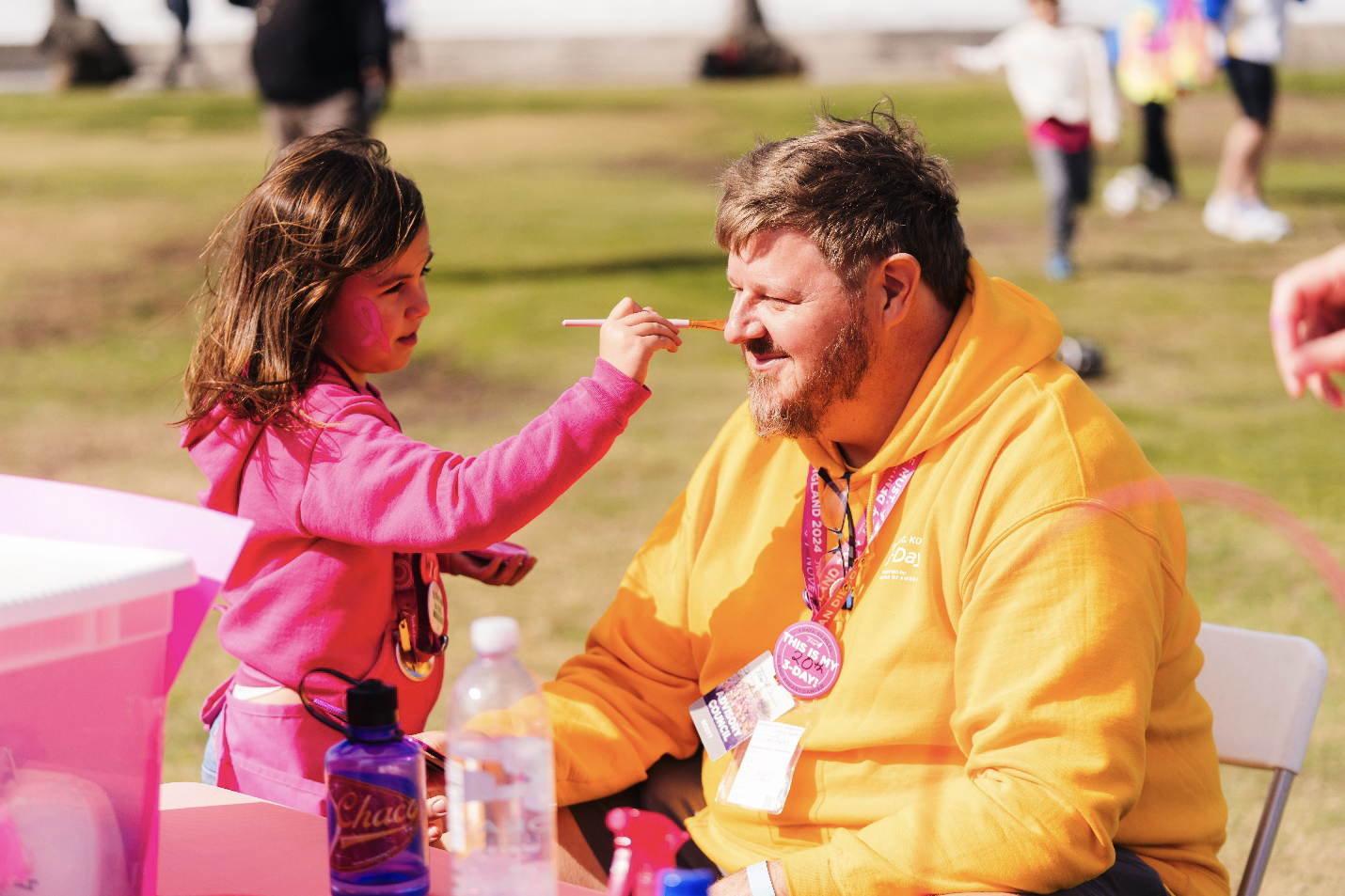
Walkers passed through Sunset Cliffs National Park and Smiley Lagoon before heading toward South Mission Beach Boardwalk and the infamous Muscle Beach. At Pit Stop 2, walkers were greeted by a Mickey Mouse theme and a real parrot, as well as delicious snacks, hydration, and porta johns. Walkers headed over to lunch to celebrate the halfway mark where a mother and her seven-year-old daughter were offering pink ribbon face paint to walkers and crew. Before you knew it, walkers were back on their feet squeezing in a quick Wobble with the SDPD before heading back out on the route!
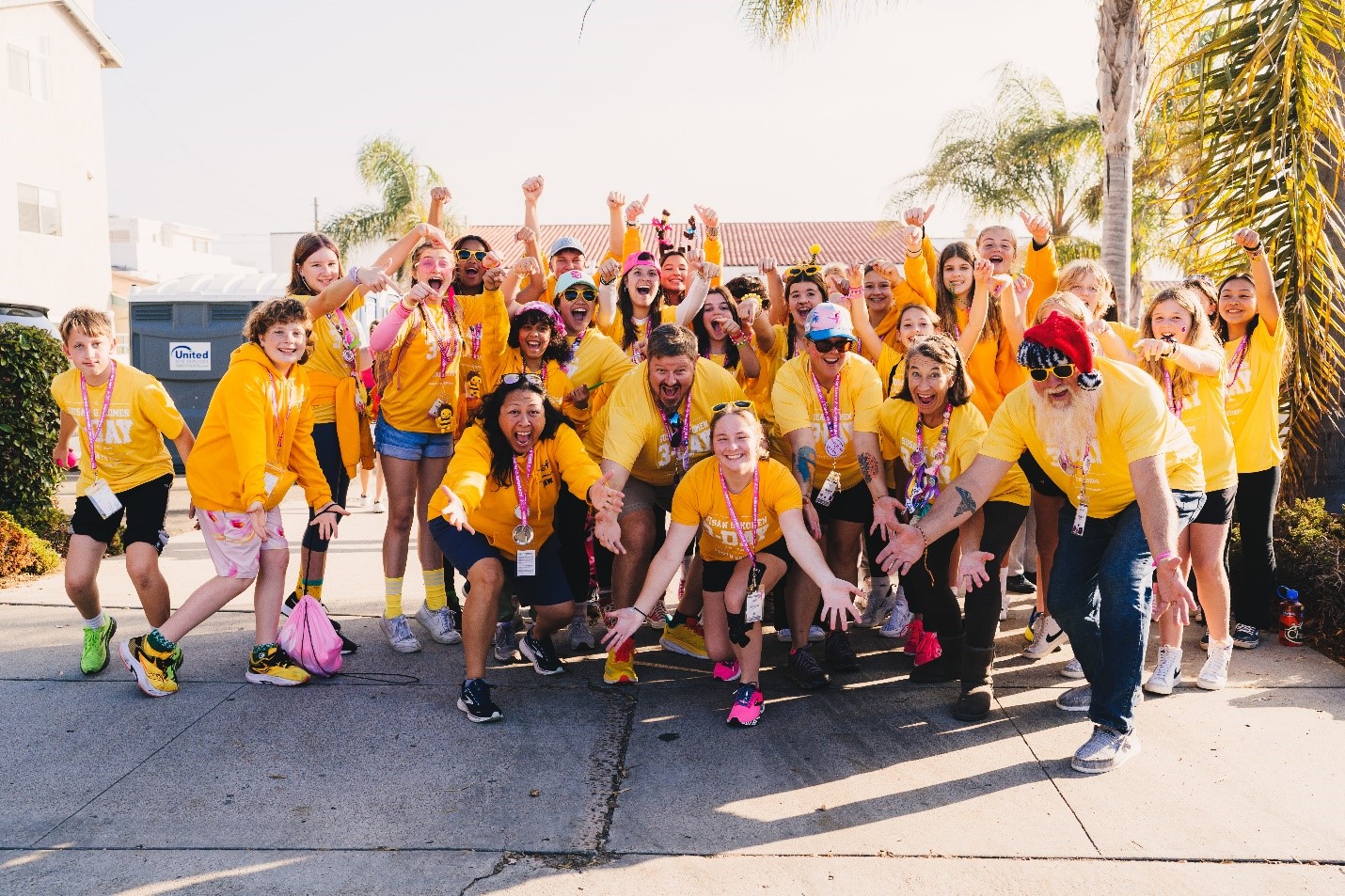
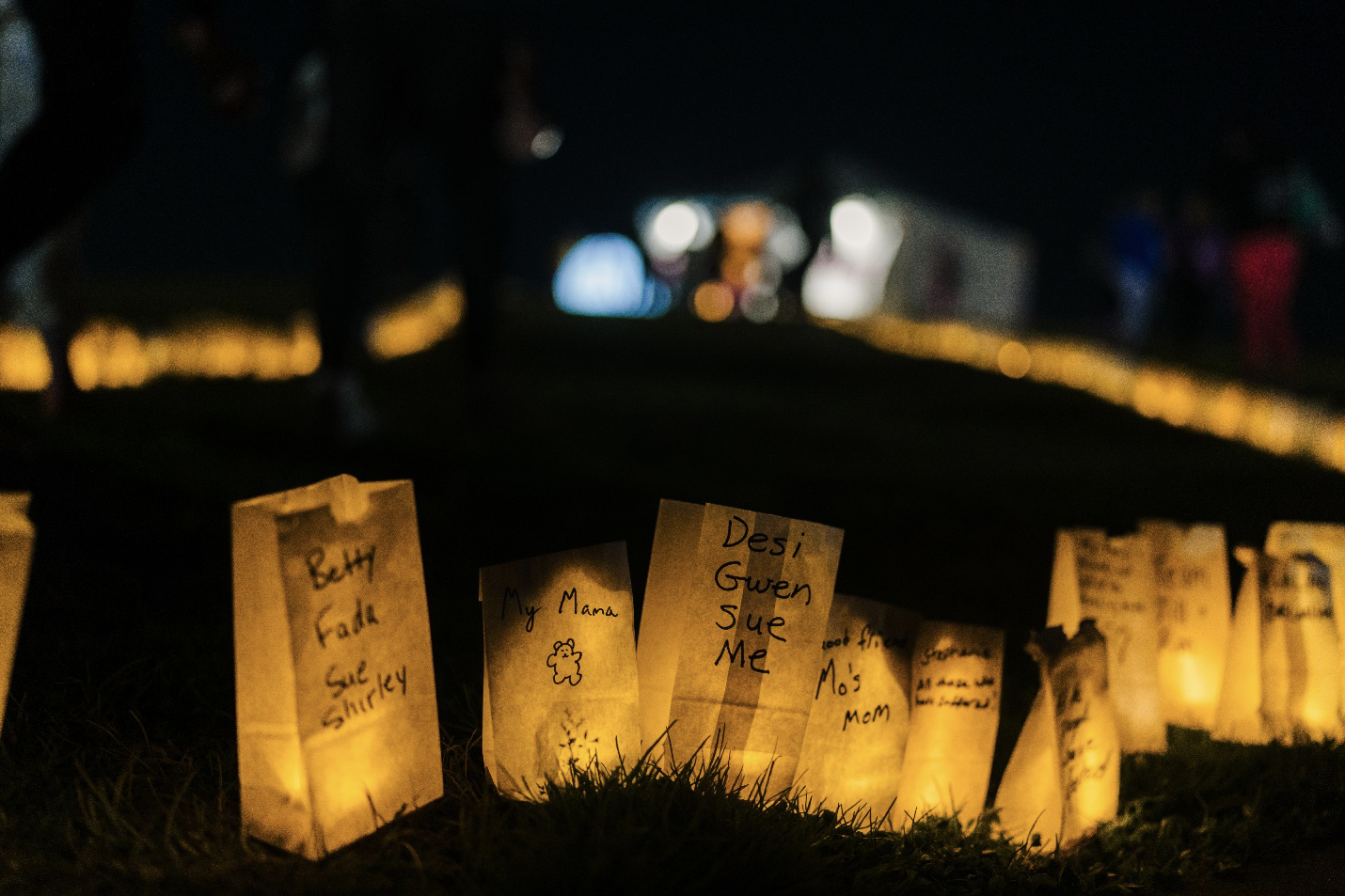
Walkers then passed through Memorial Mile where the photos of 100 incredible individuals who battled breast cancer stood proudly. As they made their way into camp, walkers were greeted with the famous 3-Day mac ‘n’ cheese before welcoming in the last walker, who entered the tent dancing. A hot chocolate bar, courtesy of Bank of America, opened with countless toppings including marshmallows, whipped cream, chocolate shavings, peppermint sticks, and more! With stomachs and hearts full, we enjoyed a touching Honor Ceremony which began with words from all 27 members of our Youth Corps. Tears were shed, hugs were exchanged, and we were all unified as we remembered why we walk. Everyone lit a candle to line the way to the remembrance tent before calling it a night and resting up for the final day of the San Diego 3-Day.
Day 3
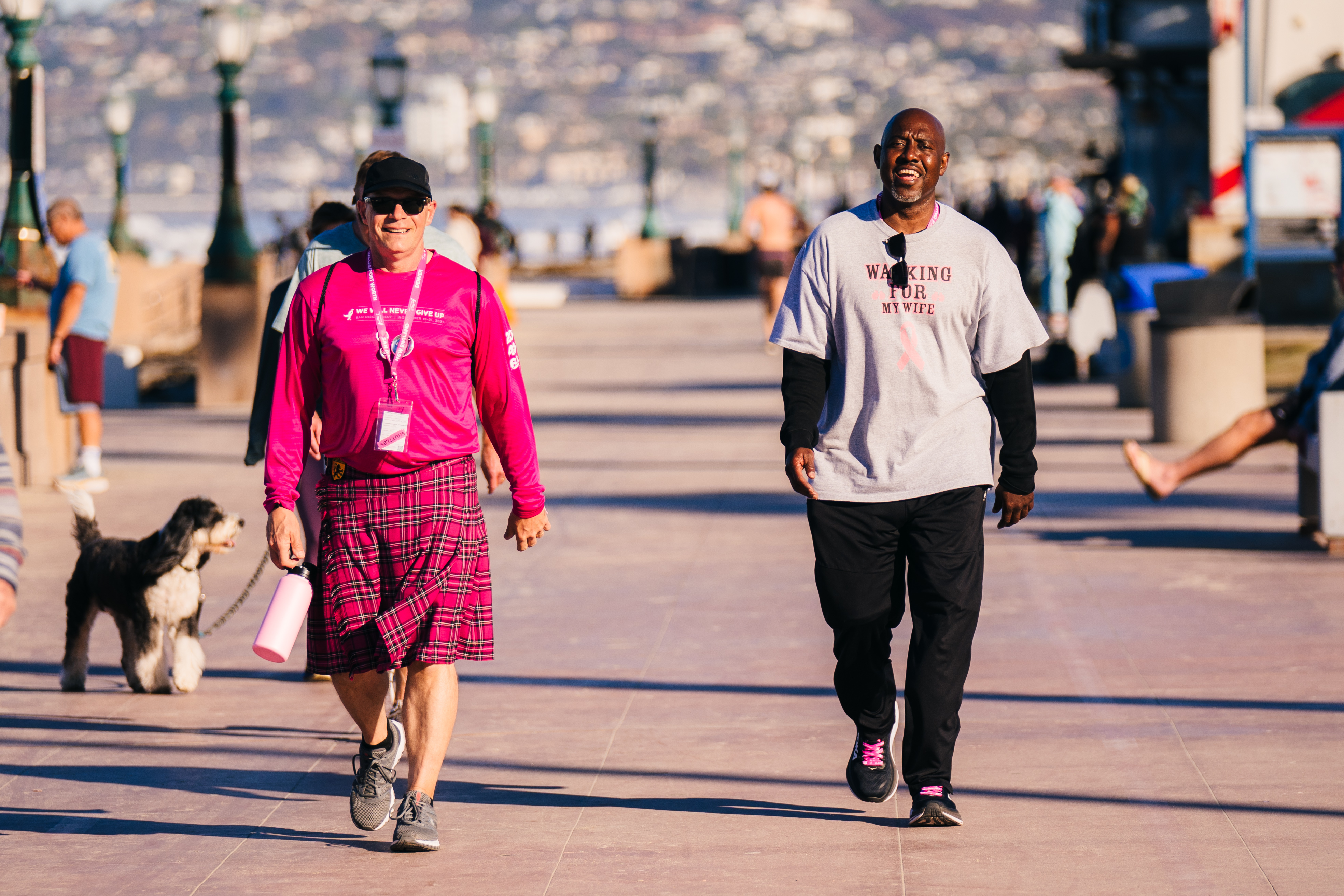
To kick off Day 3, walkers packed up their pink tents and enjoyed a delicious breakfast at camp. As they headed out on the route, walkers passed through Ocean Front Walk, Belmont Park, and Bonita Cove before passing by Hubbs-SeaWorld Research Institute. Shortly after, SeaWorld San Diego cheered on walkers with the help of an adorable penguin named June! They also provided walkers with water, gummy bears, holiday ornaments, and more to put a little pep in their step. Walgreens cheered on walkers as they strolled toward Old Town Viewpoint and the Little Italy Sign, and before we knew it, they were crossing the Mohawk Pink Carpet into the Closing Ceremony!
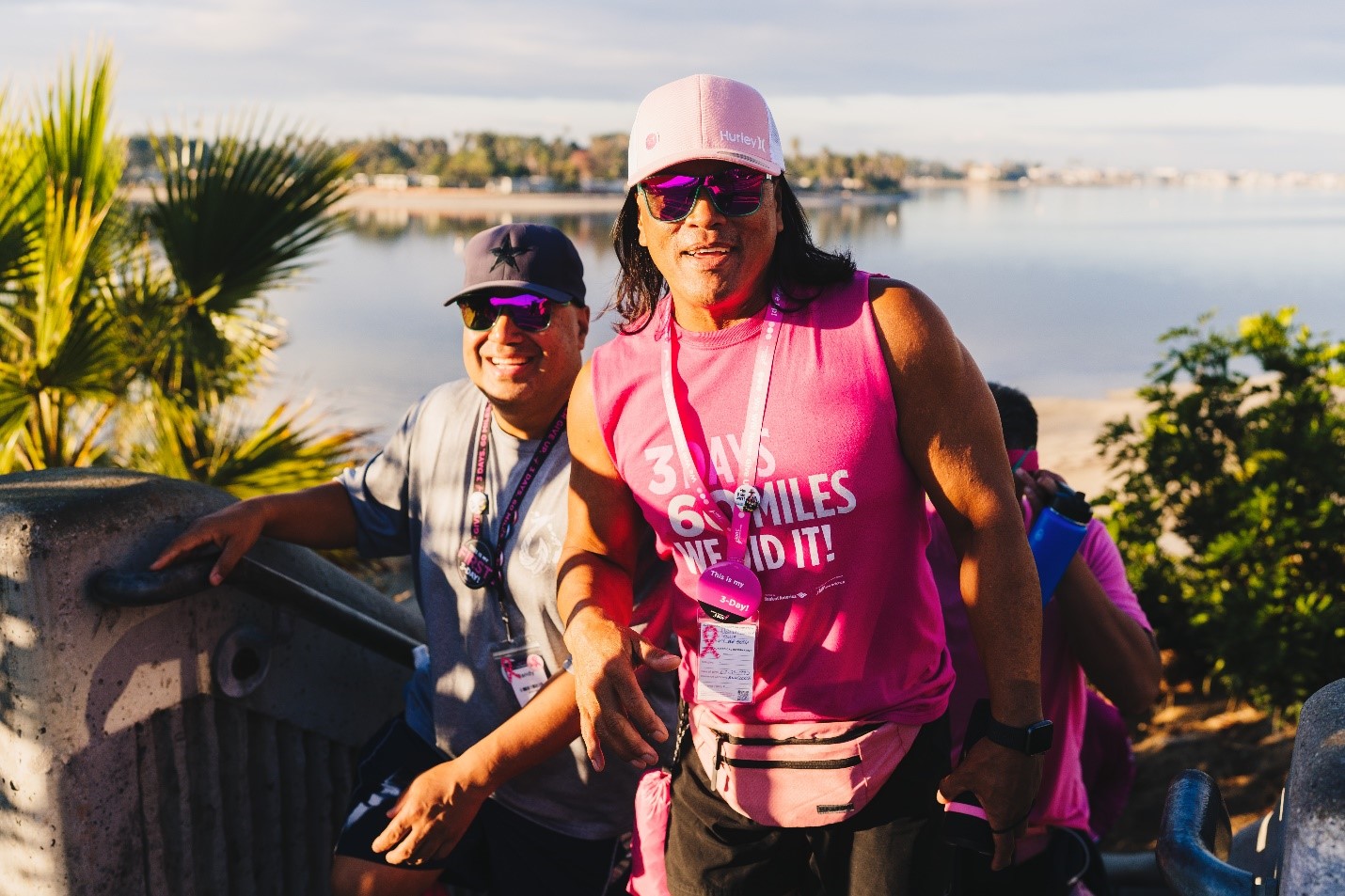
To celebrate their tremendous achievement of up to 60 miles in three days, walkers were gifted a victory t-shirt and San Diego medal courtesy of Bank of America. They got to snap a quick photo in front of the 60-Mile sign and at the Nature’s Bounty Butterfly Wings. Nature’s Bounty also offered a drawing to win a prize pack as well as a free bag stuffed with their Hair Growth vitamins and a stunning pin! Walkers grabbed a Mohawk SmartCushion to rest their feet and take in the gorgeous view of Waterfront Park while eagerly waiting for our last walker.
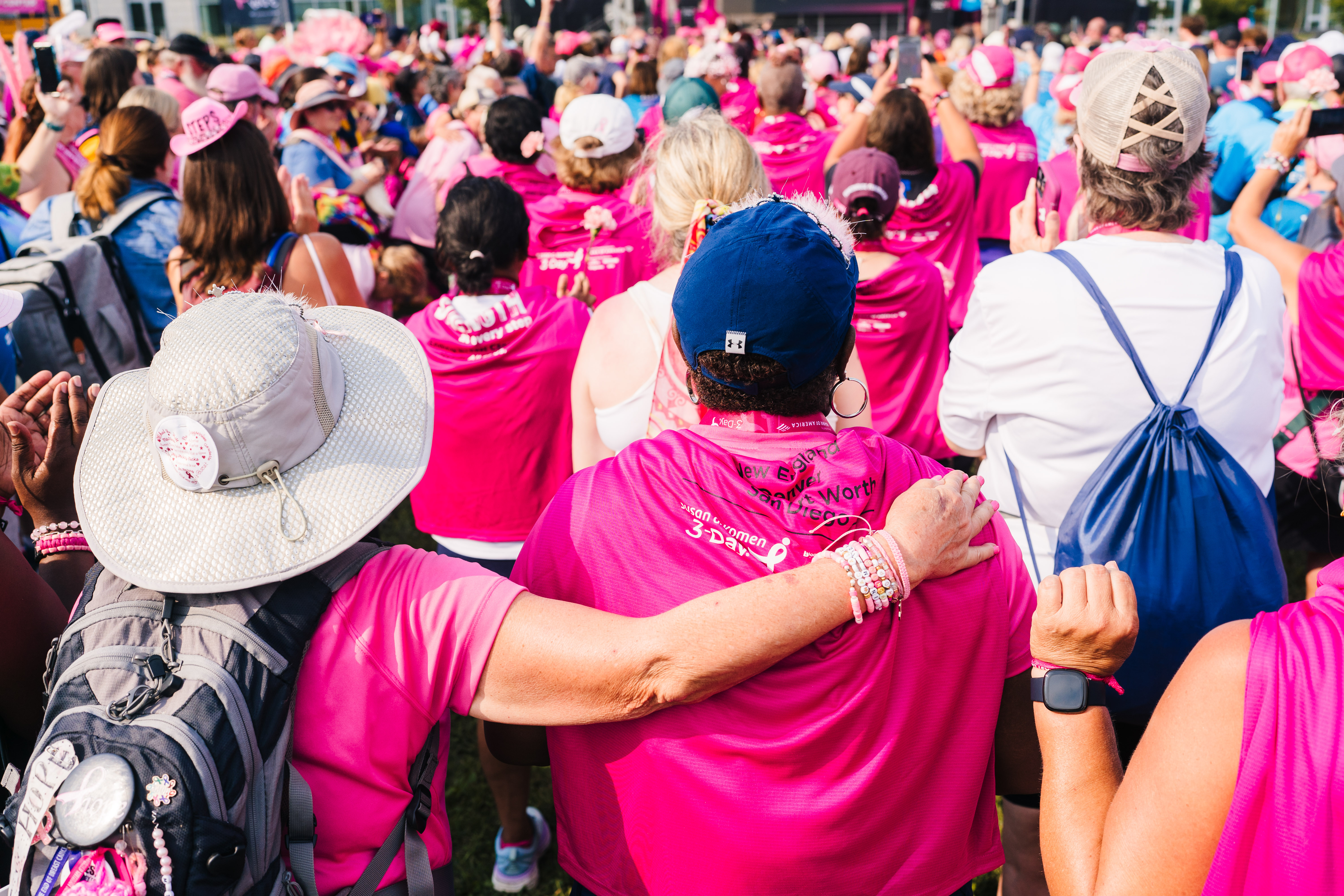
The last walker entered the sea of supporters and raised the last walker flag one last time before crew members lined the way to the stage for survivors and thrivers. A collection of thousands of sneakers arose, contrasting beautifully with the waterfront scenery. Hand-in-hand, survivors and thrivers walked toward the stage prompting our Closing Ceremony. It was at this time that we discovered that, collectively, the participants of the San Diego 3-Day raised a colossal $6.4 million in the fight against breast cancer. Bubbles were released into the air and the celebration concluded with crying, hugging, and dancing as we look forward to the 2025 3-Day season.
Thank you to all who joined us this year. From walkers to crew to volunteers, your efforts push us closer to the world we dream of. A world without breast cancer. We look forward to seeing you next year!