Happy Father’s Day!

As we celebrate fathers and father figures on this special day, let us remember that the fight against breast cancer knows no gender boundaries. It is a collective battle that requires the participation of everyone, and the 3-Day community is proud to unite all in the pursuit of a world without breast cancer. Today, we’re highlighting male breast cancer statistics and information in honor of the men in our Pink Bubble family, whether walking or crewing, who support the fight against breast cancer. 

While the gifts of material possessions or experiences are an easy enough way to convey how much we care about the fathers in our lives, the gift of knowledge can be more impactful.  

One crucial piece of knowledge that it’s important to convey is the fact that men can, and do, have breast cancer. It’s understandable why men are often overlooked when it comes to breast cancer but, despite many physical dissimilarities, men, just like women, are born with breast tissue. That means that men are also susceptible to breast cancer. 

Although the numbers, when compared to women, are low, 1 in 833 men will still come face to face with a diagnosis that will change their lives.  
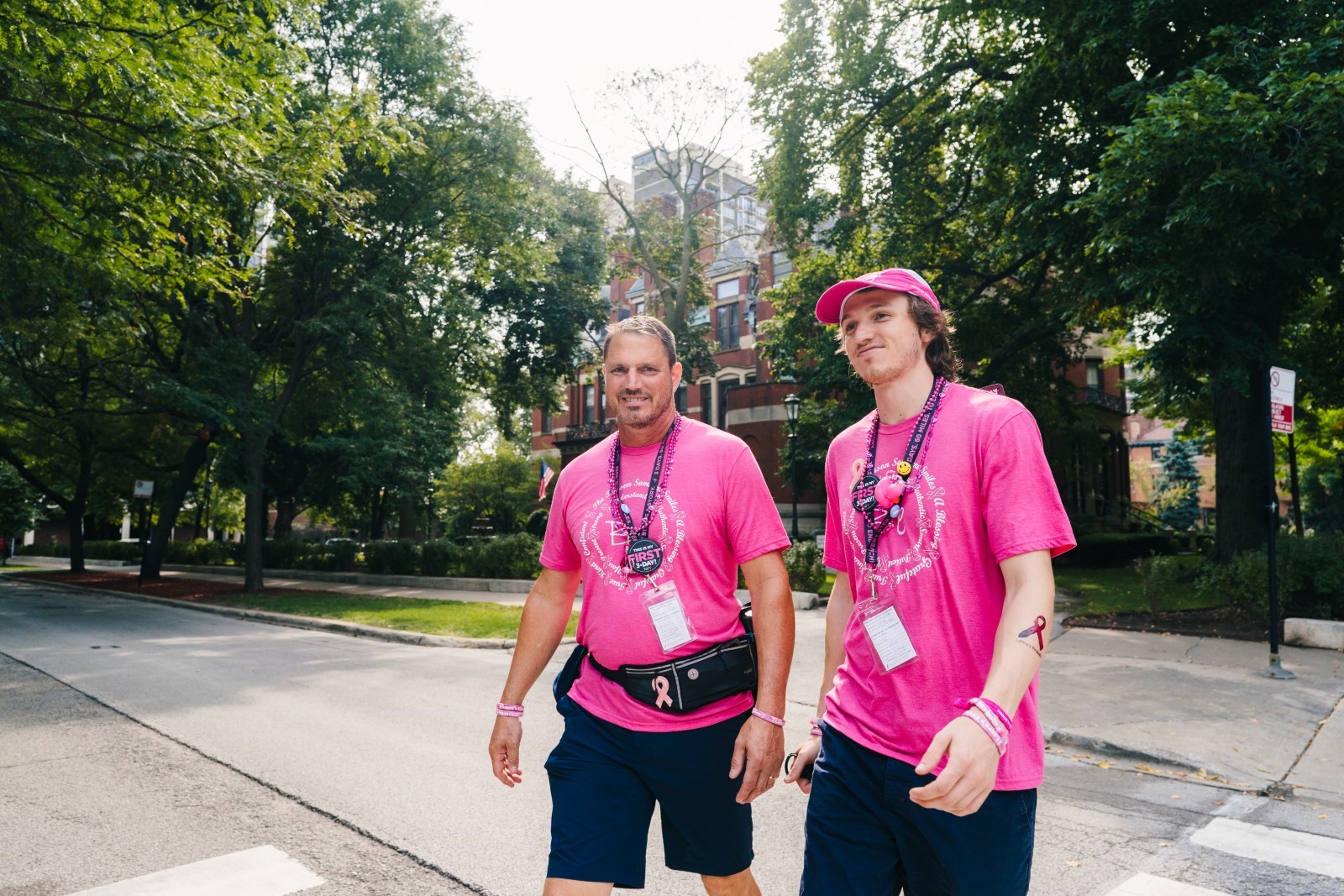
There are some realities that are true for all men, like the median age of diagnosis being higher than it is for women, or that it’s probable that men are less likely to report signs or symptoms of illness. But there are other aspects of the experience that are unique to different populations, like the fact that non-Hispanic Black men have the highest rate of incidence and tend to be younger than white men when it comes to being diagnosed, and non-Hispanic Asian and Pacific Islander men have the lowest rate of incidence. Age, physical activity, diet, health history, etc., all of these can majorly influence the ways in which the men closest to us might come face-to-face with this disease.  
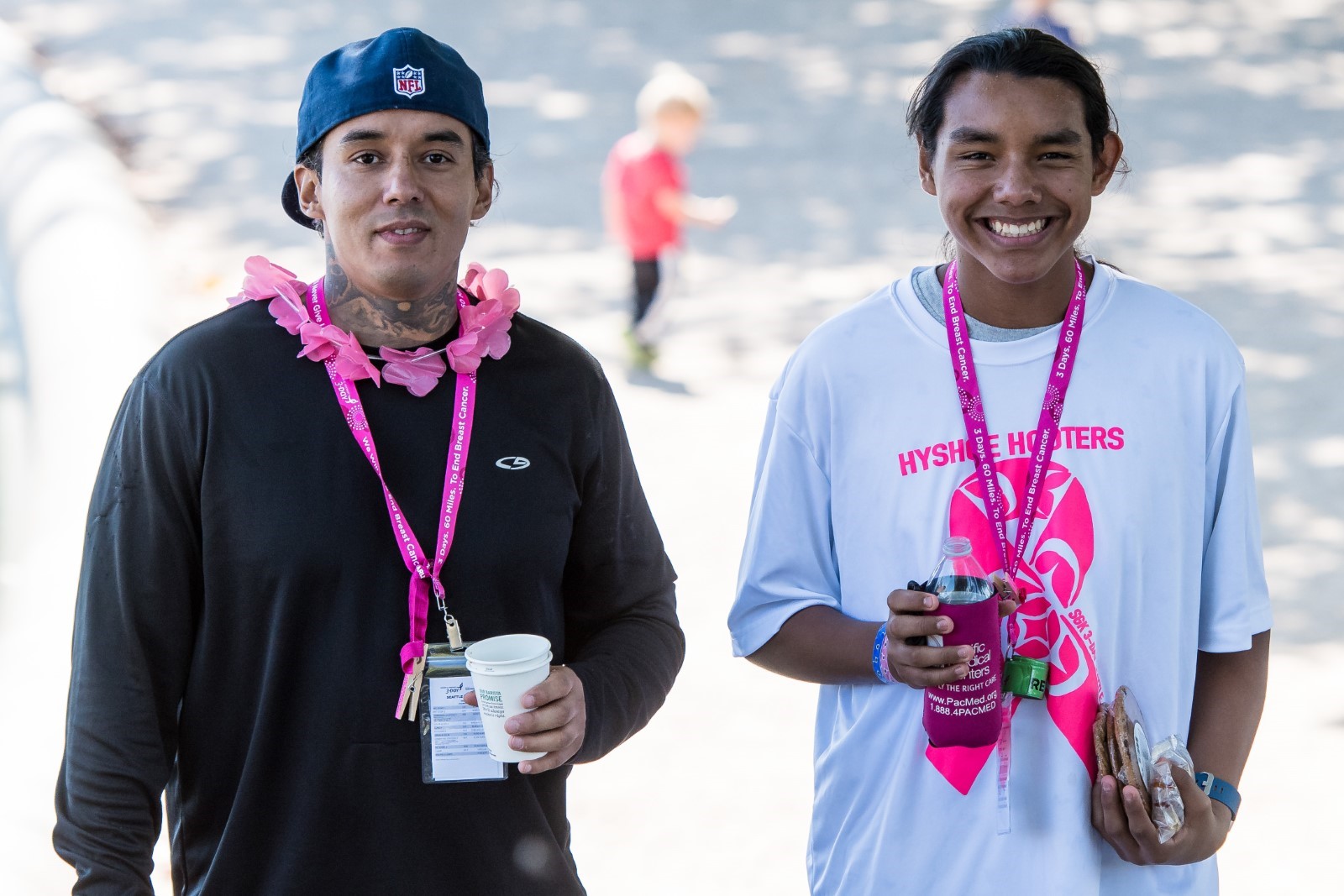
In 2023, 2,800 new cases of invasive breast cancer will be diagnosed in male patients. Even with this in mind, the disease is, by and large, considered by many to be a women-specific issue. The shame and lack of awareness contribute to men missing or ignoring the warning signs, delaying medical intervention, and postponing care. One of the best ways to combat this culture is through education. Being mindful of things like one’s family history of cancer, genetic determinants such as BReast CAncer 2 (BRCA2) and Klinefelter syndrome, and lifestyle can all help make sure the men closest to us live lives as healthy and fruitful as they can.  

Here are 5 things every man should know about breast cancer: 

  1. Breast cancer in men usually occurs between the ages of 60 and 70. 
  1. Among all men, black men have the highest incidence (new cases) of breast cancer. 
  1. When self-examining, look for a painless lump or thickening in the chest or armpit. 
  1. It’s recommended that men know and understand their risk. 
  1. Annual exams can save your life. 

If you’re able, take some time this year to check in with the fathers you know. It’s understandable that these conversations might be uncomfortable, but Susan G. Komen is ready to provide resources that will give you the information needed to speak knowledgeably. Take a look at some of the links below and share them with those in your circle. 

The 3-Day’s ultimate goal is to help manifest a society in which breast cancer is a thing of the past. And while we walk for the many people who’ve helped shape us into who we are, a society truly free of breast cancer includes men as well. All of us, regardless of gender, deserve to invest in and benefit from, a world where this affliction is rendered powerless.  

We are a stronger, more vibrant community thanks to those we call “Papa,” “Pops,” “Gampy” and everything in between. To all the dads out there – especially the ones who are in the fight and to those serving as caretakers – happy Father’s Day! 

Check out more resources from Susan G. Komen here: 

Male Breast Cancer 

Support Services Help Men Cope With A Breast Cancer Diagnosis 

Treatment for Male Breast Cancer 
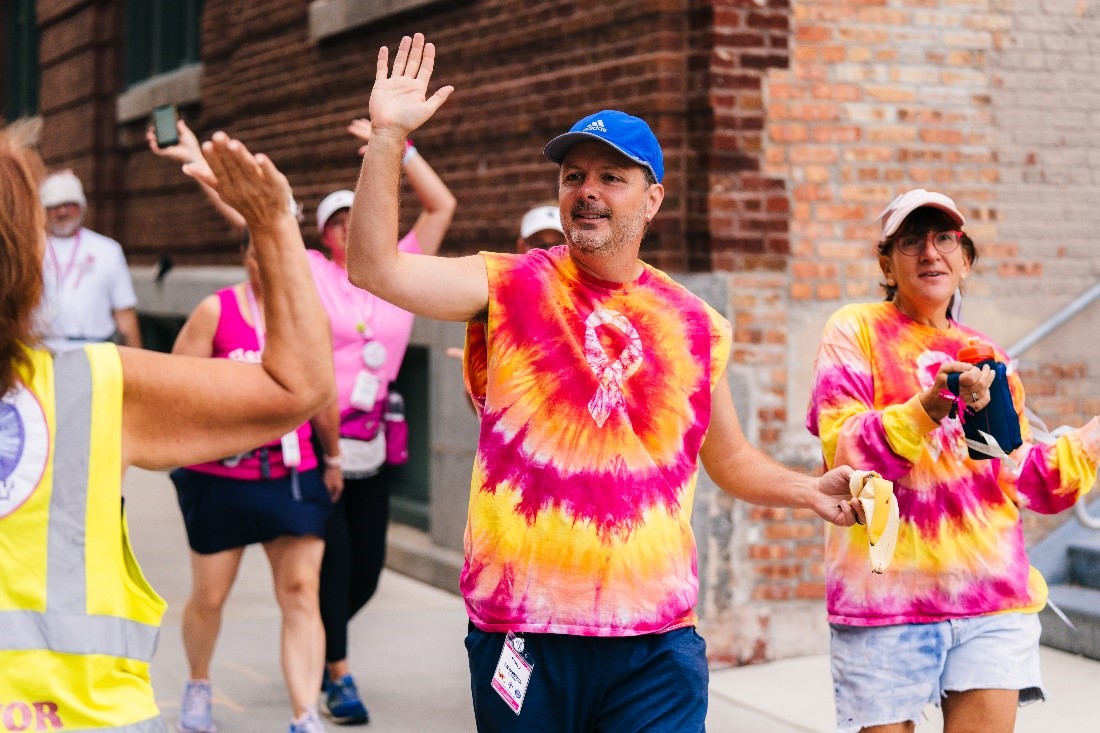
Let’s Keep It Going! Beginning Your Fundraising Journey for the Susan G. Komen 3-Day

Welcome to part two of our fundraising how-two series!

This week, we’ll be talking about how to start your fundraising. By the time you’re reading this, the New England 3-Day, our very first of the 2023 season, is exactly 64 days away, with Denver and Chicago close on its heels. Although that may seem like plenty of time, it’ll be here before you know it. That said, a sense of urgency is your best friend as you work to meet or exceed your fundraising goals. But where to begin?  

Spotlight: Check out this handy guide on Raising $2,300 in 2 Months

Whether this is your first walk or your 101st, The3Day.org can serve as your central hub for help. The fundraising page hosts a wide range of invaluable resources to help orient you on this journey. Trying to utilize social media for your campaign and want to know what to post? Check the Fundraising page. Need 101 different appeal ideas, or are you attempting to meet your $2,300 goal in one month? Fundraising page. Searching for sample solicitation letters to get in touch with a local business? Fundraising page. From outreach templates to thank you notes and everything in between, the 3-Day fundraising page serves as a comprehensive online resource, along with all of the tools in your Participant Center.  

If you’re like some participants, fundraising for the 3-Day could be the first time you’ve ever raised money for an event. Not to fear! Taking care of things early means you can free up mental space and energy to focus all of your attention on training. Approaching your fundraising with strategy and careful planning can make all the difference. For example, rather than asking a potential donor, “Hey, I’m walking the Dallas/Fort Worth 3-Day in October, would you like to donate?”, be as specific as possible! “I’m aiming to raise $3,000 [or whatever your fundraising goal is — name a specific amount] by the end of July. Can I count on you to make a donation of $60 today?” Do you have 23 family members that you can ask for $100? Are there 46 friends who could support you with $50 each? Asking for a specific amount, and asking big, is the best way to get you to your goals faster. Whatever the denomination and whomever the patron base is, thinking critically about how to best navigate the landscape can be just the move to put the winds in your sails.  

Regardless of your preferred methods or how you choose to space out different milestones, the biggest stride you can take toward success is simply getting started. Go for that initial ask, make your first donation follow up, and don’t be afraid to tap into your network. While there are many people just waiting to support you, life can get busy! Even with the best intentions, your donors can forget to revisit Facebook fundraisers, or lose track of email requests. You will have to ask more than once or twice. Be brave in how you approach family, friends, and community members, and just as you push your body to cover more and more ground each week during training, you can push yourself more and more to march toward your fundraising target. 

The money we raise is invaluable to the individuals and their loved ones supported by Susan G. Komen. Your efforts are instrumental in the funding of research, as well as patient care and advocacy, all of which help us in the fight against breast cancer. These real efforts impact real people and are fueled by the fundraising dollars you raise!  

Stay tuned for our July post as we dive into part three of our series and, in the meantime, check out part one. As always, feel free to share your thoughts and drop a comment below!   

To recap: 

Tip #1 — Check out the fundraising page. If you’re in search of creative ideas or need a bit of structure, this resource is sure to act as your starting point and guide you in the right direction.  

Tip #2 — Stick to your plan. The equation for donations is pretty simple: your solicitations + support from your community = you hitting your goal! Take a moment to map out the time you have, the people you know, and the dollars you need. If you do your math correctly, your solution will come that much easier. 

Tip #3 — The best way to build momentum is by moving! If you don’t know who to start with, consider your last call or text message. Chances are, you were just speaking with someone who’d love to help you on your quest. 

June Pink Bubble Story of the Month – Brooke M. 

At its core, the power of the 3-Day is in how it connects people and how those connections expand the community and help in the fight to end breast cancer. When on event, the Pink Bubble is a sight to behold, a sea of participants wearing all shades of pink. From Boston to San Diego, coast to coast, our host cities are left coated in the hard-won sweat and tears that pour out of this amazing community. We see parents walking with their children, friends with friends, and spouses with each other. And as beautiful as it is to witness these face-to-face relationships, those we’ve lost also come along with us on the journey. For Brooke M., being a part of the 3-Day Pink Bubble meant not only honoring a loved one but, ultimately, forging a new, yet unexpected connection. 

 In 1991 Brooke’s dear friend, Wendy F., died of breast cancer. She was in her early 30s and left behind four children under the age of six: a son, a daughter, and a set of twins. For her family and Brooke and other friends, everyone who knew and loved Wendy was devastated. Brooke stayed in contact with Wendy’s husband for a few years, but they lost touch after he moved and Brooke had no forwarding address to write to. And although years passed, Brooke never truly forgot her friend. 

When Brooke first saw an advertisement for the 3-Day, she was looking for an opportunity to exercise more (to relieve stress from a tough corporate job) and to give her energy to a worthy cause. The 3-Day sounded like a perfect fit to meet both needs — all while honoring Wendy at the same time.  

So, Brooke walked and fundraised for years — all over the U.S. Eventually, the name of her team became “4LittleWendy”. About ten years later, this routine was disrupted when she got a seemingly random contribution that immediately grabbed her attention. The donor? A young woman named Laura who shared the same last name as Wendy. Brooke’s heart immediately stopped. It turns out, Laura was Wendy’s daughter and worked for Susan G. Komen in the Midwest. On the anniversary of her mother’s death, she had googled Wendy and somehow Brooke’s 3-Day fundraising page popped up. She was completely shocked to find that this woman in California who she didn’t even know had been walking and raising money in her mother’s name for a decade. 

Brooke and Laura started corresponding, and in 2010 they both attended the Chicago 3-Day together. The experience, while heart-affirming, was also heartbreaking. Laura was the spitting image of her mother and was the same age that her mom was when she and Brooke first connected in California. It really brought the tragedy of this terrible disease into focus: Brooke had gone on to live a wonderful life with fond memories of Wendy, but Laura had lived her whole life without her mother, relying on hazy recollections as she struggled to find her way in her early 20s. They had a good week together, but each went home a little overwhelmed by the reality of the breadth and depth of their loss. 

Still, Brooke and Laura kept in touch, mainly through Christmas cards. Laura went on to finish college and get married, thriving through her young adulthood. And if there’s one thing Brooke’s sure of, it’s that Wendy would be proud of her daughter. 

Through the experience of fundraising, training, and walking the 3-Day, there are any number of surprises that might lie in wait for any participant. Maybe you finally convince that one friend to join your team, or your child lets you know that they’re deeply interested in joining the Youth Corps. These are shining moments that can strike like lightning, quick and powerful, immediately changing your year, or maybe even your life. For Brooke, that meant being found by and then walking in lockstep with the child of a dear friend. There’s so much magic that will reveal itself to you in the Pink Bubble as you bond with those around you. While you won’t see it coming every time, if you keep your eyes, ears, and heart open, it will always find you — right on schedule.  

Laura (left) and Brooke (right) carried banners at the Opening Ceremony of the 2010 Chicago 3-Day.