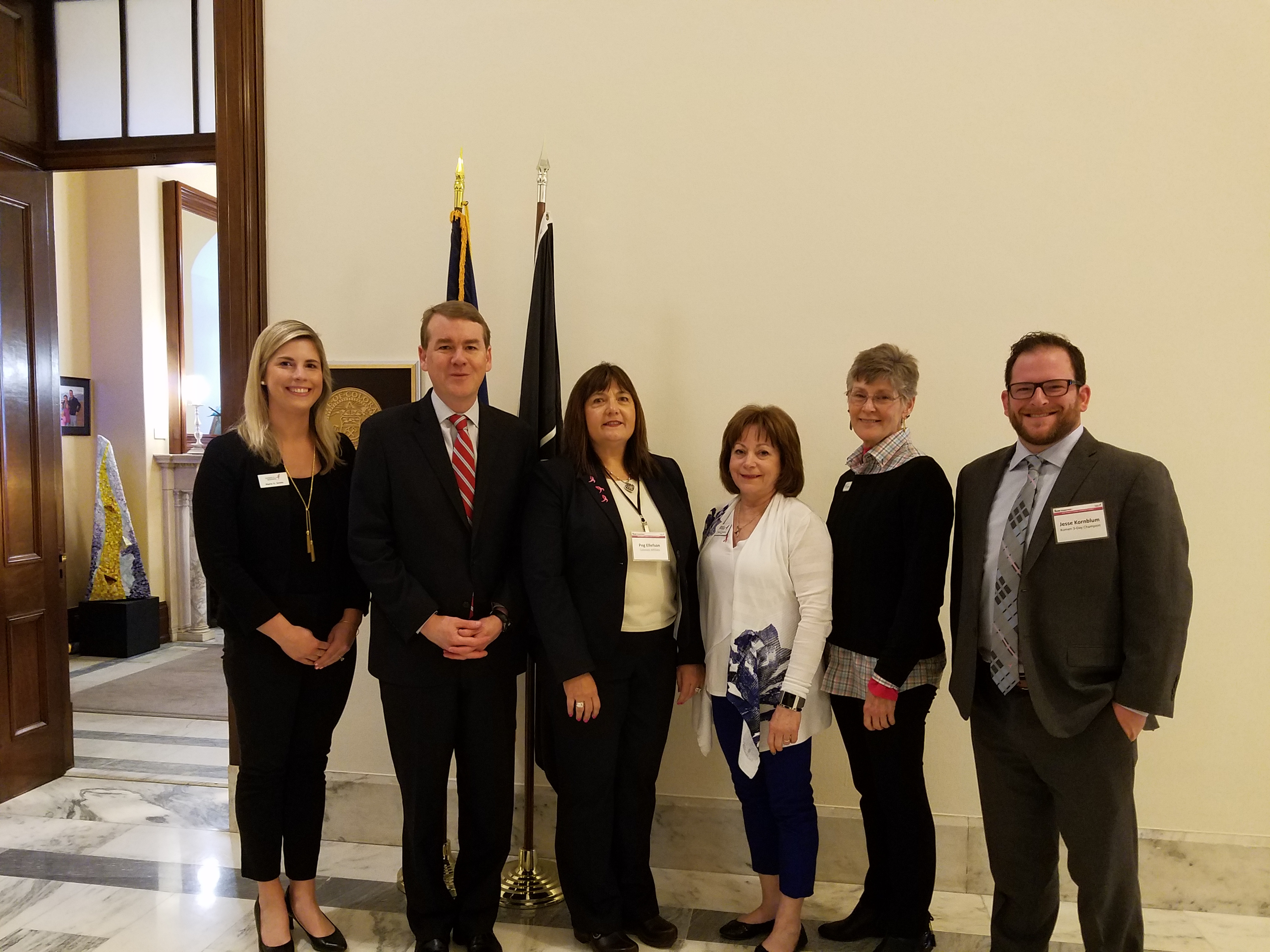
Health on the Hill: Komen Advocacy Summit Recap by Jesse Kornblum

jessse 2

Provide us an overview of your experience during the Komen Advocacy Summit.

The 2018 Komen Advocacy Summit is best described as the most beneficial roller coaster ride of my life. I had no idea what to expect. I started the first day nervous about the responsibility that I was given. I am extremely driven to make a positive change to help prevent and cure breast cancer, but the pressure I put on myself to make this trip as impactful as possible made me nervous. I worried I was not the right person for the job.

When the conference started, I found myself seated at a table labeled “Colorado” and was so excited to meet others from home that are advocating for the same things. Everyone started to show up, and I quickly learned that the Colorado crew was fantastic, and we became fast friends. These people were fighters, not just in their personal battles with breast cancer, but in our local communities. All of them were experienced advocates for breast cancer research funding and legislation. I knew that I needed to follow their lead and learn as much as possible. All my nervous feelings changed to excitement. I learned a lot and was given all the tools necessary to hit Capitol Hill and have a meaningful conversation with our elected officials. I fell asleep that night still feeling the overwhelming power of the group as well as shared our excitement for our day on the Hill.

On day two, I woke up once again feeling nervous. I was thinking about the opportunity in front of me and the impact I could have. I didn’t want to let anyone down, especially the cause itself. We had an additional pre-meeting and again, my nervous energy changed to excitement. We loaded onto the buses with the tools and knowledge needed to make a change.

As we approached our first meeting, all my emotions were fighting each other, but excitement prevailed. Once we sat down, I watched the group of experienced advocates go to work. Hearing their stories and seeing how they made the presentation to our representative gave me the confidence that I could do this and there was nothing to fear. From that meeting on, I had fun presenting our data and asks to the representatives. I could answer their questions, and felt confident presenting a case for budget increases and bill sponsorship. As the day went on, we were having such great engagement in our meetings that we were running behind, so we had to divide and conquer. The group was confident that I could conduct a meeting independently. I initially disagreed, but felt relieved and empowered after my solo mission turned out to be very constructive. The representative was very responsive to my presentation.
jesse 3

That is the moment I told myself that I would not only fight breast cancer through fundraising and participating in events, but would take a much larger role in advocacy. My toolbox now has another amazing power tool that can be used to fight breast cancer.

The third day was an exciting ending to this wild roller coaster ride. We heard from some amazing people who are fighting breast cancer personally as well as people who have devoted their careers and their lives to the fight against breast cancer.

What these people shared with us made me feel empowered and optimistic for the changes we fought for on Capitol Hill. But while these small wins should be celebrated, it is still not enough. Now that I am home, I have not stopped thinking about ways I can be an advocate and how I will continue to help in the fight against breast cancer.

jesse 4

What was the most impactful part of the Summit?

There were two parts that were extremely impactful:

  1. The team of people I was with from Colorado had confidence in me to conduct a meeting independently with a Colorado representative. This was when I realized I could continue fighting breast cancer with advocacy by taking it head on.
  2. Seeing all the people coming together, despite travel headaches, to take on Capitol Hill to divide and conquer this fight against breast cancer.

Explain your day on Capitol Hill.

My day on Capitol Hill was amazing. I was overwhelmed by the history of the places I was walking, and the power that exists within the walls of Capitol Hill. The day was filled with meetings where we discussed specific topics with either the Member themselves or with a staff member. We had a meeting with every Colorado representative’s office, making it a busy day of running around the Capitol. After every meeting, I walked out feeling that the topics we were discussing and the things we were asking for had be received well and had value to the representatives and their staff.
jesse

What surprised you about the Summit?

How much impact can be made in such a short period of time. Also, I was surprised to how easy it was to talk to the representatives and their staff as I was worried they would be intimidating to talk to prior to the Summit.

What can we do so everyone has a voice in government?

Educate everyone on the ease of contacting their representatives and the respect you will be given, even if just sending an email. If everyone knew how that their voice will be heard and knew how to reach out, I feel they would take the time to do it.

How can others get involved in advocacy?

Writing emails and making calls, as they are received by the representative’s office. There is also a lot of advocacy that is needed locally in every state, so if you want to become an advocate for the cause, I recommend becoming an advocate on Susan G. Komen’s website and keeping an eye out for opportunities to make your voice heard.

What does advocacy mean to you?

Advocacy means change. The education that you can provide to your representatives while being an advocate is the fuel for greater change.
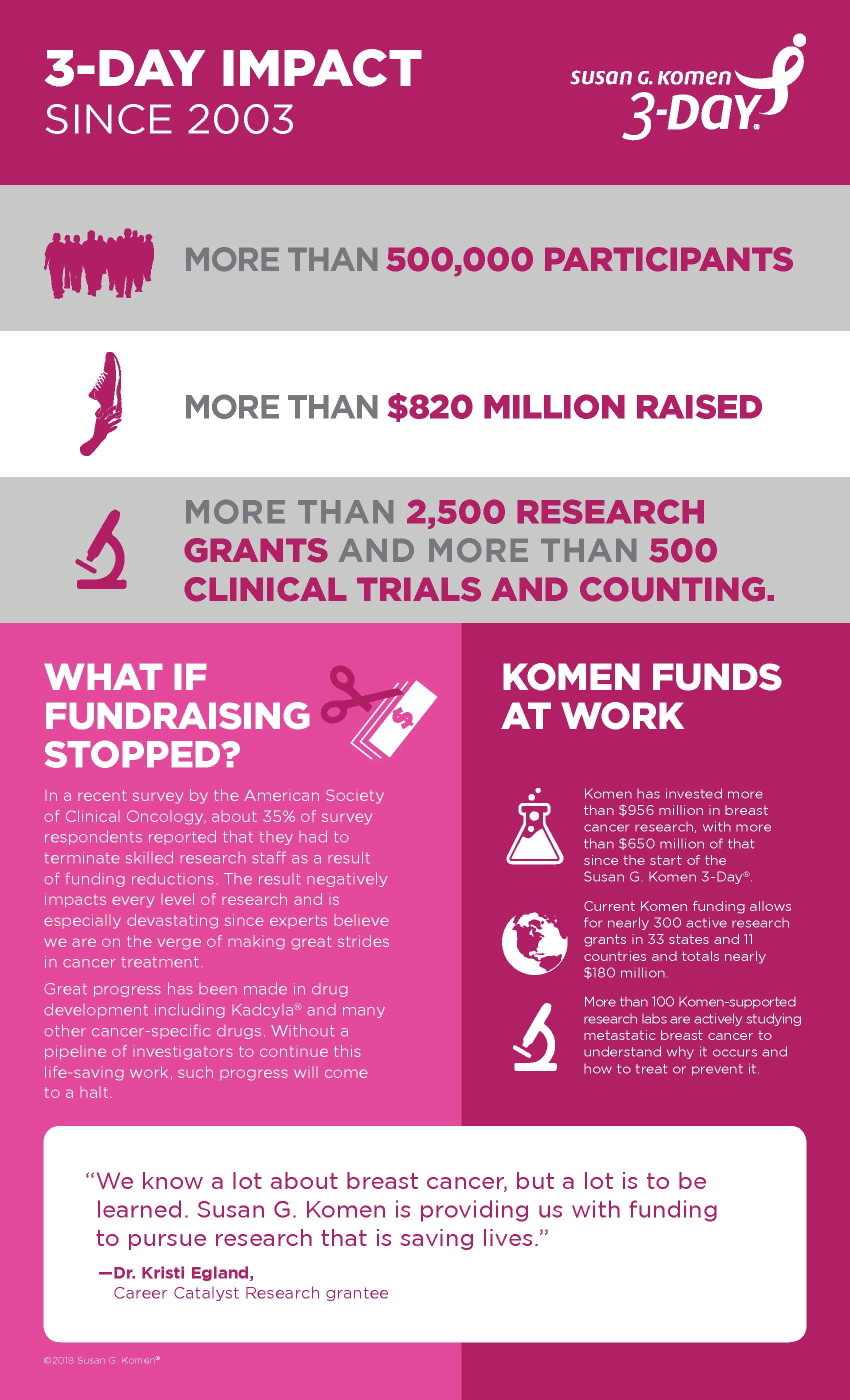
Not-to-Miss 3-Day Infographics

4-13 Insta.jpg

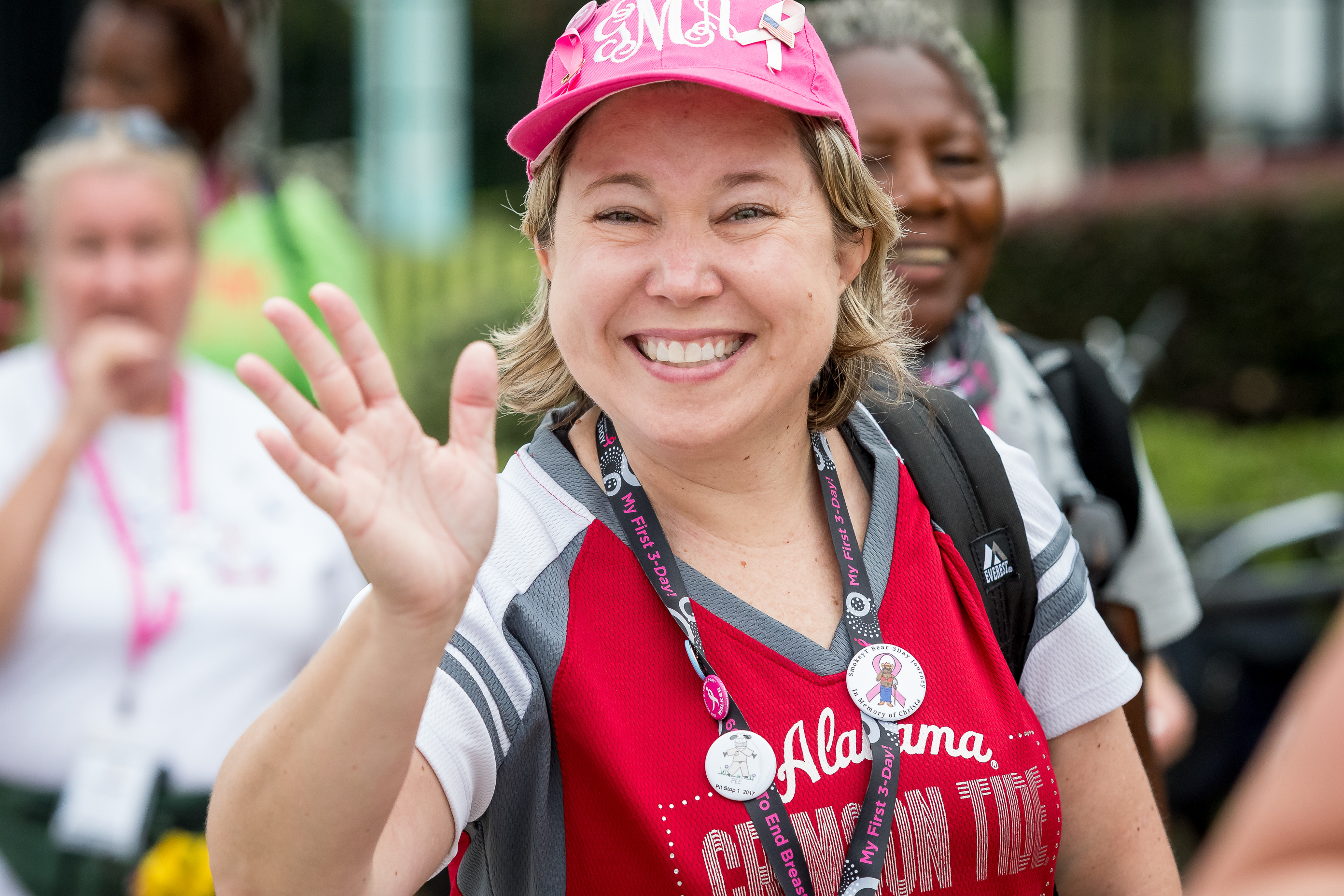
We are now less than six months away from the first 3-Day of 2018, so it’s time to kick your training, recruiting and fundraising into high gear! When you’re reaching out to people for donations, or to asking them to walk with you, it’s natural that people might have questions about the impact of the 3-Day.

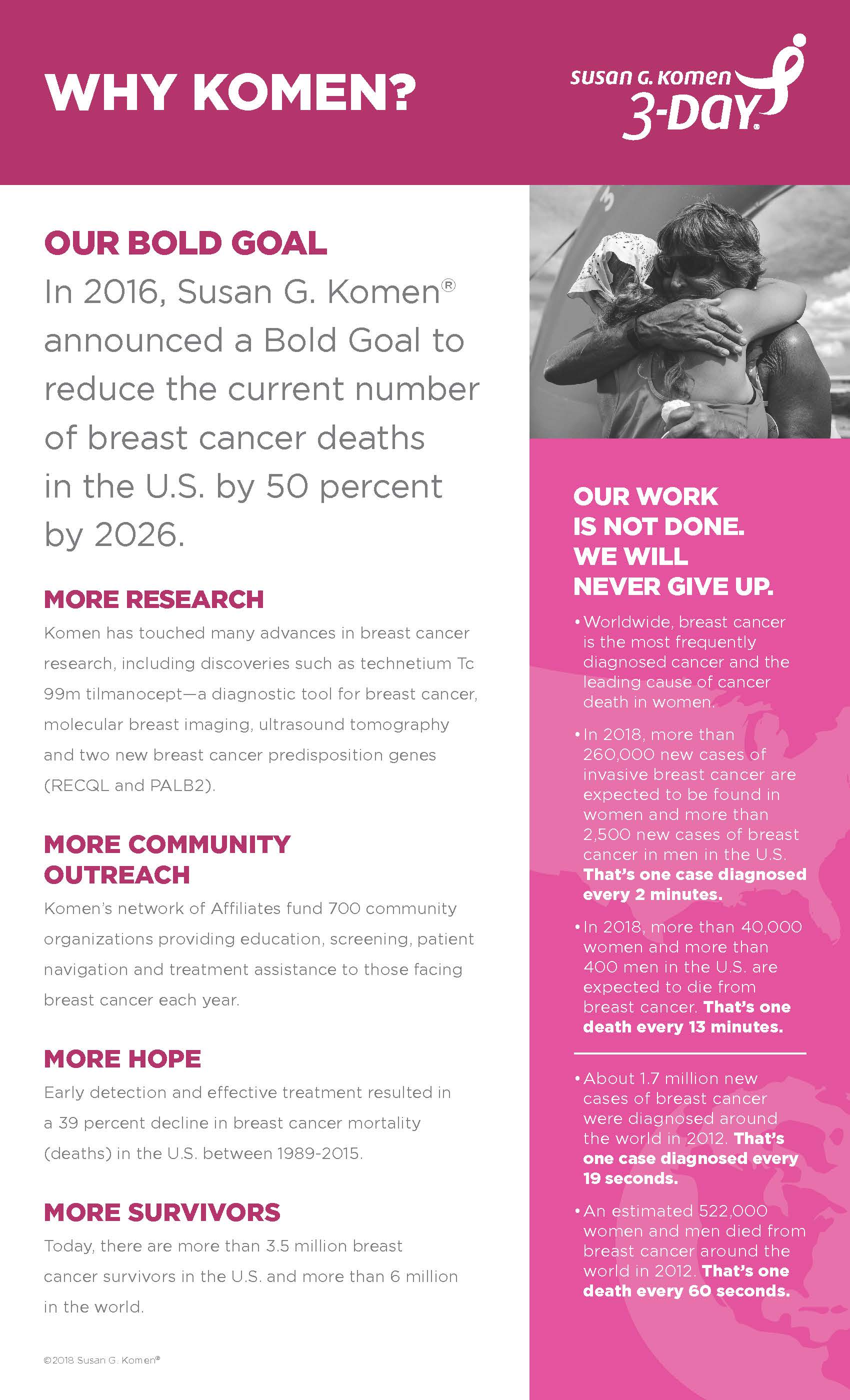
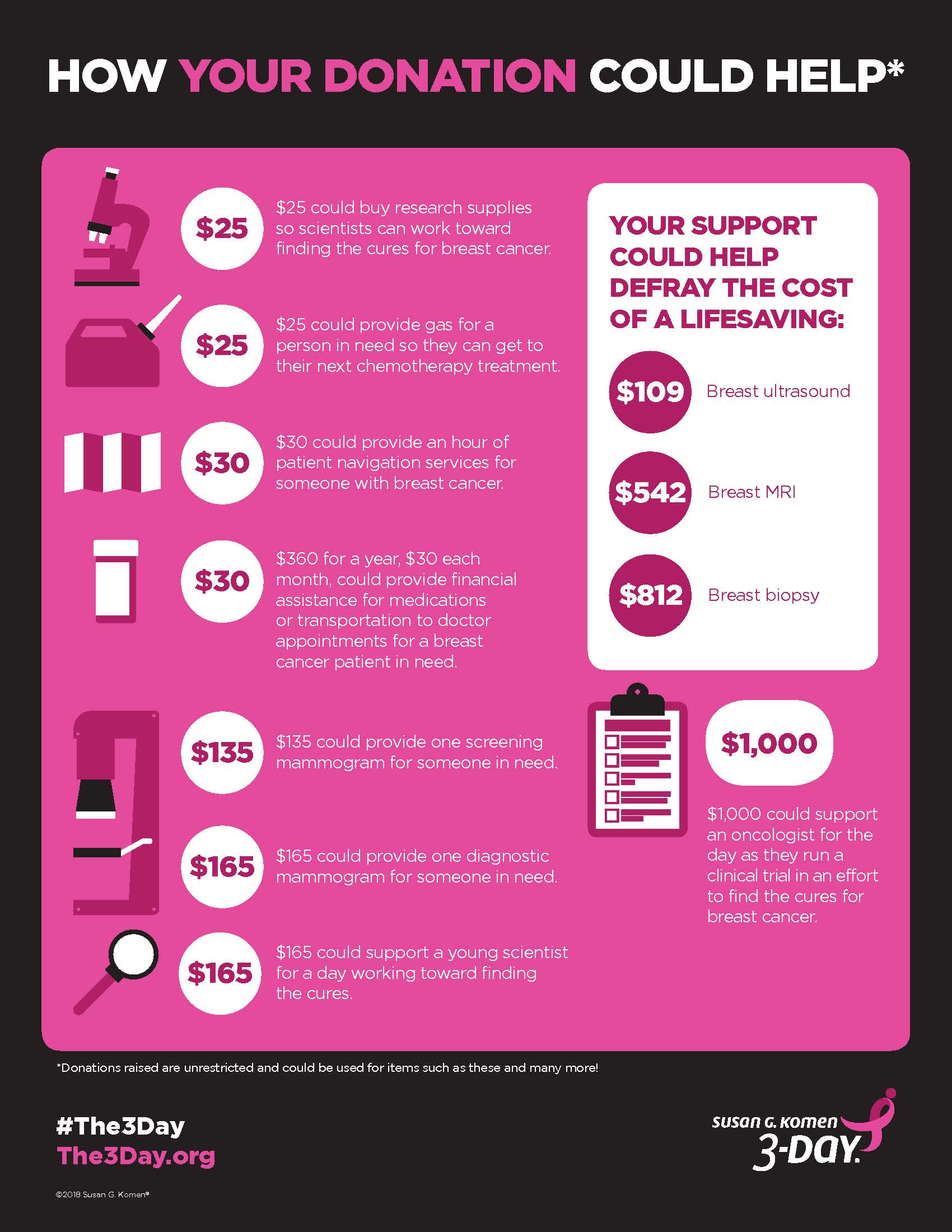
Luckily, Susan G. Komen has created new infographics that make it easy to answer these questions, and to learn more about the cause you are working so hard for. You can see the full range of infographics on the 3 Day website, or easily download some of the newest additions below. They show the latest and greatest of all the work the 3-Day does, and how you are helping us reach Komen’s Bold Goal.

These are eye-catching and to-the-point breakdowns to motivate you, and those around you, to continue working and walking towards a cure.

3DAY_2016_KomenInfographics_1_fp

3DAY_2016_KomenInfographics_2_fp

3DAY_2017_Infographic_FundraisingDollars_fp

There is also a “Fast Facts” section right on the Infographics homepage, where you can find quick and easy links to topics like:

  • Early Detection, Diagnostic and Risk Biomarkers
  • Nutrition and Breast Cancer
  • Metastatic Breast Cancer
  • Targeted Therapies
  • and more!

If you want more information about Susan G. Komen and the 3-Day, reach out to your local coaches with questions, or check out the 3-Day website to find answers to Frequently Asked Questions, along with more information about the 3-Day experience.

Creating the 3-Day Route: What goes into planning those 60 miles?

3DAY_2017_ATL_MDER_0026.jpg

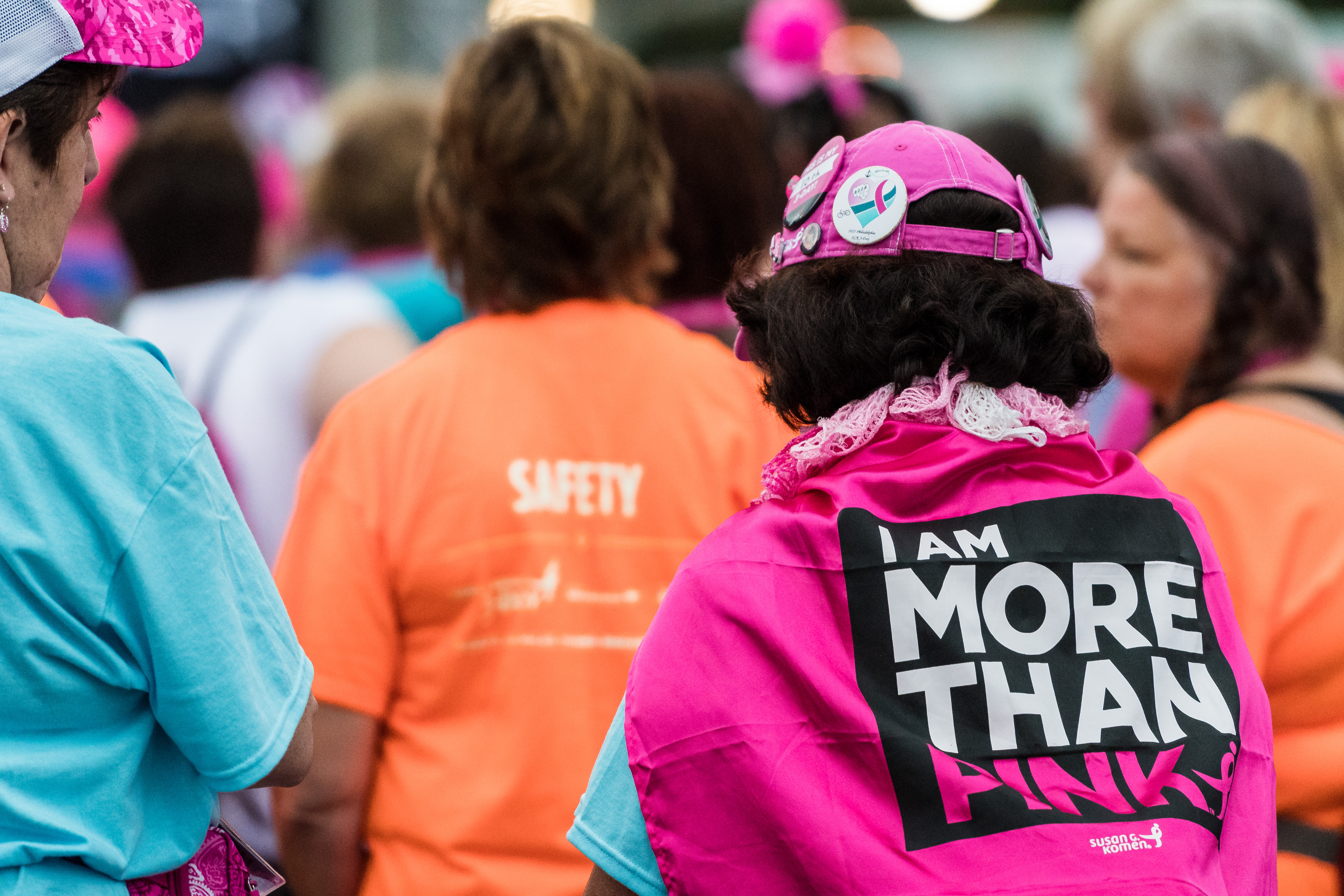
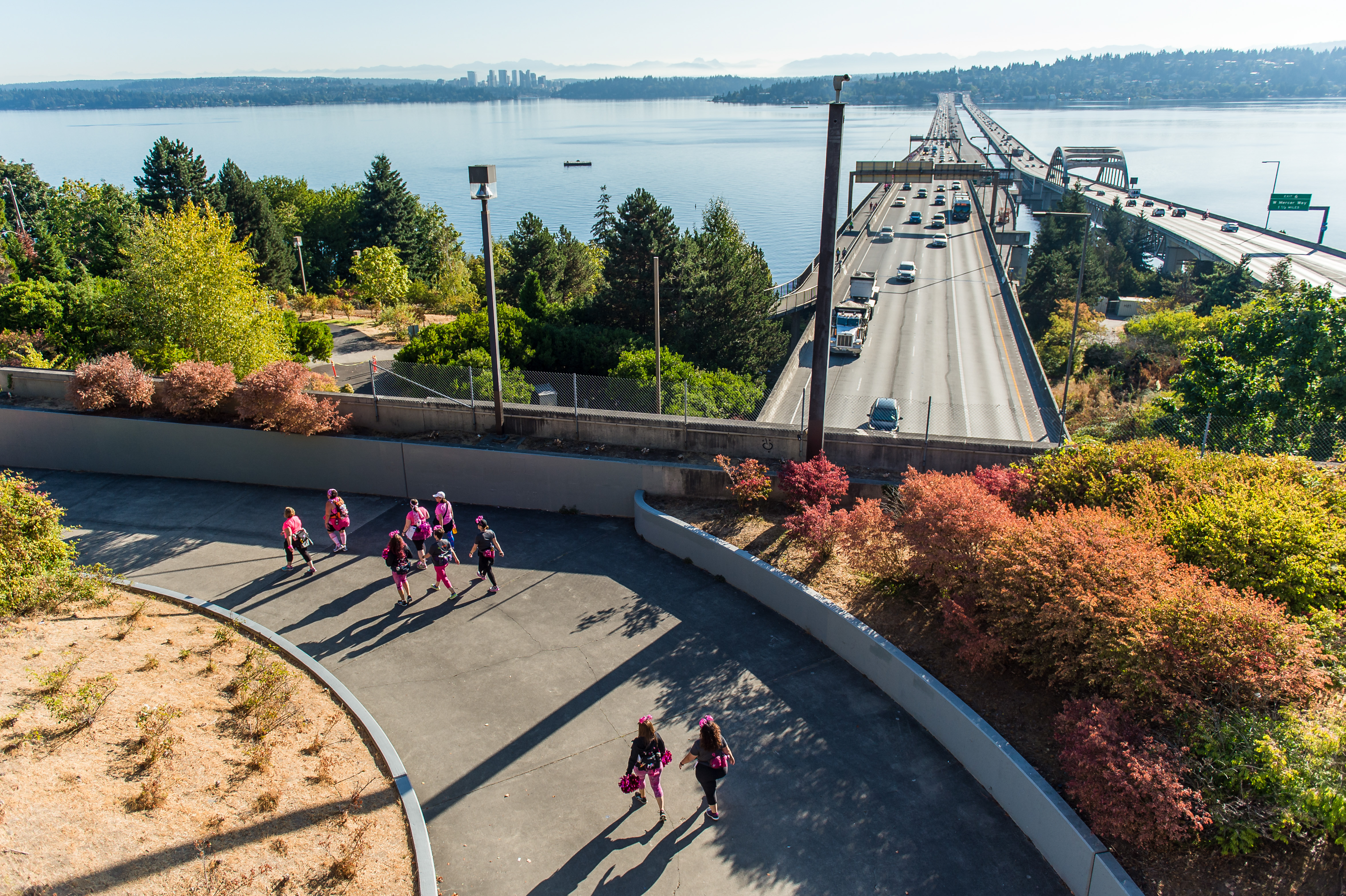
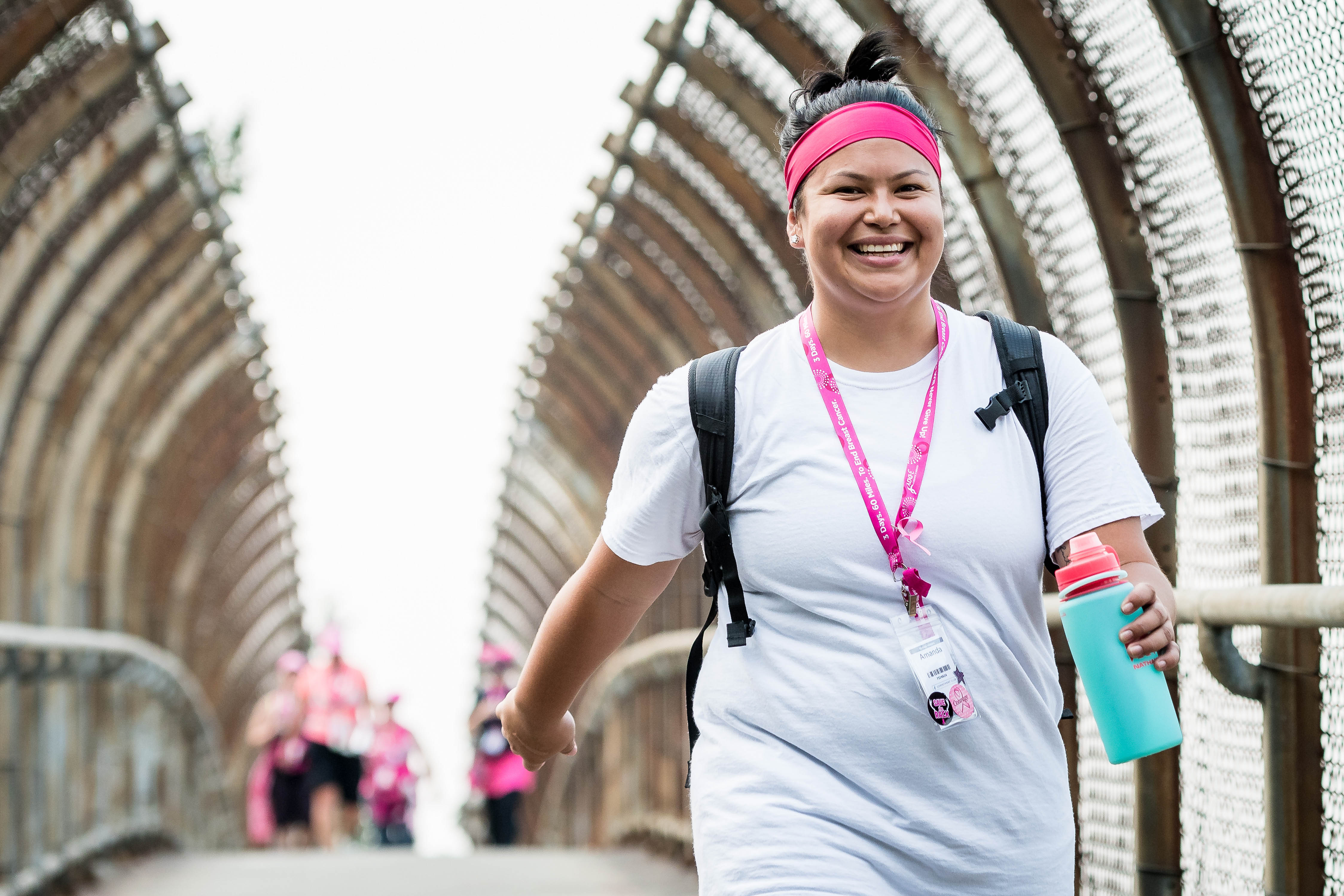
Planning a 60-mile journey is no small feat, especially for hundreds of people in different cities across the country. That is the magic of the 3-Day! For three days, we take over major metropolitan cities like Atlanta, Philadelphia, Seattle, and more, to walk 60 miles towards a cure for breast cancer. One of the many benefits of spending 60 miles on your feet is in how the 3-Day route is a showcase of the amazing host cities we call home for a few days each year.

Planning that route goes on all year long, and involves many people, working to get our 3-Day routes ready. There’s a lot going on behind the scenes!

This applies to all our 3-Day cities, but we asked the Seattle Coaches, Gayla and Liz, our amazing crew & Volunteer Coordinator Libby, as well as our Event Planning Manager, Ann, to give us an in-depth look at how they work to make every step of the 60-mile journey challenging but fun, all while showing off the best of our host cities.

3DAY_2017_SEA_MDER_0192.jpg

Planning the Route

Every city is different, and that’s why the elements of the 3-Day route look and feel different in each of our host cities. We base our route on the natural scenery, beauty, and attractions of the host city, but we also must be ready for the route to change based on factors like construction and local events. Can you imagine if we didn’t walk through Gas Works Park in Seattle or stroll past the Rocky Steps in Philadelphia?

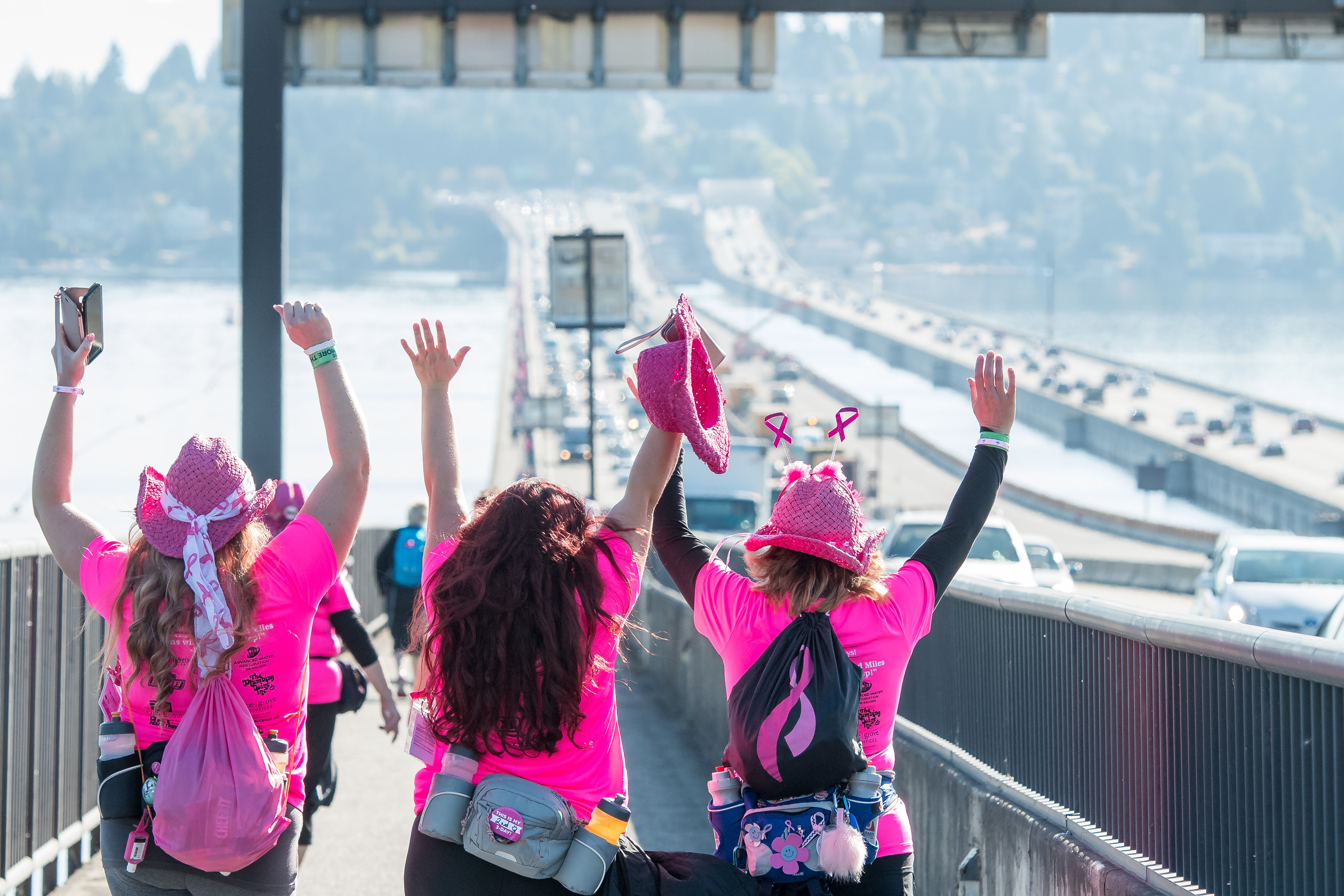
What about those parts of the route that aren’t exactly scenic, but unavoidable, like hills? We work very hard to eliminate and minimize hills along our route. This is especially true in hilly cities like Seattle, which is nestled in the beautiful foothills of the Cascade mountains, surrounded by water, islands and bridges. These features provide for unique challenges in the planning process while attempting to achieve the flattest possible path. The beautiful terrain doesn’t provide many flat options in and around Seattle, however, in cases where we cannot go entirely flat, we work with the terrain to the best of our ability. Whenever we are designing the route in any city, we look at different options to get from one place to another, and try to always choose the least hilly or steep path.

However, when a hill is unavoidable because we need to get out of a valley or our route options are limited by construction, sidewalk availability, or city requirements, we look at ways to break the hill up as much as possible. This can include employing a “switch back” technique that breaks the hill up into several smaller, less steep hills whenever possible. Essentially, we try to stair-step our way up the hills.

3Day_2017_SEA_MDER-695

No matter what 3-Day city you are walking, proper training is always essential. As we work to plan the best route possible, you should do prep work as well. Try to find a route with some hills and stairs to help prepare for the possibility that they will occur during any event.

Also, check the website for training walks that are being hosted in your area. They are a great way to get ready for the event while meeting and talking to other walkers!
3DAY_2017_SEA_MDER_0291.jpg

Involving the Community

Our local teams are already working hard to get businesses along the route to cheer our walkers on, so everyone will feel the constant support from the community. If you have any recommendations or connections along the route, send contact information to your local Coaches. And if you have friends, neighbors and longtime donors who are local, talk with them about setting up a cheering station. The work with communities is continual throughout the year and we have dedicated volunteers (some of them walkers and crew members) who work on community involvement year-round, but while we do our best to line the route with all the support we can, we cannot do it alone!

You can also help by sharing these documents with local businesses, neighborhood associations, clubs, teams, church groups, etc., and by contacting your local coaches at 800-996-3DAY, (Hey, Seattle! Liz and Gayla are at Option 7) or on their coaches Facebook pages to volunteer to help so we can get an early start on lining the route with support.

3Day_2017_SEA_MDER-292

Leading the Way

Our Route Team works tirelessly to make sure the route is as clearly marked as possible. We never want a 3-Dayer to feel lost! However, because we mark the route the day before, the signage is vulnerable to changes. That’s why we are always on alert during each 3-Day weekend, and why we also make changes every year based on walker experiences.

For example, last year, Seattle signs were removed and altered by the public in many places, especially along trail sections, which caused confusion and frustration for walkers — and hey, we get it! That’s a huge bummer, especially when it means being on your feet for any longer than you have to be.

To address this problem, this year we will rely on staff members to confirm placement of all signage in the early hours before we open the route for walkers. We will also utilize Route Safety crew members to check each section of the route before the walkers pass through and increase our Route Safety presence and signage along foot paths and areas of high traffic.

3DAY_2017_SEA_MDER_0206.jpg

If you have feedback on any part of your 3-Day route, community involvement, or anything about your experiences, please make sure to include those in your post-event surveys! We work hard to make sure every aspect of your 3-Day experience is the best it can be, all year long.

We are putting in that work now, and always, because we know how important your 60 miles are. Every step you take is important to us because every step is another one towards a world without breast cancer. Thank YOU, participants for walking with us, for giving your time and energy, and for being the best part of the 3-Day experience.