Dr. Judy’s 10-Year ‘Camino’ After Breast Cancer

Statements and opinions expressed are that of the individual and do not express the views or opinions of Susan G. Komen. This information is being provided for educational purposes only and is not to be construed as medical advice. Persons with breast cancer should consult their health care provider with specific questions or concerns about their treatment.

When breast cancer entered Dr. Judy’s life in 2014, she was 64 and at the height of a demanding academic career, leading the biotechnology program at the University of California, Davis and working 60-hour weeks. With a family history of breast cancer, she never missed her annual mammogram. That spring, her mammogram showed something suspicious.

“I was a Nike sponsored marathon runner in my 30s and I have a Ph.D. in microbiology,” she told her doctor at the time. “I am a tough woman, but this scares me. My maternal grandmother died from metastatic breast cancer in 1967 at the age of 65.”

After a biopsy, Dr. Judy was diagnosed with Grade 1 tubular carcinoma, hormone receptor-positive, HER2 negative of her left breast. A lumpectomy followed, and radiation was recommended by her doctor. With her background in clinical medicine, Dr. Judy researched the risk and benefits of radiation of her non-aggressive cancer. She worried about possible heart valve damage. She respectfully declined radiation and decided to focus on lifestyle changes including nutrition, exercise and stress reduction.

But the road to recovery wasn’t easy.

“I got very depressed after my surgery,” Dr. Judy recalled. “This cancer was a reminder that chronic stress has serious effects on the body. So, I focused on increasing exercise, eating healthy, reducing alcohol consumption and adding yoga to reduce the stress from my high-powered job.” 

That October, she was introduced to the Susan G. Komen 3-Day® and joined the Hands Up For Hooters Team, after her sister Patty joined.  After our 2015 walk in San Diego, our sister Chrissy joined the team. In 2020, Chrissy was diagnosed with early stage breast cancer.
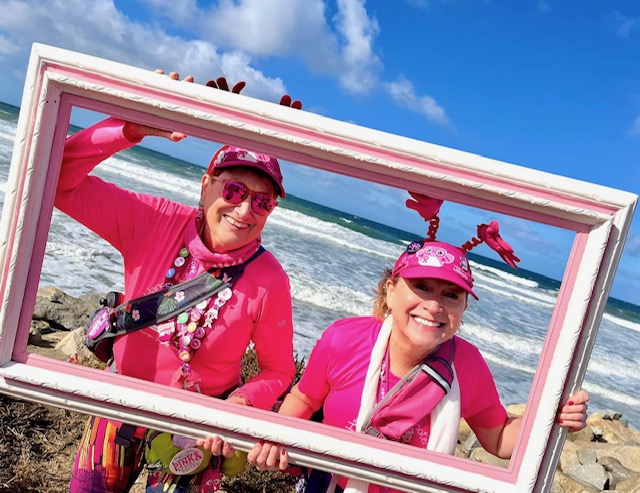
“The 3-Day changed my life,” Dr. Judy said. “It’s my spiritual journey (My Camino). Each year, I walk to raise money and awareness for breast cancer and I am usually one of the top fundraisers on the team.” 

Dr. Judy explained that her diagnosis didn’t just change her health, it also changed her outlook. The intense schedule that once defined her career no longer felt sustainable. 

“I was busy trying to change the world before I got breast cancer,” she said. “Facing my own mortality made me realize I had to make changes.”

In 2018 when her grandson was born, she made the decision to retire and shift her focus fully to her health, philanthropy and her family.   
“He wants to be a scientist like me,” she said with a big smile. “I want to be there for his college graduation. He’s my reason for getting up in the morning. I want to stay healthy so I can be a good grandma.”

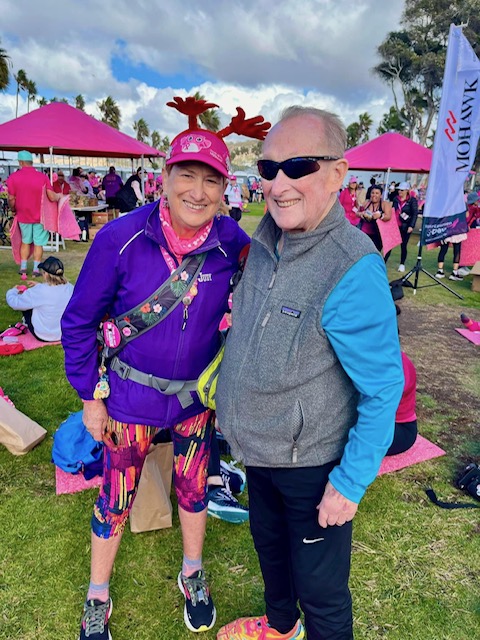
Ten years after her diagnosis, Dr. Judy is now 75 and cancer free. She is gearing up for her 10th 60-mile walk at the San Diego 3-Day. Her husband, Kent, always joins her and is a valued cheerleader. They have been married for over 52 years. 
“Many can’t believe I am going to walk again at my age. I tell them I’m healthier now than I was in 2014,” she laughs. “But I do take one sweep van before the San Juan Hill. That stretch is tough.” 

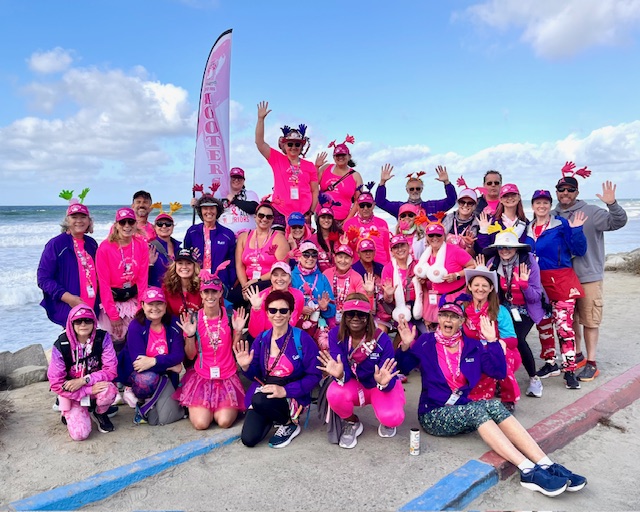
This year’s 3-Day represents a pivotal milestone for Dr. Judy as she celebrates 10 years of walking with the Pink Bubble and a decade of being cancer-free. It is also the 10th Anniversary of the Hands Up For Hooters Team. 

“For three days you forget politics and other things that are going on in your life. You’re surrounded by love, stories and people walking to honor loved ones and some survivors who are still receiving cancer treatments,” Dr. Judy said.  “It’s a celebration of life. I am not only a survivor; I am a Thriver!” 
Hydration and Physical Activity Tips for the 3-Day Community

National Hydration Day, observed every June 23, is a timely reminder of just how essential water is for overall health and well-being. For those who are navigating a breast cancer diagnosis, or life after treatment, staying well-hydrated coupled with physical activity is vital in the healing and recovery process.

At the Susan G. Komen 3-Day®, hydration is a top priority for the Pink Bubble community. Walkers are encouraged to drink about 4-5 ounces of fluid per mile, alternating between water and a sports drink to help maintain sodium and electrolyte balance.

Kirstin B., a registered nurse and medical crew volunteer, sees firsthand how dehydration affects participants.

“We often treat walkers for headaches, dizziness and digestion problems. All signs of dehydration,” Kirstin said. “We usually start rehydrating patients at the 3-Day with water or Gatorade, but sometimes IV hydration is needed. It’s critical for participants to be drinking a lot of water while walking during the event and while training.”

According to the Centers for Disease Control and Prevention, staying well-hydrated helps reduce the risk of developing kidney stones, urinary tract infections and constipation, and supports improved digestion, better sleep and energy levels.

So, how much water should you be drinking?

Hydration supports every system in the body, from digestion to blood circulation and brain function.

  • Daily water needs vary based on factors like age, sex, pregnancy status, activity level and breastfeeding status. The CDC recommends speaking with your doctor to determine the right amount for you.
  • You can also boost your hydration with water-rich foods including lettuce, cucumbers, watermelon and celery.

Just as hydration is important, physical activity is a powerful tool for your health. It helps maintain a healthy weight and lowers the risk of heart disease, stroke and diabetes. In the breast cancer space, research shows that women who exercise regularly have a 10%-20% lower risk of breast cancer than women who are inactive. This benefit applies to both premenopausal and postmenopausal women.

Research also shows breast cancer survivors who are more had better survival. For example, one study found that physical activity equal to a 30-minute brisk walk several times a week improved survival.

Whether you’re training for the 3-Day or looking to improve your overall wellness, staying hydrated and moving your body are two of the most powerful habits you can do for your health. Start today by setting a daily hydration goal and taking a short walk.

Tips to Stay Hydrated:

  • Drink 64 oz. (8 cups) of water the day before a walk
  • Drink 16 oz. (2 cups) of water before walking
  • Carry a refillable water bottle
  • Add lemon or cucumber slices to flavor your water
  • Choose water over sugary drinks
  • Drink a glass of water before each meal or snack
  • Rehydrate after a walk or exercise with both water and electrolytes
  • Remember you may need to drink more fluids in hot or humid weather

 Statements and opinions expressed are that of the individual and do not express the views or opinions of Susan G. Komen. This information is being provided for educational purposes only and is not to be construed as medical advice. Persons with breast cancer should consult their health care provider with specific questions or concerns about their treatment. 


Dennis’s Story of Survival and Service

Dennis Siemsen at the 3-day

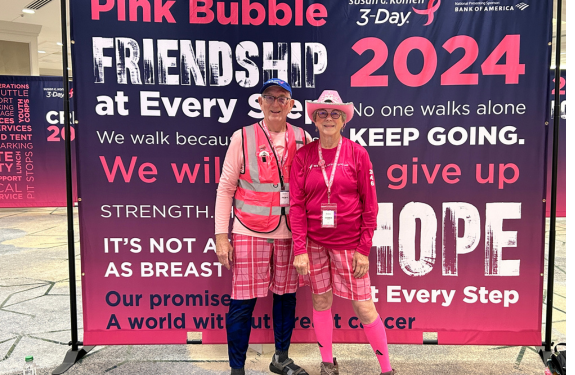
Dennis and his wife, Elaine, at the 2024 Susan G. Komen 3-Day.

When Dennis S. was 42, he faced something no husband or father expected: a breast cancer diagnosis. 

“I started noticing nipple discharge,” Dennis recalled. “That was in 1993, and it went on for almost two years before I did something about it. I was playing basketball a lot and when I’d take an elbow to the chest, they’d start to weep and wet my shirt.”  

His doctors initially thought the symptoms Dennis was experiencing might have been a hormonal issue and referred him to an endocrinologist. But when that was ruled out, Dennis was examined by another physician who discovered a lump and ordered a mammogram and then a biopsy.  

“At that time, my doctor was a young guy in his thirties. I was his first male breast cancer patient,” Dennis, now 74, said. “We were both shocked.”

Dennis underwent a mastectomy but was fortunate not to need chemotherapy or radiation. After surgery, Dennis chose to keep his diagnosis private.  

“I didn’t even tell my closest friends,” he said. “And I never took my shirt off at the pool. I’d say it was because I had red hair and burned easily. I think part of it was, if a woman saw me, I didn’t want my scar to make her feel uncomfortable.” 

Several years later Dennis’s wife, Elaine, connected with the Susan G. Komen 3-Day®. She was looking for a meaningful cause to support and signed up to walk in the Twin Cities. Dennis said he dropped her off at the 3-Day and picked her up when it was over. 

“After the walk, she was so excited and effusive,” Dennis said. “She told me about her experience and about the route safety guys on their bikes and motorcycles. She said, ‘You’ve got to join.’” 

An avid cyclist, Dennis was intrigued. He said he wasn’t sure how to get involved so he went out of his comfort zone.  

“It was hard to break into that group because they had their usual team of people. So, I decided to play the ‘survivor card’ and told them I was a breast cancer survivor. Well, that worked,” Dennis chuckled. “And they said, ‘We’d love to have you!’” 

That moment in 2012 was the start of Dennis’s connection to the 3-Day community. He still rides with the Route Safety team to help keep walkers safe, but this year he is taking time off to recover from two knee replacements. Dennis has found another way to support the 3-Day though. Since retiring, Dennis and Elaine spend the winters living in an RV resort in Arizona. Dennis offers free bike repairs to his neighbors and asks for donations to the 3-Day instead of payment.  

“For a long time, I hardly told anyone of my history with breast cancer. It wasn’t like I was embarrassed, I just thought no one needed to know,” Dennis said. “Now I share it because other men need to know that they can get breast cancer, too.”